
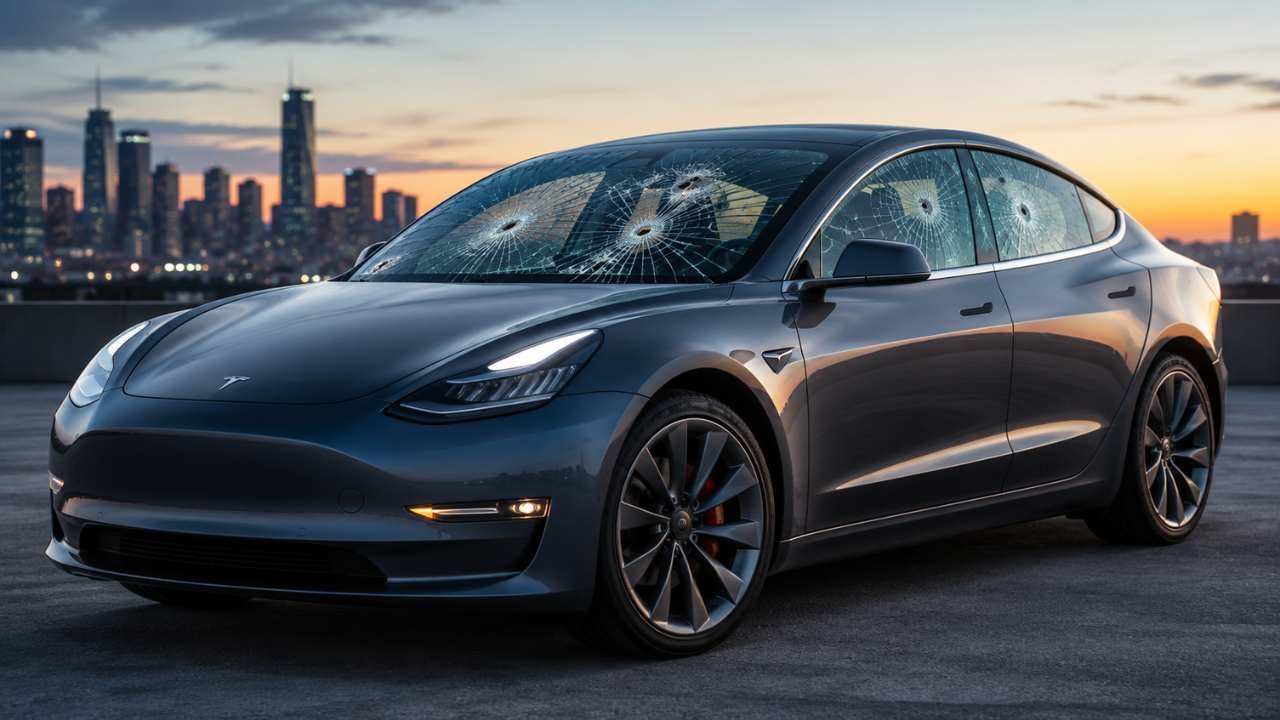
If you’re searching for Bullet Proof Windows Tesla Model 3, the short answer is no. The production Tesla Model 3 does not come with factory-installed bulletproof or ballistic-rated windows. Tesla equips the Model 3 with advanced Tesla safety glass and automotive laminated glass designed for crash protection, visibility, and durability—not ballistic protection against firearms.
However, Tesla’s strong reputation for safety, the Cybertruck’s famous armor glass demonstration, and viral social media videos have led many people to believe that all Tesla vehicles feature bulletproof windows. This article separates fact from fiction using authentic information and explains what Tesla Model 3 owners should actually expect.
Table of Contents
Are Tesla Model 3 Windows Bulletproof?
The idea of Bullet Proof Windows Tesla Model 3 has gained popularity online, but there is an important distinction between strong automotive safety glass and certified ballistic glass.
Tesla has never officially claimed that the production Model 3 includes bulletproof windows. There is no evidence that the factory-installed windows meet recognized ballistic standards such as UL 752 or NIJ (National Institute of Justice) ratings.
Instead, Tesla focuses on manufacturing vehicles with industry-leading crash performance and advanced occupant protection. The Tesla Model 3 glass is engineered to withstand everyday driving conditions, improve passenger safety, and support the vehicle’s driver-assistance technologies.
For buyers, this means the Model 3 offers durable glass, but it should not be mistaken for military-grade or ballistic-resistant protection.
Why Do People Think Tesla Windows Are Bulletproof?
Much of the confusion comes from Tesla’s reputation for innovation and a few highly publicized demonstrations.
1. The Tesla Cybertruck Armor Glass Demonstration
One of the biggest reasons people search for Bullet Proof Windows Tesla Model 3 is the famous Cybertruck unveiling.
During Tesla’s 2019 launch event, Elon Musk introduced Tesla Cybertruck armor glass, which was designed to demonstrate improved impact resistance compared with conventional automotive glass. During the live demonstration, a metal ball unexpectedly cracked the prototype window, creating headlines around the world.
Although the event involved experimental Tesla armor glass, it was not a demonstration of the production Tesla Model 3. The Cybertruck prototype used different engineering concepts than the glass installed in Tesla’s passenger sedan.
2. Tesla’s Outstanding Safety Reputation
Tesla vehicles consistently perform well in independent crash testing. Excellent Tesla crash safety ratings have helped the brand become known for occupant protection.
Because Tesla vehicles are built with rigid passenger compartments, advanced battery placement, and sophisticated safety systems, many people incorrectly assume the windows must also be bulletproof.
Crash protection and ballistic protection, however, are two completely different engineering objectives.
3. Viral Videos on Social Media
Videos showing Tesla vehicles surviving impacts from rocks, tools, or other heavy objects often receive millions of views.
While these demonstrations showcase impressive Tesla window strength, they should not be interpreted as proof that Tesla windows can stop bullets.
A window may resist road debris extremely well while still failing ballistic testing because firearm impacts generate dramatically higher energy.
What Type of Glass Does the Tesla Model 3 Use?
Rather than bulletproof glass, Tesla uses advanced Tesla glass technology designed for safety, comfort, and long-term durability.
The exact glass configuration may vary slightly depending on the model year and production updates, but the vehicle generally includes multiple types of automotive safety glass.
Tesla Laminated Glass for the Windshield
The Tesla Model 3 windshield uses Tesla laminated glass, which consists of two layers of glass bonded together with a strong plastic interlayer.
This construction provides several important benefits.
Improved Passenger Protection
If the windshield breaks during a collision, laminated construction helps hold the broken pieces together instead of allowing dangerous shards to scatter throughout the cabin.
Better Noise Reduction
Laminated glass helps reduce outside traffic noise, making the cabin quieter during highway driving.
UV Protection
The windshield blocks a significant amount of harmful ultraviolet radiation, helping protect passengers and interior materials from excessive sun exposure.
Enhanced Tesla Windshield Safety
Another advantage of laminated construction is improved Tesla windshield safety during collisions. The windshield contributes to maintaining the structural integrity of the passenger compartment and supports the proper deployment of airbags.
Tesla Model 3 Side Windows
The Tesla Model 3 side windows are built using automotive safety glass that is engineered to reduce injury during accidents.
Many newer Tesla configurations also feature laminated front side glass to improve cabin acoustics and increase overall comfort.
Even with these improvements, these windows should not be confused with bullet resistant windows used in armored vehicles.
Rear Glass Design
The rear glass is also manufactured to meet modern automotive safety standards while providing clear visibility and structural support. Like the windshield and side windows, it is designed for everyday driving—not ballistic protection.
What Is Ballistic Glass?
Many people search for Tesla ballistic glass, but this phrase often creates confusion. Tesla has not announced that the production Model 3 uses certified ballistic glass. Instead, true ballistic-resistant glass is a specialized material developed specifically to resist firearm impacts. It typically consists of multiple layers of:
- Hardened glass
- Polycarbonate
- Acrylic materials
- Specialized polymers
These layers work together to absorb and distribute the energy from bullets. Compared with standard automotive glass, ballistic glazing is:
- Significantly thicker
- Much heavier
- More expensive
- Designed to meet strict ballistic certification standards
This type of glass is commonly found in armored security vehicles, military transport, diplomatic vehicles, and specialized law enforcement applications—not standard consumer electric vehicles like the Tesla Model 3.
Why Doesn’t Tesla Install Bulletproof Glass on the Model 3?
There are practical engineering reasons why Tesla has chosen not to equip the production Model 3 with ballistic-rated windows. The company’s primary goals are to maximize efficiency, safety, range, and everyday usability rather than provide military-grade protection.
1. Ballistic Glass Adds Significant Weight
One of the biggest drawbacks of ballistic-resistant glass is its weight. Compared with standard automotive glass, ballistic glass can weigh several times more.
For an electric vehicle, additional weight can reduce:
- Driving range
- Energy efficiency
- Vehicle acceleration
- Overall handling
Since Tesla designs its vehicles around efficiency and performance, using ballistic glass in every Model 3 would compromise many of those priorities.
2. Manufacturing Costs Would Increase
Certified ballistic glazing is considerably more expensive than standard automotive glass. Installing it as factory equipment would increase the vehicle’s purchase price while offering a feature that most drivers neither need nor request.
Instead, Tesla invests in technologies that benefit everyday owners, including battery improvements, software updates, driver-assistance systems, and occupant protection.
3. Everyday Safety Is the Priority
Tesla’s engineering philosophy emphasizes Tesla vehicle safety during common real-world driving situations. That includes:
- Collision protection
- Roof strength
- Side-impact protection
- Pedestrian safety
- Emergency braking
- Stability control
These features help reduce injuries during accidents, which are far more common than situations requiring ballistic protection.
Can You Buy Bulletproof Windows for a Tesla Model 3?
Yes, but only through specialized aftermarket companies.
Several professional vehicle-armoring firms offer upgrades for selected electric vehicles. Depending on the company and the protection level requested, an aftermarket bulletproof Tesla conversion may include:
- Certified ballistic glass
- Reinforced doors
- Armored body panels
- Run-flat tire systems
- Heavy-duty suspension upgrades
- Additional structural reinforcement
These modifications are performed independently of Tesla and are intended for customers who require enhanced security.
Owners should also understand that adding armor can affect vehicle performance, increase weight, reduce driving range, and may influence warranty coverage.
How Strong Is the Tesla Model 3 Windshield?
Although it is not bulletproof, Tesla uses high-quality automotive glass designed to perform well in everyday driving conditions.
The Tesla Model 3 glass is engineered to resist:
- Small stone impacts
- Normal road debris
- Weather exposure
- Temperature fluctuations
- Everyday driving stresses
This durability helps reduce minor damage, but no automotive glass is immune to chips or cracks. A large rock or a severe impact can still damage the windshield or side windows.
Tesla Model 3 Safety Features Beyond the Glass
The strength of the Model 3 comes from much more than its windows. Tesla has developed the vehicle with a range of advanced systems that contribute to its excellent safety reputation.
Important Tesla Model 3 safety features include:
- Rigid passenger safety cell
- Low center of gravity created by the battery pack
- Advanced airbag system
- Automatic Emergency Braking
- Forward Collision Warning
- Lane Departure Avoidance
- Electronic Stability Control
- Side-impact protection
- Traction control systems
Together, these technologies improve occupant protection during collisions, even though the windows themselves are not ballistic-resistant.
Bulletproof Glass vs. Automotive Safety Glass
Many people confuse strong automotive glass with bulletproof glass, but they are designed for different purposes.
| Feature | Tesla Safety Glass | Certified Ballistic Glass |
|---|---|---|
| Primary purpose | Crash protection | Bullet resistance |
| Weight | Relatively lightweight | Significantly heavier |
| Vehicle efficiency | Optimized | Reduced due to extra weight |
| Certification | Automotive safety standards | Ballistic testing standards (such as UL 752 or NIJ) |
| Factory-installed on Model 3 | Yes | No |
This comparison shows why Tesla safety glass should not be confused with certified ballistic protection.
Common Myths About Bullet Proof Windows Tesla Model 3
Myth 1: Every Tesla has bulletproof glass.
Fact: Production Tesla Model 3 vehicles do not come with certified bulletproof windows.
Myth 2: Strong glass means bulletproof glass.
Fact: Automotive safety glass is engineered for crash safety, not ballistic resistance.
Myth 3: Cybertruck glass proves the Model 3 is bulletproof.
Fact: The Cybertruck prototype demonstration involved a different vehicle and specialized prototype materials.
Myth 4: Laminated glass can stop bullets.
Fact: Standard laminated automotive glass is not designed or certified to stop firearm projectiles.
Frequently Asked Questions
Is the Tesla Model 3 bulletproof?
No. The production Tesla Model 3 is not a bulletproof vehicle and does not include factory-installed ballistic protection.
Are Tesla Model 3 windows bulletproof?
No. Tesla has not certified or marketed the Model 3 windows as bulletproof or ballistic-resistant.
Can aftermarket companies install bulletproof windows?
Yes. Some specialized armoring companies offer ballistic protection packages for selected Tesla vehicles, though these are independent of Tesla.
Does laminated glass stop bullets?
No. Laminated automotive glass improves crash safety and helps hold broken glass together, but it is not equivalent to certified ballistic glass.
Why are Tesla windows considered strong?
Tesla uses high-quality automotive safety glass that is designed for durability, crash performance, noise reduction, and occupant protection.
The search term Bullet Proof Windows Tesla Model 3 has become increasingly popular, but the facts are straightforward. The production Tesla Model 3 does not come with factory-installed bulletproof windows, and Tesla has not certified its glass to recognized ballistic standards.
Instead, Tesla equips the Model 3 with advanced Tesla safety glass that supports crash protection, durability, passenger comfort, and visibility. The combination of laminated windshield construction, strong side glass, and comprehensive safety engineering contributes to the Model 3’s excellent reputation for occupant protection.
For drivers who genuinely require ballistic protection, professionally installed aftermarket armoring remains the appropriate solution. However, those conversions differ significantly from the standard production vehicle and involve additional weight, cost, and maintenance considerations.
Understanding the difference between Tesla safety glass and true ballistic-resistant glass helps buyers make informed decisions based on verified information rather than online myths.