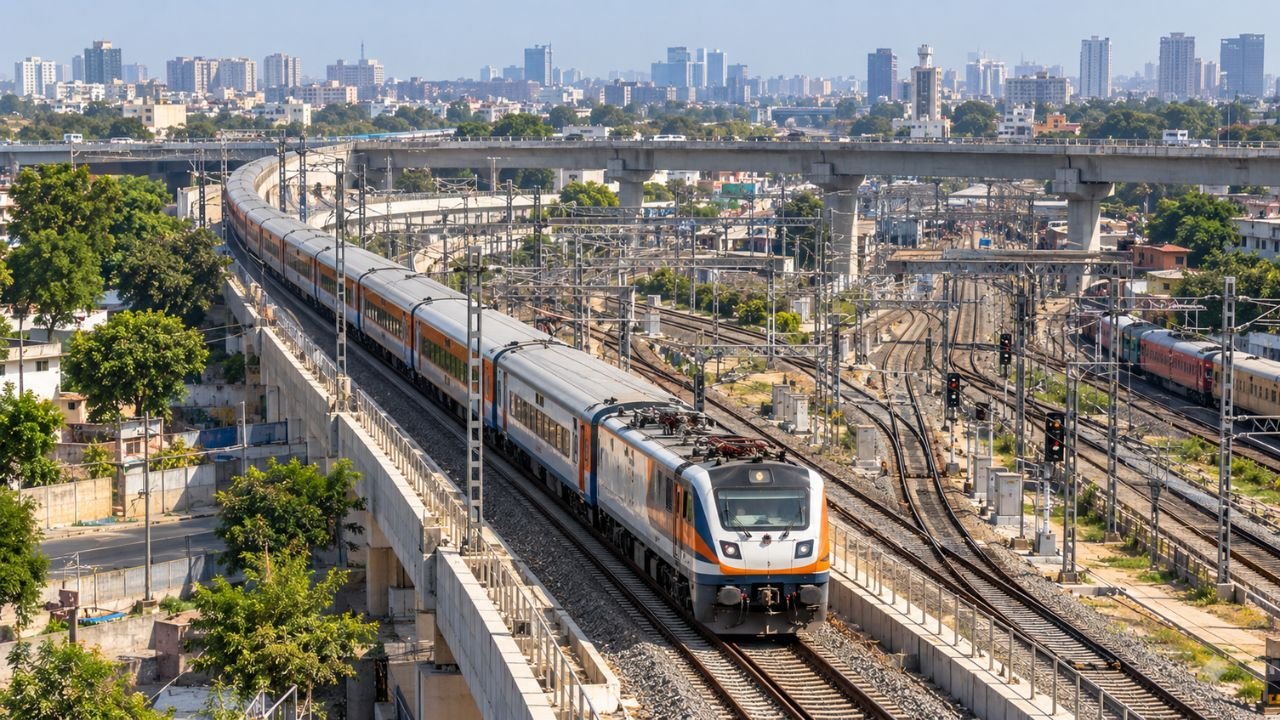
The Ahmedabad Railway Y-Connectivity Project is a newly completed railway infrastructure upgrade executed by the Western Railway zone. Built at a cost of over ₹15 crore, the project includes a strategic 1-kilometre-long chord line connecting three major railway hubs of Ahmedabad: Sabarmati, Asarva and Kalupur (Ahmedabad Junction). The new connection is designed to address a long-standing operational bottleneck by creating a direct link between Asarva and the Sabarmati A cabin. One of its major operational benefits is that trains on certain routes can avoid entering Kalupur station only to reverse their engines before continuing their journey. This article explains how the project works, what it changes and why it matters for Ahmedabad’s railway network.
New Railway Connection Links Three Major Hubs
The project provides a direct railway connection between the Asarva and Sabarmati A cabin areas. This creates an alternative movement route for trains travelling between North Gujarat or Rajasthan and the Saurashtra region. Previously, trains on these routes had to enter the heavily congested Kalupur main station for engine reversal before continuing their journey. The new track allows these routes to bypass Kalupur, which means trains can move more smoothly without adding pressure on the main terminal. With a length of approximately 1 kilometre and an investment of more than ₹15 crore, the project focuses on improving railway operations through a shorter and more direct connection.
Up to 45 Minutes of Travel Time Can Be Saved
One of the key benefits of the Y-Connectivity Project is the elimination of the engine reversal process. By avoiding the need to enter Kalupur for this operational requirement and reducing congestion-related delays, the project can cut overall travel time by up to 45 minutes per train. This time saving is particularly connected with trains that previously needed to enter Kalupur before changing their direction of movement and continuing towards their destination. For passengers travelling on these routes, the benefit is a faster and more predictable journey, while for the railway network, it means better use of existing tracks and schedules.
Kalupur Station Gets Relief From Additional Traffic
The new railway connection also helps reduce pressure on Ahmedabad Junction (Kalupur). Bypassing Kalupur for the relevant routes frees up critical platform space and track capacity at the city’s main terminal. This can allow the railway network to handle more trains more smoothly. The project therefore serves not only as a new track connection but also as an operational solution for reducing unnecessary train movement through the main station. With fewer trains entering Kalupur just for engine reversal, the station can focus its capacity on trains that genuinely need to stop there.
Fuel and Energy Efficiency
The project is also expected to provide fuel and energy benefits through shorter routes and the elimination of engine idling during reversals. Earlier, trains requiring engine reversal had to spend additional operational time at the station. With the new connection, the shorter route and zero engine idling time during reversals result in substantial diesel and energy savings. This makes operational efficiency one of the important features of the new railway connection. In the long run, these savings can contribute to lower operating costs and a more sustainable railway system.
Advanced Signalling and Technical Infrastructure
The Y-Connectivity Project includes a complete structural overhaul with modern railway signalling infrastructure. The deployment includes non-interlocking work, modern electronic interlocking and advanced signalling systems designed to ensure high-speed safety. The technical specifications include approximately 1 kilometre of new track constructed with an investment of ₹15+ crore. These signalling and structural improvements form an important part of the project’s operational setup and are meant to support safe and efficient train movement once the track opens for regular operations.
Civil Work Completed, Safety Trials Underway
The civil and technical work for the project is fully complete. The Commissioner of Railway Safety (CRS) is conducting high-speed trials before the track is formally opened for regular passenger and freight operations. The final safety clearance will be required before regular operations begin on the newly constructed connection. This stage is important because it confirms that the track, signalling and structural systems meet the required safety standards before trains are allowed to run on the new route.
Part of Ahmedabad’s Wider Railway Infrastructure Transformation
The Y-Connectivity Project is presented as one component of a broader transformation of Ahmedabad’s transit infrastructure. Several other railway infrastructure projects are also highlighted alongside it.
Kalupur Station Redevelopment
Kalupur Station is planned for a ₹2,400 crore world-class overhaul aimed at creating a Multi-Modal Transport Hub (MMTH). The redevelopment is described as featuring a massive 17-storey tower connecting conventional rail, the Ahmedabad Metro and the upcoming Mumbai-Ahmedabad Bullet Train.
Chandkheda Road Terminal
Chandkheda Road Terminal is being developed as a satellite terminal to further divert traffic away from Kalupur. The project is expected to save an additional 30 to 40 minutes for Saurashtra-bound travellers by providing another option for managing railway traffic.
Amrit Station Upgrades
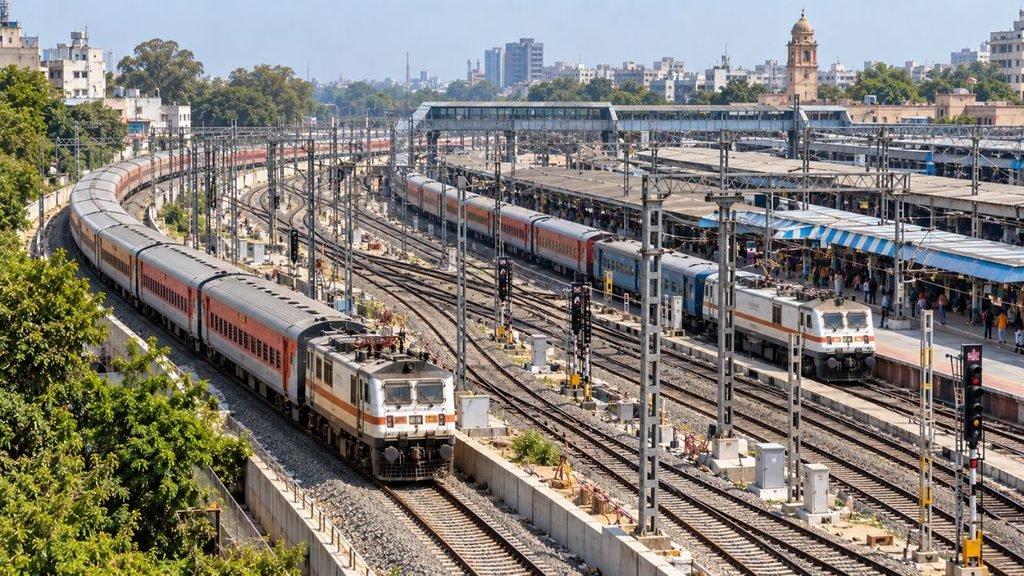
Stations including Asarva, Sabarmati, Maninagar and Chandlodia are being modernised under the Amrit Bharat scheme. These stations are being developed to function as high-capacity satellite hubs as part of the wider railway infrastructure changes.
What the Y-Connectivity Project Changes
| Project Feature | Details |
|---|---|
| Project | Ahmedabad Railway Y-Connectivity Project |
| Railway Zone | Western Railway |
| New Track Length | Approximately 1 kilometre |
| Investment | Over ₹15 crore |
| Main Connection | Asarva to Sabarmati A cabin |
| Major Railway Hubs Linked | Sabarmati, Asarva and Kalupur |
| Major Operational Benefit | Avoids engine reversals |
| Time Saving | Up to 45 minutes per train |
| Station Benefit | Reduces pressure on Kalupur |
| Energy Benefit | Diesel and energy savings |
| Signalling | Modern electronic interlocking and advanced signalling |
| Current Status | Civil and technical work completed |
| Next Step | CRS high-speed trials and final safety clearance |
What Passengers and Commuters Need to Know
For passengers and regular commuters, the Ahmedabad Railway Y-Connectivity Project is expected to bring faster journeys on routes that previously required engine reversal at Kalupur. Trains travelling between North Gujarat or Rajasthan and the Saurashtra region will benefit the most, with time savings of up to 45 minutes per train. Kalupur station will also see less unnecessary traffic, which can improve the experience for passengers boarding or alighting there. Once the CRS high-speed trials are completed and safety clearance is granted, the track will be opened for regular passenger and freight operations. Until then, the project remains in its final safety testing stage.
Conclusion
The Ahmedabad Railway Y-Connectivity Project adds a 1-kilometre railway chord line connecting the Sabarmati, Asarva and Kalupur railway network. Built at a cost of over ₹15 crore, it is designed to eliminate engine reversals, save up to 45 minutes per train, reduce pressure on Kalupur station and support fuel and energy efficiency. The project is currently undergoing high-speed trials by the Commissioner of Railway Safety before the track is formally opened for regular passenger and freight operations. Once cleared, it will become an important part of Ahmedabad’s growing railway infrastructure.
Frequently Asked Questions
Q1. What is the Ahmedabad Railway Y-Connectivity Project?
A1. It is a Western Railway infrastructure project that adds a 1-kilometre chord line connecting Sabarmati, Asarva and Kalupur, allowing certain trains to bypass Kalupur and avoid engine reversals.
Q2. How much travel time can be saved with this project?
A2. The project can save up to 45 minutes per train by eliminating the engine reversal process and reducing congestion-related delays.
Q3. Which railway hubs are connected by the new chord line?
A3. The new track connects the Asarva and Sabarmati A cabin areas, linking three major hubs: Sabarmati, Asarva and Kalupur (Ahmedabad Junction).
Q4. What is the current status of the Y-Connectivity Project?
A4. The civil and technical work is fully complete, and the Commissioner of Railway Safety is conducting high-speed trials before the track is opened for regular passenger and freight operations.
Q5. What other railway projects are part of Ahmedabad’s wider transformation?
A5. Alongside the Y-Connectivity Project, the Kalupur Station redevelopment, Chandkheda Road Terminal and Amrit Bharat station upgrades at Asarva, Sabarmati, Maninagar and Chandlodia are part of the broader railway infrastructure transformation in Ahmedabad.