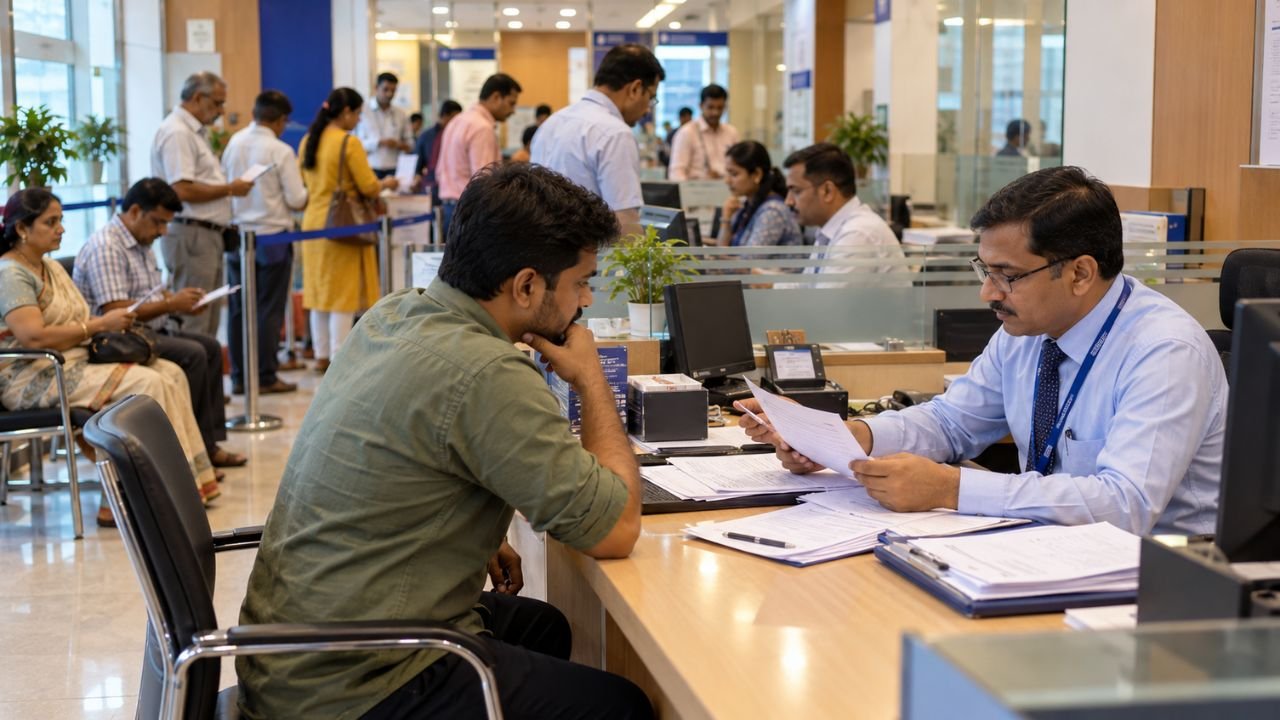
The GRM (Grievance Redressal Module) Portal is a centralized online system launched by the Ministry of Home Affairs (MHA), Government of India, and operated under the NCRP-CFCFRMS framework. The portal was introduced to streamline and speed up the process of unfreezing bank accounts or removing lien markings when accounts have been restricted because of cybercrime investigations or financial fraud complaints. However, the account holder does not directly raise the grievance online. The process begins at the physical bank branch where the account is maintained. From there, the case moves through a structured workflow involving bank officials and the investigating officer handling the original cyber complaint.
Who Handles the GRM Process?
The GRM process involves the account holder, bank officials and the investigating officer handling the relevant cyber complaint. Each party has a defined role, and the workflow depends on coordination between them.
| Entity | Primary Role |
|---|---|
| Account Holder | Cannot directly log in or raise a grievance; must visit the physical bank branch |
| Bank Branch / Manager | Verifies identity through KYC and registers the grievance on the internal portal |
| Investigating Officer (IO) | Reviews the submitted proof and decides whether the account can be unfrozen |
The process therefore moves from the bank branch to the investigating officer through the internal GRM system. The account holder’s role is limited to providing documents and identity proof, while the bank and the IO handle the technical and legal parts of the resolution.
Step 1: Visit Your Bank Branch
When an account is placed under a debit freeze or hold, the account holder must visit the physical home branch where the account is maintained. The account holder cannot generate a Grievance ID independently online. This is an important point to remember, as many people assume the process can be started from home. The bank branch is the starting point for the GRM process, and no online self-service option exists for raising the initial grievance.
Step 2: KYC and Document Verification
The bank first verifies the identity of the account holder through standard KYC verification. The account holder must provide the necessary proof relating to the disputed transaction. The listed examples include:
- Invoices
- Chats
- Legitimate source-of-fund documentation
These documents are submitted as evidence connected with the disputed transaction. The stronger the documentation, the easier it becomes for the bank and the investigating officer to assess whether the freeze or lien should be removed. Without proper proof, the case may face delays or rejection at a later stage.
Step 3: Grievance Registration and ID Generation
Once the bank is satisfied with the submitted proof, the Bank Manager or Nodal Officer logs into the internal MHA Grievance Redressal Portal. The bank then submits the account holder’s data to generate a unique Grievance ID, also called the Case ID. This ID is generated through the internal portal after the bank registers the grievance. The Grievance ID becomes the reference number for tracking the case, and it is used by both the bank and the investigating officer throughout the resolution process.
Step 4: Case Routed to the Investigating Officer
After registration, the portal automatically routes the case and submitted documents to the backend dashboard of the specific Investigating Officer (IO) handling the original cyber complaint. The investigating officer then receives the case and supporting documents for review. This creates a workflow between the bank and law enforcement for resolving the grievance. The routing is handled automatically by the system, which means the account holder does not need to separately approach the investigating officer or the cyber cell at this stage.
Step 5: Document Review and Investigation
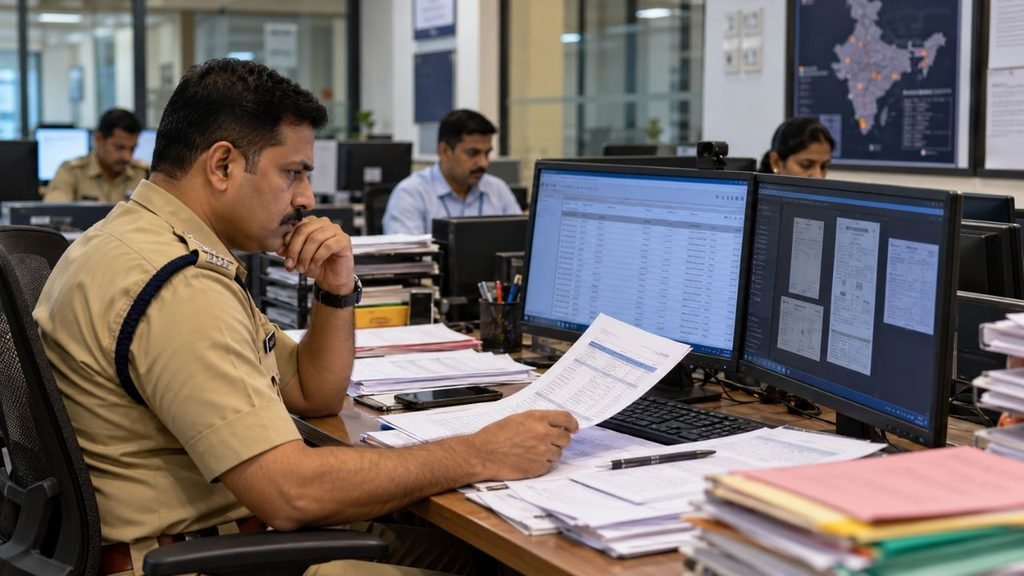
The Investigating Officer reviews the available information connected with the case. The review includes:
- Electronic movement of funds
- Bank transaction statements
- Submitted evidence
In some cases, the portal may notify the account holder if a video conference is required or bypassed. The investigation and document review determine whether the request to remove the freeze or lien can be approved. During this stage, the IO checks whether the money in the account came from a legitimate source and whether the transaction records match the documents provided by the account holder.
Step 6: Final Resolution
The process reaches its final stage after the Investigating Officer reviews the case. There are two possible outcomes described in the GRM process.
If the Request Is Approved
If the request is approved, the Investigating Officer updates the portal status to “Approved.” A safe-to-unfreeze instruction is then electronically sent back to the bank. The bank subsequently removes the lien or freeze from the account.
If the Request Is Rejected
If the source of money remains suspicious or the submitted documents are insufficient, the Investigating Officer can reject the request. In that situation, the account holder needs to seek a legal remedy through the court or contact the cyber cell directly.
GRM Portal Process at a Glance
The complete workflow can be understood in six steps:
- Visit the physical bank branch
- Complete KYC and submit supporting documents
- Bank registers the grievance and generates a Grievance ID
- Case is routed to the Investigating Officer
- IO reviews transactions and submitted evidence
- Request is approved or rejected
If approved, the bank receives the electronic safe-to-unfreeze instruction and removes the lien or freeze. If rejected, the account holder may need to seek a legal remedy through the court or contact the cyber cell directly.
What the GRM Portal Is Designed to Address
The GRM Portal was introduced specifically to streamline the process involving bank accounts restricted because of cybercrime investigations or financial fraud complaints. Its stated purpose is to make the process of unfreezing accounts or removing lien markings quicker through a structured workflow involving banks and investigating officers. The account holder’s role begins with visiting the bank branch, completing identity verification and providing evidence related to the disputed transaction. By bringing the bank and law enforcement onto a single digital platform, the portal reduces the need for repeated visits and manual follow-ups, making the resolution process more transparent and time-bound.
What Account Holders Need to Know
For anyone dealing with a frozen bank account or lien marking, the GRM Portal offers a clear path to resolution, but it requires patience and proper documentation. The first step is always to visit the home bank branch with KYC documents and proof related to the disputed transaction. Without proper evidence, the case is likely to face delays or rejection. Once the bank registers the grievance and generates a Grievance ID, the case moves to the investigating officer, and the account holder may need to wait for the review to be completed. If the request is approved, the bank will remove the freeze or lien. If rejected, the account holder should be prepared to approach the court or the cyber cell for further action. Keeping copies of all documents and the Grievance ID is advisable throughout the process.
Conclusion
The GRM Portal provides a structured process for handling grievances related to bank account freezes and lien markings connected with cybercrime investigations or financial fraud complaints. The process starts at the account holder’s physical bank branch, where KYC verification and document submission take place. The bank then registers the grievance and generates a unique Grievance ID before routing the case to the Investigating Officer. The IO reviews the electronic movement of funds, transaction statements and submitted evidence. If approved, an electronic safe-to-unfreeze instruction is sent to the bank, which removes the lien or freeze. If rejected because the source of money remains suspicious or the documents are insufficient, the account holder may need to seek a legal remedy through the court or contact the cyber cell directly.
Frequently Asked Questions
Q1. What is the GRM Portal?
A1. The GRM (Grievance Redressal Module) Portal is a centralized online system launched by the Ministry of Home Affairs and operated under the NCRP-CFCFRMS framework to handle bank account freezes and lien removal related to cybercrime investigations.
Q2. Can account holders directly raise a grievance on the GRM Portal?
A2. No, account holders cannot directly log in or raise a grievance online. They must visit their physical home bank branch, where the bank verifies their identity and registers the grievance on their behalf.
Q3. What documents are needed to start the GRM process?
A3. Account holders need to provide KYC documents and proof related to the disputed transaction, such as invoices, chats or legitimate source-of-fund documentation.
Q4. How is the case resolved after registration?
A4. After the bank generates a Grievance ID, the case is routed to the Investigating Officer, who reviews the electronic movement of funds, bank statements and submitted evidence. If approved, a safe-to-unfreeze instruction is sent to the bank.
Q5. What happens if the GRM request is rejected?
A5. If the source of money remains suspicious or the documents are insufficient, the Investigating Officer can reject the request. In that case, the account holder needs to seek a legal remedy through the court or contact the cyber cell directly.