Solex Energy Limited has secured multiple significant domestic orders for high-efficiency solar modules. The company’s full market announcement on October 6, 2026, confirmed a cumulative order inflow of ₹194.14 crore across two primary contracts. The new orders include advanced TOPCon bifacial solar PV modules, with contracts awarded both to Solex Energy Limited and its wholly-owned subsidiary, Solex Green Energy Private Limited. This development comes at a time when the company is looking to strengthen its position in India’s growing solar manufacturing sector, and the orders are set to be executed within a relatively short timeframe at the company’s facility near Surat.
₹194.14 Crore Order Breakdown
The total order inflow of ₹194.14 crore is divided between two major contracts, each with its own scope and delivery schedule. Together, they represent a strong vote of confidence in Solex Energy’s manufacturing capabilities and its ability to deliver high-efficiency solar modules for domestic projects.
₹180.98 Crore TOPCon Bifacial Glass-to-Glass Order
The largest contract, worth ₹180.98 crore, has been awarded to Solex Green Energy Private Limited, a wholly-owned subsidiary of Solex Energy. The domestic work order involves the supply of advanced TOPCon Bifacial Glass-to-Glass (G2G) Solar PV modules. This order forms the bulk of the total inflow and reflects the growing demand for high-efficiency bifacial modules in Indian solar projects. The Glass-to-Glass construction is known for its durability and long-term performance, making it suitable for large utility-scale installations.
₹13.16 Crore 620Wp TOPCon Bifacial Order
The second contract, valued at ₹13.16 crore, has been awarded directly to Solex Energy Limited. This order covers the supply of 620Wp TOPCon Bifacial solar modules. Earlier reports on October 5 had combined a separate ₹75.96 crore contract with the ₹13.16 crore contract to arrive at an ₹89.12 crore figure. This came before the larger ₹181 crore subsidiary order was officially finalised and announced. Now that both contracts are confirmed, the total order inflow stands at ₹194.14 crore.
Solar Modules to Be Manufactured Near Surat
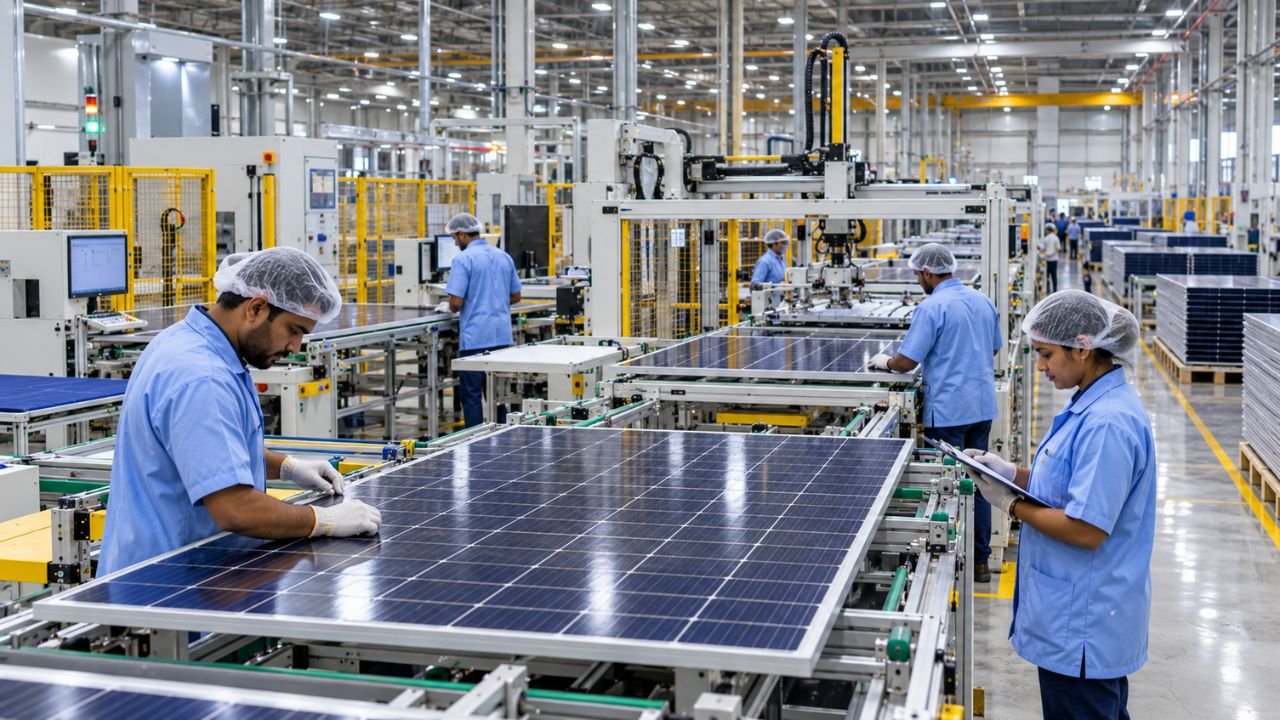
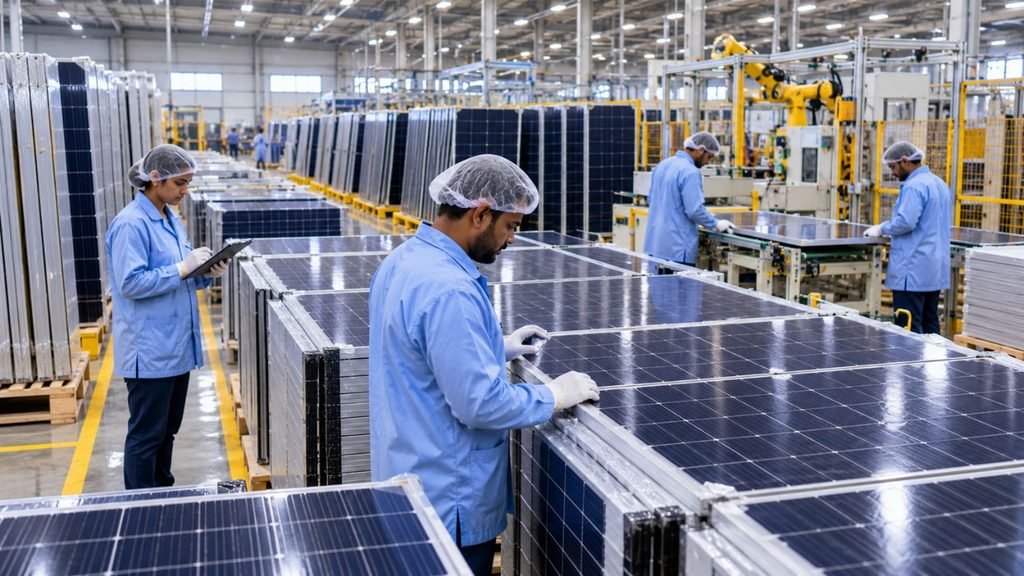
All the modules covered by these contracts will be manufactured at Solex’s Industry 4.0-enabled automated solar module plant in Tadkeshwar, on the outskirts of Surat, Gujarat. The facility has an expanded production capacity of 4 GW. The manufacturing facility is therefore the production base for the high-efficiency solar modules covered by the newly secured domestic orders. The location near Surat also gives the company logistical advantages in terms of transporting modules to different parts of the country.
N-Type TOPCon Bifacial Technology
The contracts centre around N-Type TOPCon (Tunnel Oxide Passivated Contact) bifacial modules. This high-efficiency technology captures sunlight on both sides of the panel, allowing the modules to generate electricity from light received on both surfaces. The technology is intended to optimise real estate and output for large utility solar farms. By generating power from both the front and rear sides of the panel, these modules can produce more electricity from the same amount of land, which is a major advantage for large-scale solar projects where space and efficiency are key concerns.
Modules Listed Under MNRE Approved List
Solex’s modules are enlisted under the Indian Ministry of New and Renewable Energy’s (MNRE) Approved List of Models and Manufacturers (ALMM). The listing provides compliance for the modules in domestic public and private sector projects. This approval is important because it allows the company’s modules to be used in government-backed solar projects and ensures that they meet the required quality and performance standards set by the ministry.
Delivery Schedule for the New Orders
The module supply agreements have been fast-tracked for immediate near-term deployment. The parent company’s portion of the order is scheduled for completion by November 2026. The subsidiary’s order volume is scheduled for completion by January 2027. This creates a relatively near-term execution schedule for the newly secured solar module contracts. The tight timelines suggest that the company is confident in its production capacity and supply chain, and that it expects to deliver the modules without significant delays.
Impact on Solex Energy’s Business
The rapid turnaround of the contracts is described as favourable for cash rotation following a monsoon-disrupted Q1 FY27. Delivery delays during that period temporarily caused net profit to fall by 66.59% to ₹8.25 crore. The newly secured orders add to the company’s existing order pipeline and provide additional near-term module supply work. The quick execution of these contracts is expected to help the company recover from the slowdown caused by the monsoon period and strengthen its financial position in the coming quarters.
Order Book Crosses ₹3,400 Crore
As of mid-2026, Solex Energy’s total outstanding order book stood at over ₹3,400 crore. The latest orders further strengthen this pipeline. The company also has a longer-term roadmap under which it intends to deploy ₹4,000 crore through FY30 to expand its cell and Battery Energy Storage Systems (BESS) spaces. This long-term plan shows that the company is not just focused on short-term orders but is also preparing for larger growth in the solar and energy storage sectors over the coming years.
Solex Energy’s Latest Solar Order Inflow
Solex Energy’s latest domestic contracts represent a combined order inflow of ₹194.14 crore, with the majority coming from the ₹180.98 crore TOPCon Bifacial Glass-to-Glass solar PV module order awarded to its wholly-owned subsidiary. The parent company separately secured the ₹13.16 crore order for 620Wp TOPCon Bifacial solar modules. With manufacturing taking place at the company’s 4 GW facility in Tadkeshwar near Surat, the orders are scheduled for near-term execution, with the parent company’s portion due by November 2026 and the subsidiary’s volume by January 2027. The orders strengthen Solex Energy’s position in India’s solar module market and add momentum to its growing order book.
Conclusion
Solex Energy has secured ₹194.14 crore in domestic solar module orders, split between a ₹180.98 crore contract awarded to its subsidiary Solex Green Energy Private Limited and a ₹13.16 crore contract awarded directly to the parent company. The modules will be manufactured at the company’s 4 GW facility in Tadkeshwar near Surat, using advanced N-Type TOPCon bifacial technology. The parent company’s portion is due by November 2026, while the subsidiary’s volume is due by January 2027. With an order book exceeding ₹3,400 crore and a long-term roadmap to deploy ₹4,000 crore through FY30, Solex Energy is positioning itself strongly in India’s solar manufacturing and energy storage sectors.
Frequently Asked Questions
Q1. What is the total value of solar module orders secured by Solex Energy?
A1. Solex Energy has secured a total order inflow of ₹194.14 crore, split between a ₹180.98 crore contract awarded to its subsidiary Solex Green Energy Private Limited and a ₹13.16 crore contract awarded directly to the parent company.
Q2. What type of solar modules are covered under these orders?
A2. The orders cover advanced N-Type TOPCon Bifacial Glass-to-Glass (G2G) solar PV modules and 620Wp TOPCon Bifacial solar modules, which generate electricity from both sides of the panel.
Q3. Where will these solar modules be manufactured?
A3. The modules will be manufactured at Solex’s Industry 4.0-enabled automated solar module plant in Tadkeshwar, on the outskirts of Surat, Gujarat, which has an expanded production capacity of 4 GW.
Q4. What is the delivery schedule for the new orders?
A4. The parent company’s portion of the order is scheduled for completion by November 2026, while the subsidiary’s order volume is scheduled for completion by January 2027.
Q5. What is Solex Energy’s current order book position?
A5. As of mid-2026, Solex Energy’s total outstanding order book stood at over ₹3,400 crore. The company also plans to deploy ₹4,000 crore through FY30 to expand its cell and Battery Energy Storage Systems (BESS) spaces.