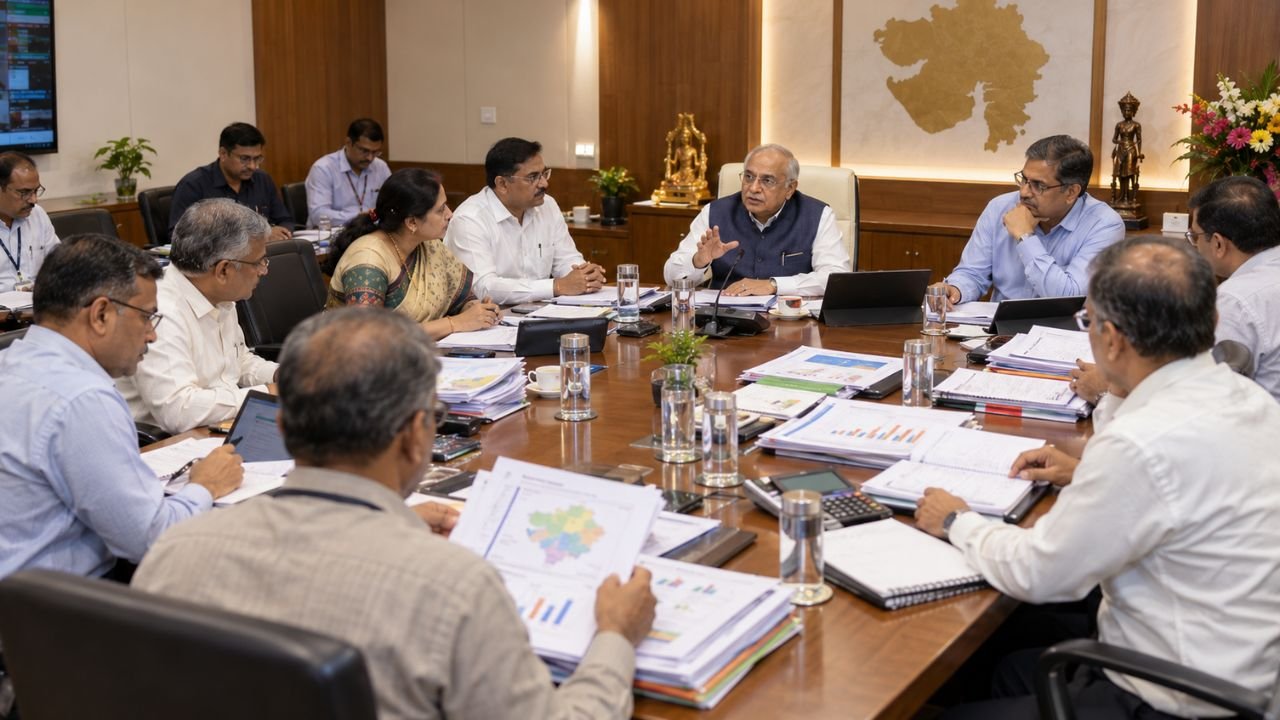
The Gujarat State Finance Department has initiated department-wise budget planning meetings during the festive week of Navratri, marking the formal beginning of the state’s budget formulation cycle for the upcoming financial periods. These meetings bring together financial advisers and the heads of major departments to examine spending requirements, assess proposals and establish financial priorities. The planning exercise aims to ensure that departmental requirements are carefully evaluated before the budget is finalised. The discussions focus on reviewing ongoing expenditure, assessing new and existing welfare schemes, controlling financial liabilities and aligning allocations with Gujarat’s development goals. With the state preparing for its next budget cycle, these meetings set the stage for a structured and outcome-focused approach to financial planning.
Core Objectives of the Budget Planning Meetings
One of the main priorities is reviewing current expenditure to prevent unnecessary budget spillovers and project delays. Departments are expected to examine their existing financial commitments and identify areas where spending needs to be assessed more carefully. The Finance Department also intends to evaluate departmental proposals based on realistic, practical and outcome-oriented objectives. Proposals for ongoing or new welfare schemes are expected to demonstrate clear purposes and align with the state’s priorities.
Another important focus is controlling deficits and liabilities. The department aims to discourage open-ended financial demands that could create long-term obligations for the state government. At the same time, financial allocations will be structured to support Gujarat’s core development objectives. By keeping a tight check on spending proposals, the Finance Department is trying to ensure that the state’s financial resources are used where they can deliver the greatest impact.
Key Sectors Likely to Receive Budgetary Attention
The state’s budget planning process covers several priority sectors, including social infrastructure, agriculture, rural development, urban development and capital creation. Each sector has specific focus areas that will shape how funds are allocated in the coming budget.
| Sector | Core Focus Areas |
|---|---|
| Social Infrastructure | Expanding funding for Education and Health and Family Welfare departments to improve public service delivery |
| Agriculture and Rural Growth | Strengthening farm mechanisation, natural farming practices and rural housing initiatives |
| Urban Development | Prioritising infrastructure development, smart city layouts and structural connectivity to accommodate rapid urban growth |
| Capital Creation | Emphasising durable physical assets, including roads, buildings and water management projects, over populist spending |
These focus areas reflect the importance of balancing social services, rural development, urban infrastructure and long-term asset creation during budget preparation. The emphasis on capital creation suggests that the state is looking to build durable assets that will continue to serve citizens for years, rather than focusing only on short-term spending measures.
Gujarat Budget Preparation: Administrative Timeline
The budget formulation process follows a defined administrative timeline, beginning with departmental consultations and progressing towards the presentation of the final budget. Each stage has a specific purpose, and the entire process is designed to move smoothly from planning to final approval.
October to November: Departmental Consultations
During this phase, individual departments present and defend their budget requirements. They also outline projected beneficiary databases as part of the planning process. This is the stage where departments make their case for additional funds and explain how the money will be used to achieve specific goals.
December: Prioritisation and Expenditure Ceilings
In December, the Finance Department aligns departmental submissions with estimated tax revenues and establishes final expenditure ceilings. This stage helps determine how available financial resources will be distributed among competing priorities. It is one of the most important steps in the budget cycle because it sets the limits within which all departments must operate.
January: Draft Compilation
January is scheduled for compiling the draft budget, finalising the budget speech and preparing official statistical data packages. The draft budget brings together all the decisions made in the earlier stages and gives a complete picture of the state’s financial plan for the coming year.
February: Presentation Before the State Legislative Assembly
In February, the Finance Minister presents the final budget before the State Legislative Assembly for debate and voting. This marks the final stage of the outlined budget preparation timeline. The budget then goes through the legislative process before becoming the official financial plan for the state.
Conclusion
The beginning of department-wise meetings marks an important stage in Gujarat Budget Planning 2027. The discussions are designed to review spending, assess departmental proposals, control long-term liabilities and direct funding towards priority development sectors. With consultations planned from October to November, followed by expenditure prioritisation in December, draft compilation in January and legislative presentation in February, the process follows a structured administrative schedule. The focus remains on aligning departmental requirements with available resources and Gujarat’s broader development goals, ensuring that the state’s financial planning is both practical and forward-looking.
Frequently Asked Questions
Q1. What is Gujarat Budget Planning 2027?
A1. It is the formal budget formulation cycle of the Gujarat government, which begins with department-wise meetings initiated by the State Finance Department to review expenditure, assess proposals and set financial priorities.
Q2. When do the budget planning meetings take place?
A2. The department-wise budget planning meetings began during the festive week of Navratri, with consultations running from October to November, followed by prioritisation in December, draft compilation in January and presentation in February.
Q3. What are the core objectives of these budget planning meetings?
A3. The main objectives are reviewing current expenditure to prevent spillovers, evaluating departmental proposals based on realistic and outcome-oriented goals, controlling deficits and liabilities and aligning allocations with Gujarat’s development priorities.
Q4. Which sectors are likely to receive budgetary attention?
A4. Key sectors include social infrastructure, agriculture and rural growth, urban development and capital creation, with focus on education, health, farm mechanisation, natural farming, rural housing, smart city layouts and durable physical assets.
Q5. What is the administrative timeline for Gujarat’s budget preparation?
A5. The process begins with departmental consultations from October to November, followed by prioritisation and expenditure ceilings in December, draft compilation in January and presentation before the State Legislative Assembly in February.