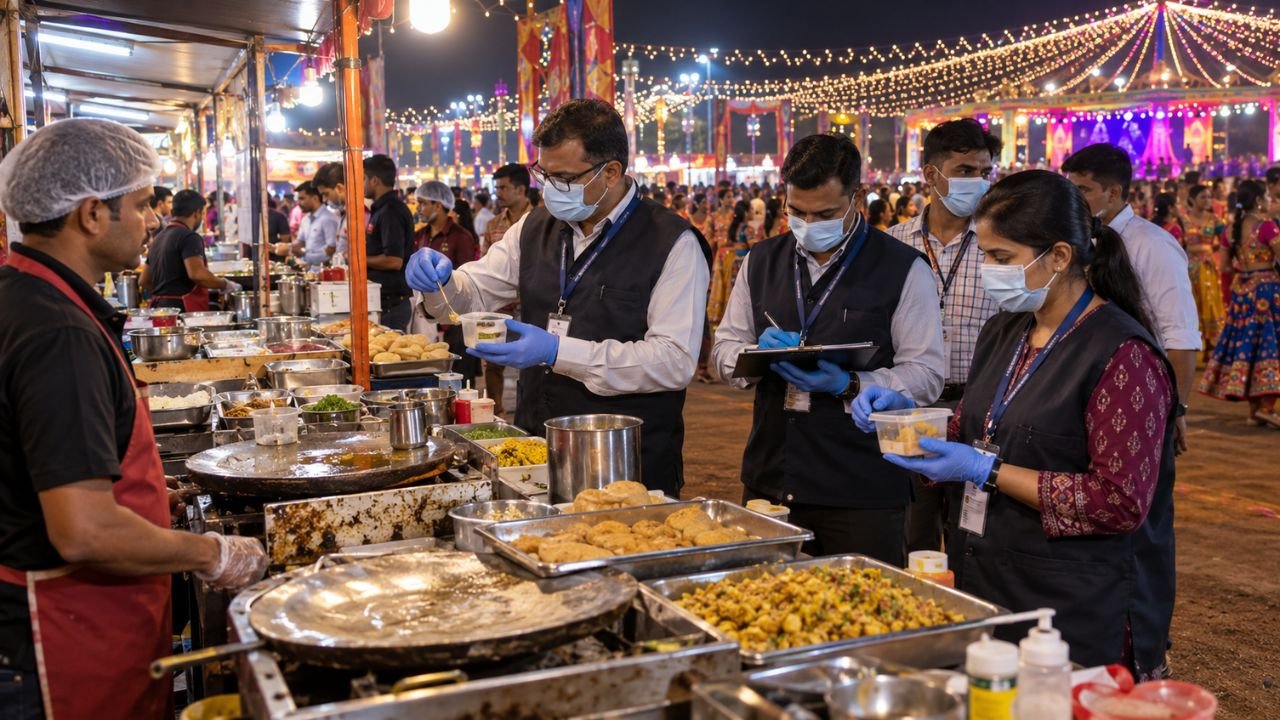
The Ahmedabad Mehsana Food Safety Drive has intensified ahead of Navratri and Diwali, with municipal bodies and health departments increasing inspections to prevent adulterated and unhygienic food from reaching consumers. Following directives from the Food Safety and Standards Authority of India (FSSAI), authorities are conducting checks at food stalls and vendor locations serving large festive crowds. The operations include inspections at Garba venues in Ahmedabad and targeted raids against vendors in Mehsana suspected of using adulterated cooking oil. These measures form part of a wider statewide effort to address food safety concerns during the festive season, when demand for street food and fried snacks rises sharply across Gujarat.
Ahmedabad Food Safety Drive: 148 Food Stalls Inspected
The Ahmedabad Municipal Corporation’s (AMC) Health and Food Department launched extensive night-time inspections at Garba venues on the first night of Navratri. The drive focused on checking food stalls, ensuring compliance with registration requirements and conducting preliminary food safety tests. Officials inspected 148 food stalls across 15 major Garba venues in Ahmedabad. The inspections aimed to ensure that vendors operating at busy festival locations followed the required food safety guidelines. Night-time checks were particularly important because Garba venues operate late into the night, and food stalls at these locations serve thousands of hungry attendees during peak festival hours.
41 Unregistered Food Stalls Receive FSSAI Registrations
Under AMC guidelines, every small vendor and food stall operator must hold an individual licence. During the initial inspection drive, officials identified 41 unregistered food stalls. The authorities issued FSSAI registrations directly at the sites to regularise their operations. This on-the-spot registration process allowed officials to address missing documentation while carrying out inspections at the venues. Instead of shutting down unregistered stalls outright, the AMC took a practical approach by bringing them into the formal system, which helps both vendors and consumers. Registered stalls are easier to monitor, and consumers get an added layer of assurance about the food they are buying.
41 Food Samples Collected for Testing
Food safety teams also collected 41 food samples during the operation. Officials conducted 35 preliminary, on-the-spot tests using mobile food testing vans. All 35 food items tested during the initial checks cleared the preliminary testing parameters. These inspections formed part of the broader effort to monitor food quality at Garba venues and protect public health during the festive season. The use of mobile testing vans allowed officials to get quick results on the spot, which made the inspection process faster and more effective than sending every sample to a distant laboratory.
Mehsana Food Safety Crackdown Targets Adulterated Cooking Oil
At the same time, the Food Safety Department in Mehsana carried out a targeted operation against vendors serving festival crowds. The action followed information about possible health violations at Navratri venues. Authorities conducted surprise checks at stalls preparing fried snacks and other festive food items. During the operation, officials detected and seized large quantities of adulterated cooking oil that was unfit for human consumption. Fried snacks are a staple at Navratri venues, and the use of substandard oil in their preparation can pose serious health risks to people consuming them, especially those dancing for long hours.
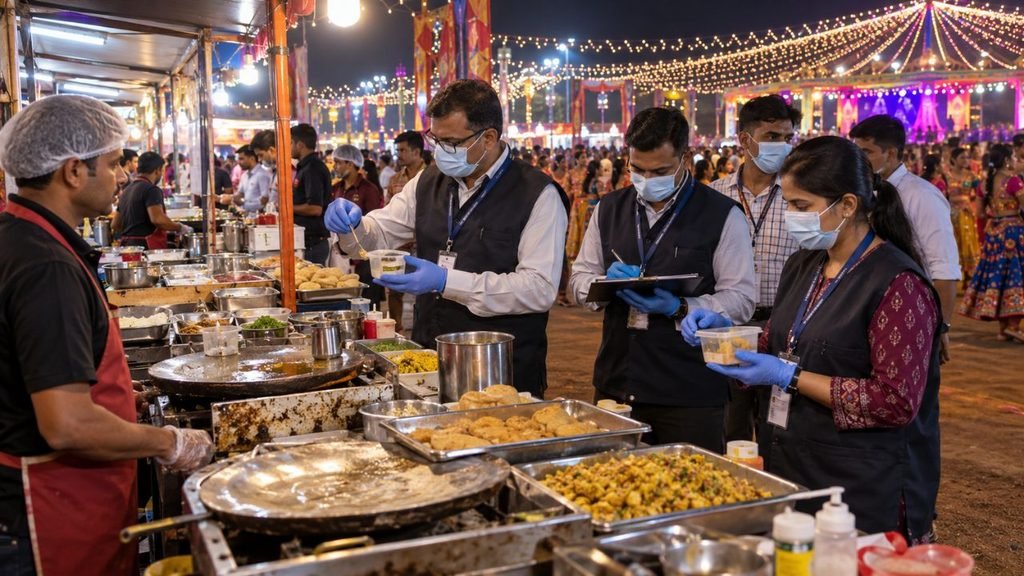
Adulterated Cooking Oil Seized and Destroyed
According to the inspection details, vendors were found using substandard cooking oil that posed an immediate health risk to Garba dancers and other festival attendees. The enforcement teams destroyed the poor-quality oil on the spot to prevent it from being reused. Statutory samples were also forwarded to state laboratories for formal chemical profiling. The operation focused on preventing unsafe cooking ingredients from being used in food prepared for large numbers of people during the festive season. Destroying the oil immediately ensured that it could not be reused at another stall or sold to unsuspecting buyers.
Gujarat Expands Food Safety Enforcement
The action in Ahmedabad and Mehsana is part of a broader state-directed initiative to strengthen food safety enforcement. The State Food and Drug Control Administration (FDCA) has also been conducting raids on illegal manufacturing setups in other major cities, including Surat and Patan. These operations have targeted adulterated ghee, inexpensive blended waste oils and unauthorised food colourings before they could reach festive markets. The wider campaign reflects a zero-tolerance approach towards food safety violations during the period of increased festival-related demand. By covering multiple cities and different types of food products, the FDCA is sending a strong message that food safety rules will be strictly enforced during the festive season.
Conclusion
The Ahmedabad Mehsana Food Safety Drive combines food stall inspections, on-site registration, preliminary testing and targeted action against adulterated cooking oil. In Ahmedabad, officials inspected 148 food stalls across 15 Garba venues, issued registrations to 41 unregistered stalls and conducted 35 preliminary food tests. In Mehsana, authorities seized and destroyed cooking oil considered unfit for consumption and sent statutory samples for laboratory analysis. Together, these operations represent an intensified effort by Gujarat’s food safety authorities to monitor vendors and prevent unsafe food products from reaching consumers during Navratri and Diwali. For festival-goers, this means a safer food environment at Garba venues and festive markets across the state.
Frequently Asked Questions
Q1. What is the Ahmedabad Mehsana Food Safety Drive?
A1. It is an intensified food safety inspection campaign by municipal bodies and health departments in Ahmedabad and Mehsana to prevent adulterated and unhygienic food from reaching consumers during Navratri and Diwali.
Q2. How many food stalls were inspected in Ahmedabad during the drive?
A2. Officials inspected 148 food stalls across 15 major Garba venues in Ahmedabad. During the inspections, 41 unregistered stalls were given on-site FSSAI registrations.
Q3. What action was taken in Mehsana during the food safety drive?
A3. The Food Safety Department in Mehsana conducted surprise checks at stalls preparing fried snacks and seized large quantities of adulterated cooking oil unfit for human consumption. The oil was destroyed on the spot and statutory samples were sent to state laboratories.
Q4. How many food samples were collected and tested in Ahmedabad?
A4. Food safety teams collected 41 food samples and conducted 35 preliminary on-the-spot tests using mobile food testing vans. All 35 food items tested cleared the preliminary testing parameters.
Q5. Is the food safety drive limited to Ahmedabad and Mehsana?
A5. No, the drive is part of a broader state-directed initiative. The State Food and Drug Control Administration (FDCA) has also been conducting raids on illegal manufacturing setups in other cities, including Surat and Patan, targeting adulterated ghee, blended waste oils and unauthorised food colourings.