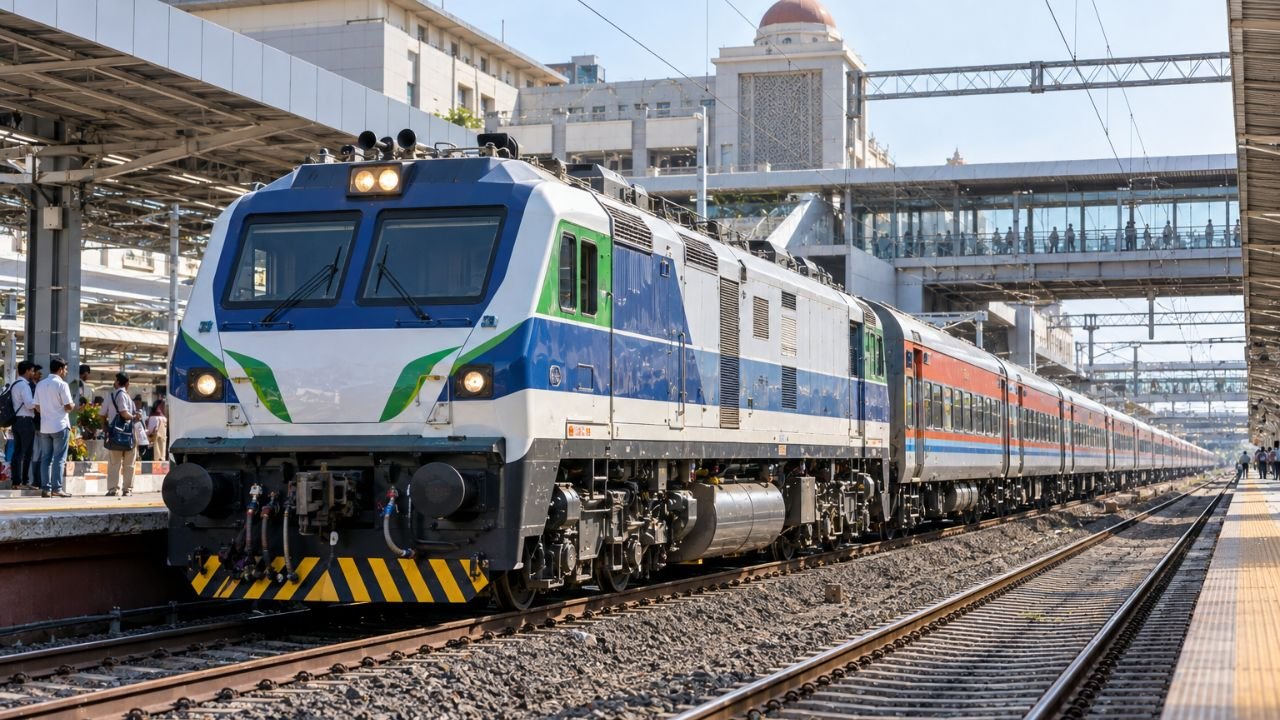
India’s first LNG powered train was inaugurated from Sabarmati Railway Station in Ahmedabad on September 27, 2026. The launch was part of a wider ₹1,472 crore package of railway and infrastructure projects in Gujarat focused on cleaner train operations, railway capacity and passenger safety. The new train uses a dual fuel system combining Liquefied Natural Gas and diesel. LNG can replace up to 40 percent of the diesel normally consumed by the engine, allowing the train to use an alternative fuel while continuing to operate with the existing railway network. This development represents a significant step in Indian Railways’ efforts to reduce its environmental impact while maintaining the reliability and efficiency of its existing operations.
India’s First LNG Diesel Dual Fuel Train
The new train is a dual fuel DEMU, or Diesel Electric Multiple Unit. Its power cars use Liquefied Natural Gas and diesel together. The train was converted locally at the Sabarmati Integrated Coaching Depot. Its dual fuel system is designed to reduce diesel consumption without requiring a complete overhaul of existing railway networks. The inaugural run was operated from Sabarmati Railway Station in Ahmedabad to Mahesana Junction. This approach allows Indian Railways to test and adopt cleaner fuel technology while maintaining the operational familiarity of its existing fleet. The conversion at the Sabarmati depot also demonstrates the capability of local railway workshops to undertake advanced technological upgrades.
LNG Can Replace Up to 40 Percent of Diesel
One of the key features of the new train is its ability to use LNG alongside diesel. The LNG system can replace up to 40 percent of the diesel typically consumed by the engine. This approach allows the train to use an alternative fuel while retaining its dual fuel operating capability. The technology is also intended to reduce the carbon footprint associated with railway operations. By using LNG as a partial substitute, the train maintains operational flexibility while contributing to environmental goals. This dual fuel approach is particularly important because it does not require a complete replacement of existing diesel infrastructure, making it a practical and cost effective solution for reducing emissions.
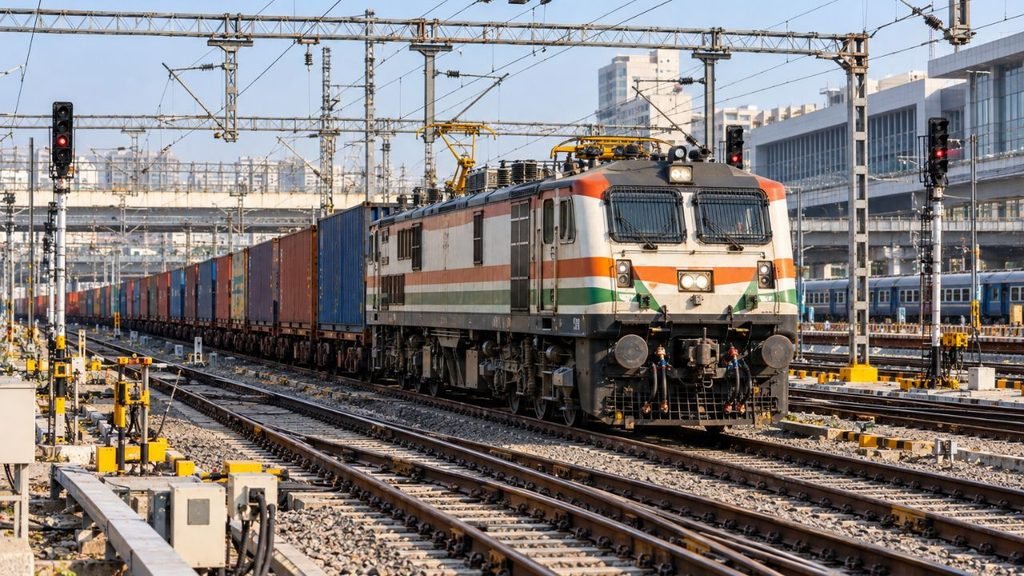
More Than 2,000 Kilometres of Field Trials
Safety testing was an important part of the train’s development. Before entering public passenger service, the train completed more than 2,000 kilometres of field trials. The trials were carried out to assess the operation of the dual fuel system and its safety before the train entered passenger service. The extensive testing period demonstrates Indian Railways’ commitment to ensuring passenger safety before introducing new technology into regular operations. This rigorous approach helps identify and resolve any technical issues before the train begins commercial service.
Financial and Environmental Benefits
The LNG dual fuel system has both financial and environmental benefits highlighted in the project details.
- Environmental Benefits: The system is described as reducing carbon dioxide, nitrogen oxides and particulate matter
- Financial Savings: The estimated financial saving for Indian Railways is around ₹11.9 lakh annually per power car
- Rake Level Savings: For an eight coach train rake, the estimated annual saving is approximately ₹23.9 lakh
- Basis of Savings: These figures are linked to the use of LNG in place of a portion of the diesel normally consumed by the train
The combination of environmental benefits and cost savings makes the LNG dual fuel approach an attractive option for Indian Railways’ long term sustainability goals.
₹1,472 Crore Railway Projects Launched in Gujarat
The LNG train launch was accompanied by several railway infrastructure projects with a combined value of ₹1,472 crore. The projects cover different areas of railway development, including locomotive maintenance, train safety, track capacity and signalling.
| Project | Financial Outlay | Purpose |
|---|---|---|
| WAG 12 Locomotive Maintenance Shed | ₹700 crore | Maintenance of up to 300 high horsepower electric freight locomotives |
| Kavach Anti Collision System | ₹411 crore | Deployment across 404 km of Ahmedabad Division |
| Sabarmati Sarkhej Line Doubling | ₹313.27 crore | 21 km track doubling for passenger transit and industrial connectivity |
| Automatic Block Signalling | ₹118.83 crore | Introduction across 122.57 km to increase route capacity |
₹700 Crore WAG 12 Locomotive Maintenance Shed
A WAG 12 locomotive maintenance shed is being developed at Sabarmati with a financial outlay of ₹700 crore. The facility is designed to maintain up to 300 high horsepower 12,000 HP electric freight locomotives. The project is also connected with freight transportation. One WAG 12 locomotive can pull cargo equivalent to approximately 600 trucks. This capacity can support the movement of goods and transportation requirements associated with Gujarat’s industries. The maintenance shed will play a crucial role in ensuring that high capacity locomotives remain operational and efficient.
₹411 Crore Kavach Anti Collision System
The Kavach anti collision system is another major project included in the railway infrastructure programme. The project has a financial outlay of ₹411 crore and is planned across 404 kilometres of the Ahmedabad Division. The sections specifically covered are Ahmedabad to Palanpur and Ahmedabad to Samakhiyali. The system is designed as an automatic train protection system, with the stated objective of reducing human error and preventing head on collisions. The Kavach system represents a significant upgrade in railway safety technology and demonstrates Indian Railways’ focus on passenger protection.
Sabarmati Sarkhej Railway Line Doubling
The Sabarmati Sarkhej railway line doubling project has a financial outlay of ₹313.27 crore. The project covers 21 kilometres of railway track and is scheduled for completion by March 2028. The additional track is intended to support faster passenger transit and improve connectivity with the Sarkhej Dholera industrial corridor. This project will help increase rail capacity on a busy section and support the growing industrial activity in the region.
Automatic Block Signalling Project
Another project in the package is automatic block signalling, which has a financial outlay of ₹118.83 crore. The system is being introduced across 122.57 kilometres. The sections mentioned include Sabarmati Kalol Bhandu Motidau and Sabarmati Sanand Jakhwada. The purpose of automatic block signalling is to reduce the safe distance intervals between running trains and increase overall route capacity. This project will help Indian Railways manage train movements more efficiently and increase the number of trains that can operate on existing tracks.
How the Railway Projects Work Together
The different projects address different requirements of the railway network.
- The LNG train introduces an alternative fuel system that combines LNG with diesel
- The WAG 12 maintenance shed supports electric freight locomotive maintenance
- The Kavach project focuses on automatic train protection and railway safety
- The Sabarmati Sarkhej line doubling project adds track capacity
- Automatic block signalling is designed to improve train movement and route capacity
Together, these projects cover fuel technology, freight operations, passenger safety, track infrastructure and railway signalling. Each project addresses a specific operational requirement while contributing to the overall modernization of the Ahmedabad division.
Railway Diesel Consumption and the 2030 Goal
The wider railway transition also includes a significant reduction in diesel consumption. Railway diesel consumption declined from 293 crore litres in 2015 to 108 crore litres in 2024 to 25. The long term objective mentioned in the project information is to achieve zero net diesel use by 2030. The LNG powered train represents one approach within this broader transition because it introduces LNG as an alternative fuel while continuing to use diesel through a dual fuel system.
What These Projects Mean for Railway Users
The projects cover several areas that can affect railway operations.
- The track doubling project is intended to increase railway capacity and support passenger movement
- Automatic block signalling is designed to improve train movement and route capacity
- The Kavach system focuses on train protection
- The LNG train introduces a different fuel technology for passenger railway operations
- The WAG 12 maintenance shed is focused on freight locomotive maintenance and capacity
As a result, the overall programme is not limited to one train or one type of railway technology. It covers multiple parts of the railway network.
Gujarat’s Railway Infrastructure Gets Multiple Upgrades
The September 27 launch brought together the LNG powered train and several railway infrastructure projects in Gujarat. The ₹1,472 crore package includes projects related to alternative fuel use, freight locomotive maintenance, automatic train protection, track doubling and signalling. The LNG train’s inaugural route from Sabarmati to Mahesana marks the introduction of the dual fuel technology into passenger service, while the other projects focus on improving different parts of the railway system. Together, these developments represent a comprehensive approach to modernizing Gujarat’s railway infrastructure.
Conclusion
India’s first LNG powered train was inaugurated from Sabarmati Railway Station in Ahmedabad on September 27, 2026. The train uses a dual fuel system combining LNG and diesel, with LNG capable of replacing up to 40 percent of the diesel typically consumed by the engine. It completed more than 2,000 kilometres of field trials before entering public passenger service and made its inaugural journey from Sabarmati to Mahesana Junction. The launch was also part of a ₹1,472 crore railway and infrastructure programme in Gujarat. The programme includes a WAG 12 locomotive maintenance shed, Kavach anti collision system, Sabarmati Sarkhej railway line doubling and automatic block signalling. The projects together address alternative fuel use, freight locomotive maintenance, railway safety, track capacity and train movement. They also form part of the wider effort described in the project details to reduce railway diesel consumption, with a stated goal of zero net diesel use by 2030.
Frequently Asked Questions
Q1. When and where was India’s first LNG powered train launched?
A1. India’s first LNG powered train was inaugurated from Sabarmati Railway Station in Ahmedabad on September 27, 2026.
Q2. What is the diesel substitution capacity of the LNG powered train?
A2. The LNG system can replace up to 40 percent of the diesel typically consumed by the engine.
Q3. What is the total value of the railway infrastructure projects launched alongside the LNG train?
A3. The total financial outlay mentioned is ₹1,472 crore, covering locomotive maintenance, train protection, track capacity and signalling infrastructure.
Q4. What are the key components of the ₹1,472 crore railway package?
A4. The package includes a ₹700 crore WAG 12 locomotive maintenance shed, ₹411 crore Kavach anti collision system, ₹313.27 crore Sabarmati Sarkhej line doubling project and ₹118.83 crore automatic block signalling project.
Q5. What is Indian Railways’ long term diesel consumption goal?
A5. The long term objective is to achieve zero net diesel use by 2030. Railway diesel consumption has already declined from 293 crore litres in 2015 to 108 crore litres in 2024 to 25.