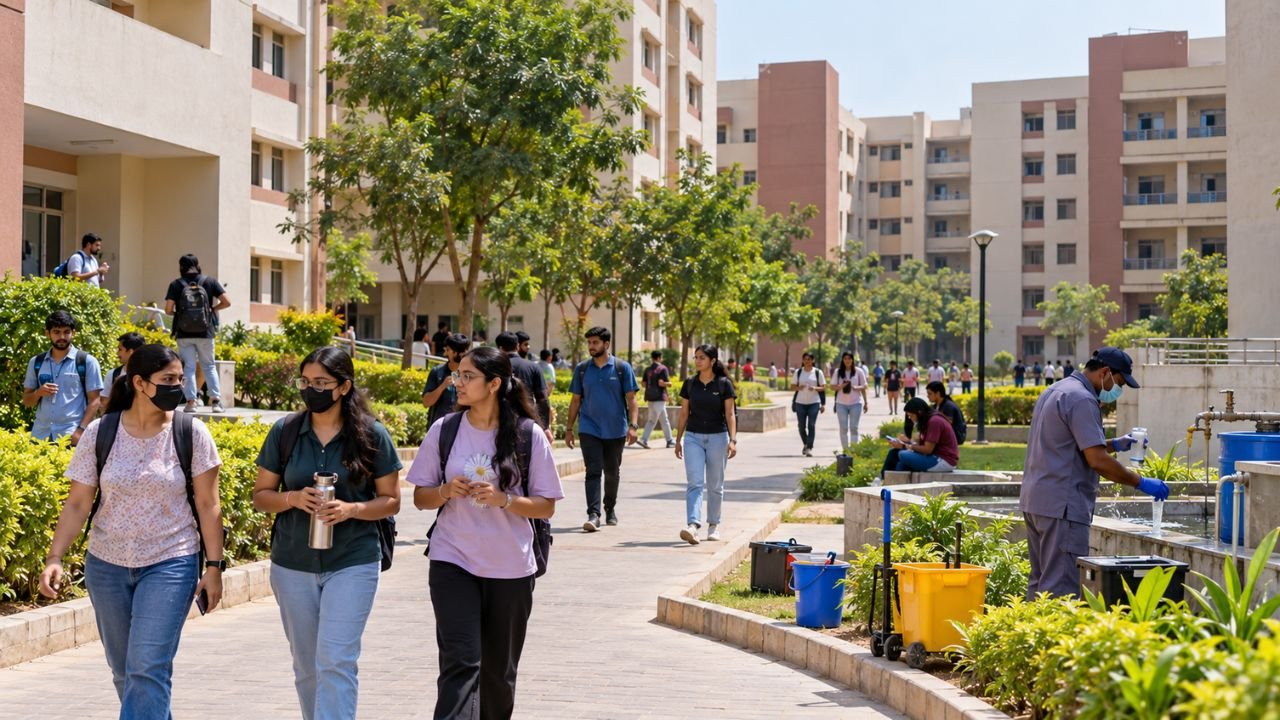
Gujarat National Law University in Gandhinagar is facing serious health and sanitation concerns after a large number of students reported illnesses on campus. The situation has drawn attention to dengue, viral infections, food poisoning, typhoid, drinking water quality, sewage, mosquito control and medical support. Students have also organized a boycott of physical classes and a sit in protest, raising concerns about living conditions and health facilities on campus. This health crisis has become a major issue for the university community, prompting both students and administration to engage in discussions about corrective measures and long term improvements to campus infrastructure.
GNLU Student Illnesses Reported
The student data highlighted several different illnesses during the reported outbreak. The figures mentioned include:
- Dengue: 93 confirmed cases
- Viral infections and fever: 58 cases
- Food poisoning: 20 cases
- Typhoid: 10 cases
- Other infections: 19 cases
The reported categories may not necessarily represent completely separate groups of students, as an individual student could potentially have more than one health condition. Overall, the reported figures have increased concern among students about health and hygiene conditions at the university.
Dengue Cases at GNLU
Dengue is one of the main health issues reported by students. The information provided lists 93 confirmed dengue cases, affecting a significant portion of the student population. Students have connected their concerns about dengue with mosquito breeding and the effectiveness of pest control measures around campus. The issue has become an important part of the wider discussion about sanitation and health protection at GNLU. With such a high number of cases, students are demanding stronger preventive measures and better coordination with local health authorities to control the spread of the disease.
Viral Infections, Food Poisoning and Typhoid
The reported illnesses are not limited to dengue. The student data includes 58 cases of viral infections or fever, 20 cases of food poisoning and 10 cases of typhoid. Another 19 cases were placed under other infections. The range of illnesses has increased student concerns about drinking water, food safety, waste management and general sanitation in residential areas. This variety of health issues suggests that multiple factors may be contributing to the situation, including water quality, food handling and overall campus hygiene.
Water and Sanitation Concerns
Water quality is one of the major concerns raised by students. Students have reported concerns involving drinking water and sanitation facilities in the residence halls. Their complaints include:
- Sewage leaks
- Concerns about contaminated drinking water
- Waste and sanitation problems
- Food hygiene concerns
- Mosquito breeding areas
- General cleanliness of residential facilities
Students have also raised claims about foreign objects allegedly being found in food and water containers. These claims are part of the grievances raised by students during the ongoing dispute. The administration has acknowledged concerns regarding water quality and has taken steps to address them.
Food Safety Concerns
Food served at the campus mess has also become part of the student complaints. Students have raised concerns about the condition of meals and have reported finding unwanted objects in food. The complaints mentioned include allegations involving a blade found in rice and worms allegedly discovered in water bottles. These are claims raised by students, while the university has taken steps to test food and water samples. The food safety concerns have added to the broader health crisis and have become a central issue in the student demands.
Mosquito Control and Fumigation
Students have also questioned the effectiveness of mosquito control measures. They have raised concerns about inadequate fumigation and pest control activities at a time when dengue cases were being reported. Mosquito breeding areas have become an important concern because of the connection between mosquito activity and dengue transmission. The issue has therefore formed part of the students broader demands for improved sanitation and preventive health measures. Without effective mosquito control, the risk of further dengue cases remains a serious concern for the university community.
Concerns About Medical Support
Students have also raised concerns about emergency medical preparedness and medical support available at the university. With multiple students reportedly falling ill, students have sought stronger medical arrangements and clearer procedures for handling health emergencies. The administration has stated that it is arranging medical care for affected individuals. However, students continue to demand improved healthcare facilities and faster response systems on campus.
Student Protests at GNLU
The health concerns have led to student protests on campus. Students organized a boycott of physical classes and held a dharna to highlight their concerns. They also submitted a formal statement of demands to the university administration. The demands focus on health monitoring, sanitation, water and food safety, and accountability for reported infrastructure problems. The protests have brought national attention to the conditions at GNLU and have put pressure on the administration to take swift action.
What Are GNLU Students Demanding
Students have put forward several specific demands.
- Independent Monitoring Committee: Students have called for an independent monitoring committee consisting of external experts and student representatives. The proposed committee would provide independent oversight of health and sanitation conditions on campus
- Independent Health and Microbiological Audit: Students have demanded a thorough independent audit of the campus water, food, waste infrastructure and health conditions. The purpose of the proposed audit is to examine possible health and sanitation problems and identify areas requiring corrective action
- Administrative Accountability: Students have also demanded clear administrative accountability for infrastructure and sanitation lapses. They want responsibility to be established for reported problems and corrective measures to be taken
GNLU Administration Response
GNLU Registrar Dr Nitin Malik has addressed the situation. The administration has stated that dengue is currently widespread across the broader Gandhinagar area and that the situation should also be viewed in the context of wider dengue activity. The university has said that it is arranging medical care for affected individuals. The administration has also acknowledged concerns regarding water quality. This acknowledgment is an important step in addressing the student concerns and finding solutions.
Bottled Water Arranged on Campus
As part of its response to the water related concerns, the university has placed bottled water across the campus. This measure was introduced after concerns were raised about the quality of drinking water. The university has also taken steps to examine the food and water being used on campus. The bottled water arrangement provides temporary relief while the administration works on permanent solutions to the water quality issues.
Food and Water Samples Sent for Testing
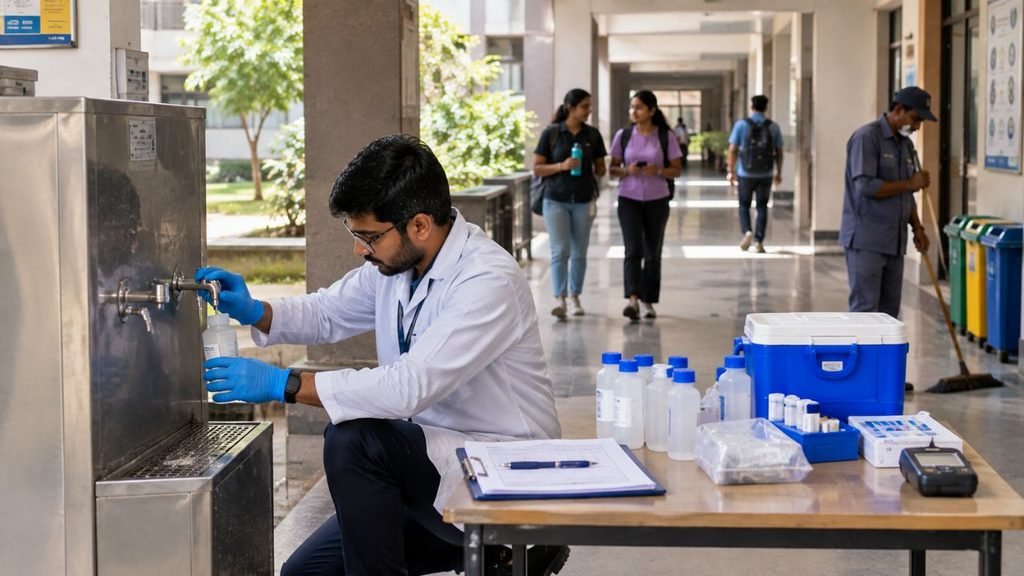
Food and water samples have been submitted to the National Forensic Sciences University for formal laboratory testing. The testing is intended to provide further information about the quality of the samples and help address concerns raised by students. The move is part of the university response to the complaints surrounding food and drinking water. The results of these tests will play an important role in determining the next steps for the administration.
Meetings Between Students and Administration
Meetings between the student body and university administration are underway. The discussions are aimed at addressing the concerns raised during the protests and finding corrective measures. The two sides are discussing issues related to health, water quality, sanitation, food safety, medical support and campus infrastructure. These ongoing discussions are expected to lead to concrete actions that address both the immediate health concerns and the longer term infrastructure improvements needed on campus.
GNLU Health Crisis 2026: Important Points
- GNLU in Gandhinagar is dealing with a significant number of reported student illnesses
- Dengue is one of the major reported health concerns
- The provided data lists 93 dengue cases
- Viral infections and fever account for 58 reported cases
- Food poisoning accounts for 20 reported cases
- Ten typhoid cases are listed
- Another 19 cases are listed as other infections
- Students have raised concerns about drinking water quality
- Sewage leaks and sanitation have also been highlighted
- Students have raised concerns about food safety
- Mosquito breeding and fumigation are major student concerns
- Students organized a physical class boycott and dharna
- Students have demanded an independent monitoring committee
- They have also called for an independent health and microbiological audit
- Administrative accountability is another major demand
- The university has arranged bottled water across campus
- Food and water samples have been sent for laboratory testing
- The administration has said it is arranging medical care for affected students
- Meetings between students and the administration are continuing
Conclusion
The GNLU Health Crisis 2026 has brought attention to student health, drinking water quality, food safety, sanitation and medical support at Gujarat National Law University in Gandhinagar. Students have raised concerns about dengue and several other illnesses, along with issues involving sewage, water quality, food hygiene, mosquito control and campus healthcare. These concerns have led to a physical class boycott, a dharna and a formal list of demands. The university administration has responded by arranging medical care, placing bottled water across the campus and submitting food and water samples for laboratory testing. Discussions between students and the administration are also continuing. The focus now remains on addressing the reported health concerns, improving campus sanitation and water safety, and implementing appropriate corrective measures for students and the university community.
Frequently Asked Questions
Q1. What is the GNLU Health Crisis 2026?
A1. It is a health and sanitation crisis at Gujarat National Law University in Gandhinagar, where students reported multiple illnesses including dengue, viral infections, food poisoning and typhoid, leading to protests and demands for improved campus conditions.
Q2. How many dengue cases were reported at GNLU?
A2. According to the provided student data, 93 confirmed dengue cases were reported at GNLU.
Q3. What are the main demands of GNLU students?
A3. Students have demanded an independent monitoring committee with external experts and student representatives, an independent health and microbiological audit of water, food and waste infrastructure, and clear administrative accountability for sanitation lapses.
Q4. What steps has the GNLU administration taken in response?
A4. The administration has arranged medical care for affected students, placed bottled water across the campus, and sent food and water samples to the National Forensic Sciences University for laboratory testing.
Q5. Are student protests still continuing at GNLU?
A5. Students organized a physical class boycott and dharna, and meetings between the student body and university administration are currently underway to address the concerns and find corrective measures.