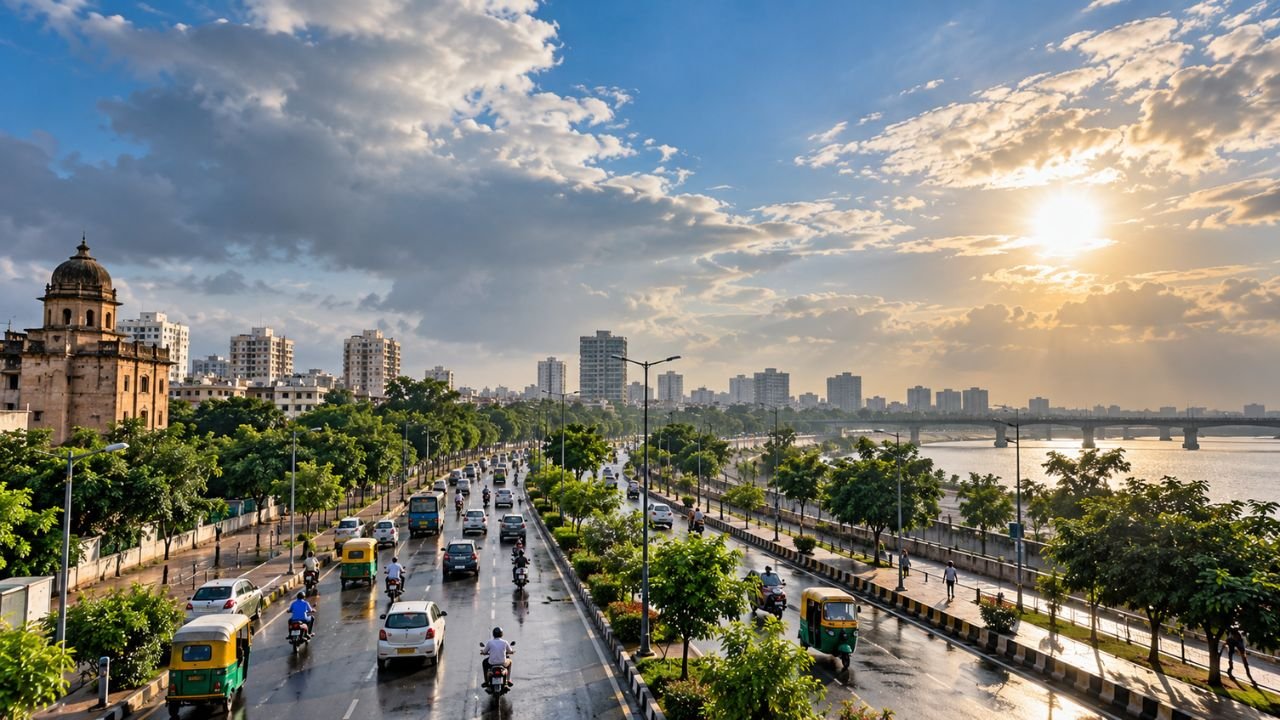
The southwest monsoon has started withdrawing from Gujarat in late September 2026, marking a seasonal shift toward drier weather and rising temperatures across the state. The withdrawal does not mean that rainfall has completely stopped. A new low pressure weather system is still expected to bring light to moderate rain and thundershowers at isolated places over parts of Gujarat. The current weather pattern is therefore showing two different conditions at the same time: the monsoon is retreating from parts of the state, while some regions may still receive rain during the next few days. This transition period is a regular feature of the monsoon cycle, where the retreat of the monsoon does not immediately end all rainfall activity across the region.
When Did the Monsoon Withdrawal Begin
The monsoon began its retreat from the region on September 24, 2026. The withdrawal is currently progressing through parts of Gujarat as the weather gradually shifts toward drier conditions. The official withdrawal line currently passes through the Deesa and Naliya regions of Kutch, along with parts of Rajasthan, Madhya Pradesh and northern India. This marks the beginning of the seasonal transition after the main monsoon period. The gradual nature of this withdrawal means that different parts of the state will experience the shift toward drier weather at different times.
Temperatures Rise as Monsoon Withdraws
As the monsoon withdraws, cloud cover has started reducing over northern and western parts of Gujarat. With fewer clouds and the changing weather pattern, daytime temperatures have increased. Maximum temperatures have reached around 36.3°C in cities such as Ahmedabad. The rising temperature is one of the noticeable signs of the transition toward post monsoon weather. This warming trend is expected to continue as the monsoon fully withdraws from the region in the coming weeks.
Rain Is Still Possible Despite Monsoon Withdrawal
Although the monsoon is withdrawing, Gujarat is not completely free from rainfall. A well marked low pressure system has developed and is expected to produce another round of rain activity in parts of the state. The current forecast indicates light to moderate rain or thundershowers at isolated places during the next three days. This means rainfall may not occur across the entire state. Instead, some locations may receive showers while other areas remain comparatively dry. The presence of this low pressure system is the main reason why rain activity is expected to continue even as the monsoon retreats.
South Gujarat and Saurashtra May Receive Rain
The upcoming rainfall activity is expected to be concentrated mainly in parts of South Gujarat and Saurashtra. South Gujarat, including areas such as Surat, may experience late season rain. Some parts of the Saurashtra region may also receive rainfall during this period. The rainfall is expected to remain localised, so weather conditions can vary from one district or location to another. Residents in these regions should continue to monitor local forecasts during this transition period.
Gujarat Rain Forecast for the Next Three Days
The current weather outlook indicates:
| Weather Factor | Forecast |
|---|---|
| Monsoon status | Withdrawal has begun |
| Withdrawal date | September 24, 2026 |
| Rainfall outlook | Light to moderate rain or thundershowers |
| Rainfall coverage | Isolated places |
| Main areas | South Gujarat and parts of Saurashtra |
| Possible location | Surat and surrounding areas |
| Temperature trend | Rising in parts of Gujarat |
| Weather transition | Toward drier post monsoon conditions |
The rainfall forecast means that residents in the affected areas should continue to check local weather conditions, especially during the next few days.
Gujarat Monsoon Rainfall in 2026
The 2026 monsoon has produced an uneven distribution of rainfall across Gujarat. The state has recorded an average total rainfall of 810.32 mm, which is around 89.16 percent of its normal seasonal rainfall. However, rainfall has not been distributed equally across all regions. Some areas have received considerably more rain than others during the season. This uneven distribution is a common feature of monsoon rainfall patterns in Gujarat, where coastal and southern regions often receive more rainfall than northern and western parts of the state.
September Rainfall Shows Regional Difference
September recorded an overall 6 percent rainfall deficit across Gujarat. However, South Gujarat experienced a different pattern. South Gujarat recorded a rainfall surplus and received around 114.23 percent of its average seasonal rainfall. This difference shows why weather conditions can vary significantly between different regions of Gujarat during the same period. While some regions experienced a deficit, others received above average rainfall during the same month.
Why Rain Can Continue During Monsoon Withdrawal
Monsoon withdrawal is a gradual process rather than an instant end to rainfall. Even as the monsoon begins retreating, other weather systems can continue to produce showers in parts of the state. The current well marked low pressure system is one reason rain activity is expected to continue in selected areas. As a result, Gujarat can experience rising temperatures and drier conditions in some areas while isolated rain continues in others. This dual pattern is typical of the transition period between monsoon and post monsoon seasons.
What Residents of South Gujarat Should Know
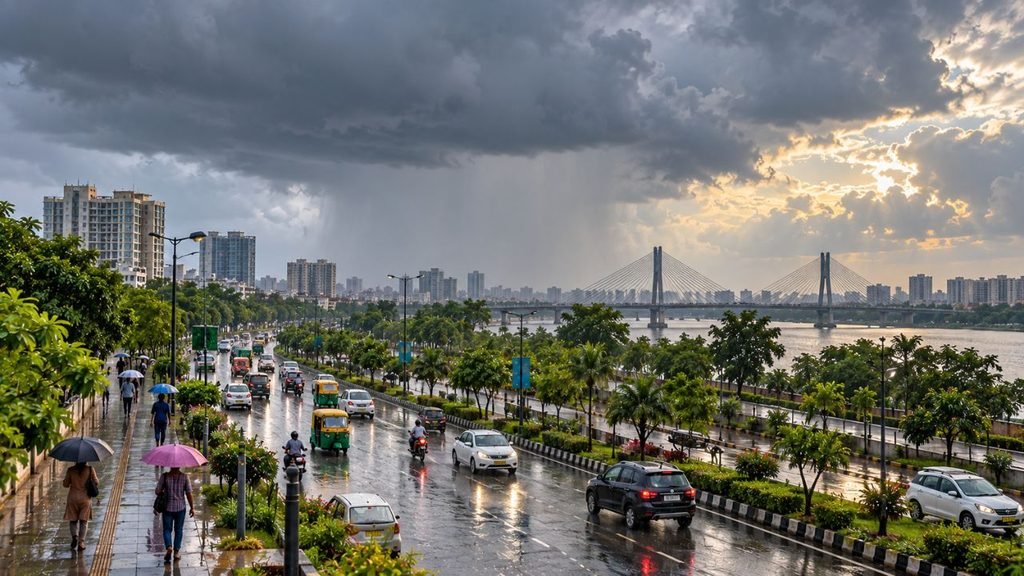
People in South Gujarat, including Surat and nearby areas, may still see rain or thundershowers during the forecast period. The expected rainfall is localised, so not every location will necessarily receive the same amount of rain. Residents should keep checking immediate local forecasts during the next 48 to 72 hours, particularly before making outdoor plans. Carrying rain protection during this period is advisable even though the monsoon is technically withdrawing.
What Residents of Saurashtra Should Know
Parts of Saurashtra are also expected to experience the late season rainfall activity. While the monsoon withdrawal is progressing, the developing low pressure system can continue to influence weather conditions in selected areas. Residents should therefore remain aware of local weather updates while the transition toward drier conditions continues.
Gujarat Weather Transition After the Monsoon
The overall weather pattern is gradually moving toward a drier phase. The reduction in cloud cover and increase in daytime temperatures are already visible in parts of Gujarat. However, the transition is not uniform across the state. Some areas may become increasingly dry while isolated showers continue elsewhere because of the current weather system. This uneven transition is expected to continue until the monsoon fully withdraws from the region.
Gujarat Monsoon Withdrawal 2026: Key Points
- The southwest monsoon has started withdrawing from Gujarat
- The withdrawal began from the region on September 24, 2026
- The withdrawal line currently passes through the Deesa and Naliya regions of Kutch
- Temperatures are rising as cloud cover decreases in parts of Gujarat
- Ahmedabad has recorded maximum temperatures of up to around 36.3°C
- A well marked low pressure system is still producing conditions favourable for rain
- Light to moderate rain or thundershowers are expected at isolated places during the next three days
- South Gujarat, including Surat, may receive late season rain
- Parts of Saurashtra may also receive showers
- Gujarat total average rainfall for the 2026 monsoon has reached 810.32 mm
- This is around 89.16 percent of the normal seasonal rainfall
- September recorded an overall 6 percent rainfall deficit across Gujarat
- South Gujarat recorded around 114.23 percent of its average seasonal rainfall
- The state is gradually moving toward drier post monsoon conditions
Conclusion
The Gujarat Monsoon Withdrawal 2026 has begun, with the southwest monsoon starting its retreat from the region on September 24. The changing weather pattern is bringing drier conditions and rising daytime temperatures in parts of the state. However, the withdrawal does not mean an immediate end to rainfall. A well marked low pressure system is expected to bring light to moderate rain or thundershowers at isolated places during the next three days, particularly across parts of South Gujarat and Saurashtra. With Gujarat gradually moving toward the post monsoon period, weather conditions are expected to remain different across regions. South Gujarat and Saurashtra may still experience some late season showers while other parts of the state become progressively drier and warmer.
Frequently Asked Questions
Q1. When did the monsoon withdrawal begin in Gujarat in 2026?
A1. The southwest monsoon began withdrawing from Gujarat on September 24, 2026, with the withdrawal line passing through the Deesa and Naliya regions of Kutch.
Q2. Will Gujarat receive more rain after the monsoon withdrawal?
A2. Yes, a well marked low pressure system is expected to bring light to moderate rain or thundershowers at isolated places during the next three days, mainly in South Gujarat and parts of Saurashtra.
Q3. Which areas in Gujarat may receive late season rain?
A3. South Gujarat, including Surat and surrounding areas, along with parts of Saurashtra, may experience late season rainfall activity.
Q4. How much rainfall has Gujarat received during the 2026 monsoon?
A4. Gujarat has recorded an average total rainfall of 810.32 mm, which is around 89.16 percent of its normal seasonal rainfall.
Q5. Why are temperatures rising in Gujarat during the monsoon withdrawal?
A5. As the monsoon withdraws, cloud cover reduces over northern and western parts of Gujarat, leading to increased daytime temperatures. Ahmedabad has recorded maximum temperatures of up to around 36.3°C.