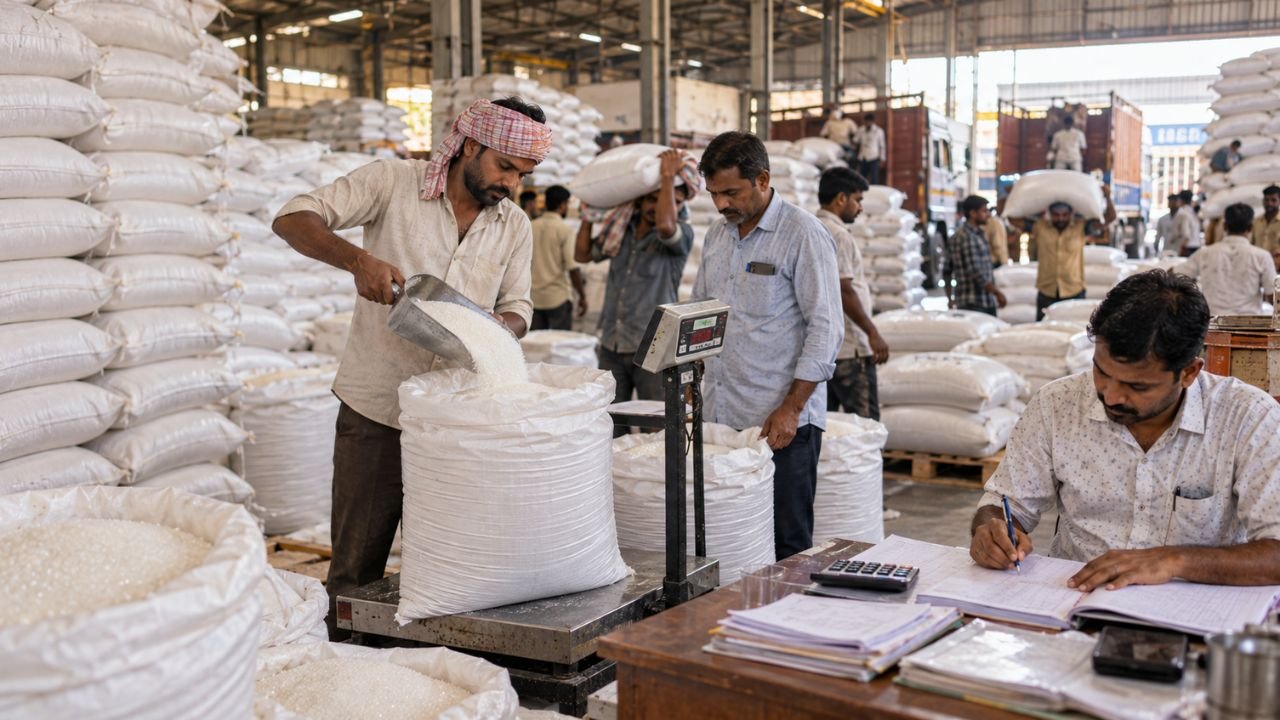
Gujarat sugar prices have risen significantly ahead of Diwali 2026, with retail rates reaching ₹55 to ₹65 per kg across the reported range. Wholesale S-grade and M-grade sugar prices in Gujarat stand at ₹4,551 to ₹4,651 per quintal, excluding GST. The price pressure has been driven by a combination of lower production estimates, damaged sugarcane crops, festive demand and concerns about stock retention. In response, the government has taken several measures, including permitting 10 LMT of duty-free imports, introducing stock limits for dealers and bulk consumers, and advancing the start of sugarcane crushing operations to October 15. The question now is whether these steps will be enough to bring relief to consumers in the coming weeks.
Why Sugar Prices Have Risen Before Diwali 2026
The rise in sugar prices ahead of Diwali has not come from a single cause. Several factors have come together to push both retail and wholesale rates higher during the festive season.
- Lower production estimates have reduced the expected supply of sugar in the market
- Damaged sugarcane crops have affected the raw material available for crushing
- Festive demand during Diwali has increased buying activity from households and bulk buyers
- Concerns about stock retention have led some traders to hold back supplies
- Tighter global sugar supplies have added pressure on domestic prices
Each of these factors has played a role in shaping the current market situation. When domestic production falls and demand rises at the same time, prices tend to move up quickly, especially during a period like Diwali when sugar consumption increases across households and sweet shops.
Government Measures to Control Sugar Prices
To address the rising prices, the government has introduced a set of measures aimed at improving supply and discouraging hoarding. These steps are meant to bring some balance to the market and prevent further sharp increases in retail rates.
- Permitted 10 LMT of duty-free imports to boost domestic supply
- Introduced stock limits for dealers and bulk consumers to discourage hoarding
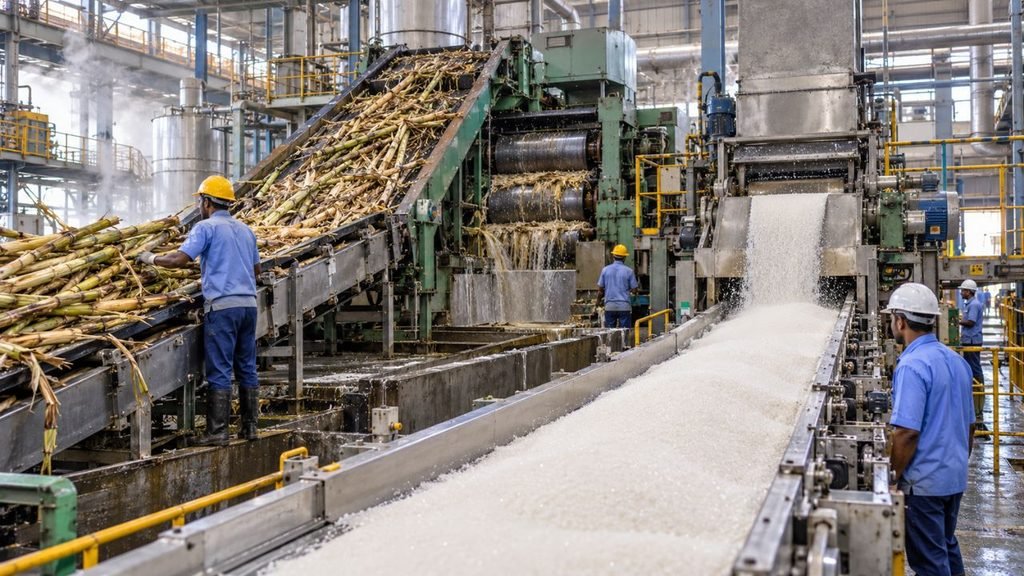
- Advanced the start of sugarcane crushing operations to October 15, 2026
The decision to advance crushing is particularly important because it means fresh sugar will enter the market earlier than usual. The duty-free imports are expected to add to the overall supply, while stock limits are designed to ensure that traders do not hold back large quantities in anticipation of higher prices.
October Production Projection and Expected Relief
The projected increase in October production to more than 10 LMT is expected to ease retail price pressure heading into November. This is a significant jump compared with the usual 3 to 4 LMT produced during the same period in previous years. However, the reported market conditions also include weather-related crop damage, higher festive demand and tighter global sugar supplies. The extent of any price relief will depend on how domestic production and supply develop during the coming weeks.
| Factor | Details |
|---|---|
| Usual October Production | 3 to 4 LMT |
| Projected October Production 2026 | More than 10 LMT |
| Expected Impact | Ease retail price pressure heading into November |
| Key Risks | Weather-related crop damage, festive demand, tighter global supplies |
If production stays on track and imports reach the market on time, consumers may see some relief in November. But if weather conditions worsen or global supply remains tight, the relief could be limited.
What This Means for Consumers and Traders
For consumers, the current situation means sugar is likely to remain expensive through the Diwali season. Retail prices between ₹55 and ₹65 per kg are significantly higher than what many households are used to paying. For traders and bulk consumers, the stock limits mean they need to plan their purchases carefully and avoid holding excess inventory beyond the permitted levels.
- Consumers may need to budget for higher sugar costs during the festive season
- Bulk buyers and sweet shop owners should monitor stock limit rules closely
- Traders should watch for the impact of duty-free imports on wholesale rates
- The start of crushing on October 15 could bring fresh supply into the market sooner than expected
For anyone involved in the sugar trade or bulk purchasing, keeping an eye on production updates and government notifications will be important in the coming weeks.
Conclusion
Gujarat sugar prices have risen significantly ahead of Diwali 2026, with retail rates reaching ₹55 to ₹65 per kg across the reported range. Wholesale S-grade and M-grade sugar prices in Gujarat stand at ₹4,551 to ₹4,651 per quintal, excluding GST. Lower production estimates, damaged sugarcane crops, festive demand and concerns about stock retention have contributed to the price pressure. In response, the government has permitted 10 LMT of duty-free imports, introduced stock limits for dealers and bulk consumers, and advanced the start of sugarcane crushing operations to October 15. October sugar production is projected to exceed 10 LMT, compared with the usual 3 to 4 LMT. This increase is expected to ease retail price pressure heading into November.
Frequently Asked Questions
Q1. What are the current sugar prices in Gujarat before Diwali 2026?
A1. Retail sugar prices in Gujarat range from ₹55 to ₹65 per kg, while wholesale S-grade and M-grade sugar prices stand at ₹4,551 to ₹4,651 per quintal, excluding GST.
Q2. Why have sugar prices risen in Gujarat ahead of Diwali 2026?
A2. The price rise is due to lower production estimates, damaged sugarcane crops, higher festive demand, concerns about stock retention and tighter global sugar supplies.
Q3. What measures has the government taken to control sugar prices?
A3. The government has permitted 10 LMT of duty-free imports, introduced stock limits for dealers and bulk consumers, and advanced the start of sugarcane crushing operations to October 15, 2026.
Q4. How much sugar production is expected in October 2026?
A4. October 2026 sugar production is projected to exceed 10 LMT, compared with the usual 3 to 4 LMT produced during the same period in previous years.
Q5. Will sugar prices come down in November 2026?
A5. The projected increase in October production to more than 10 LMT is expected to ease retail price pressure heading into November. However, the extent of any relief will depend on weather conditions, festive demand and global sugar supply during the coming weeks.