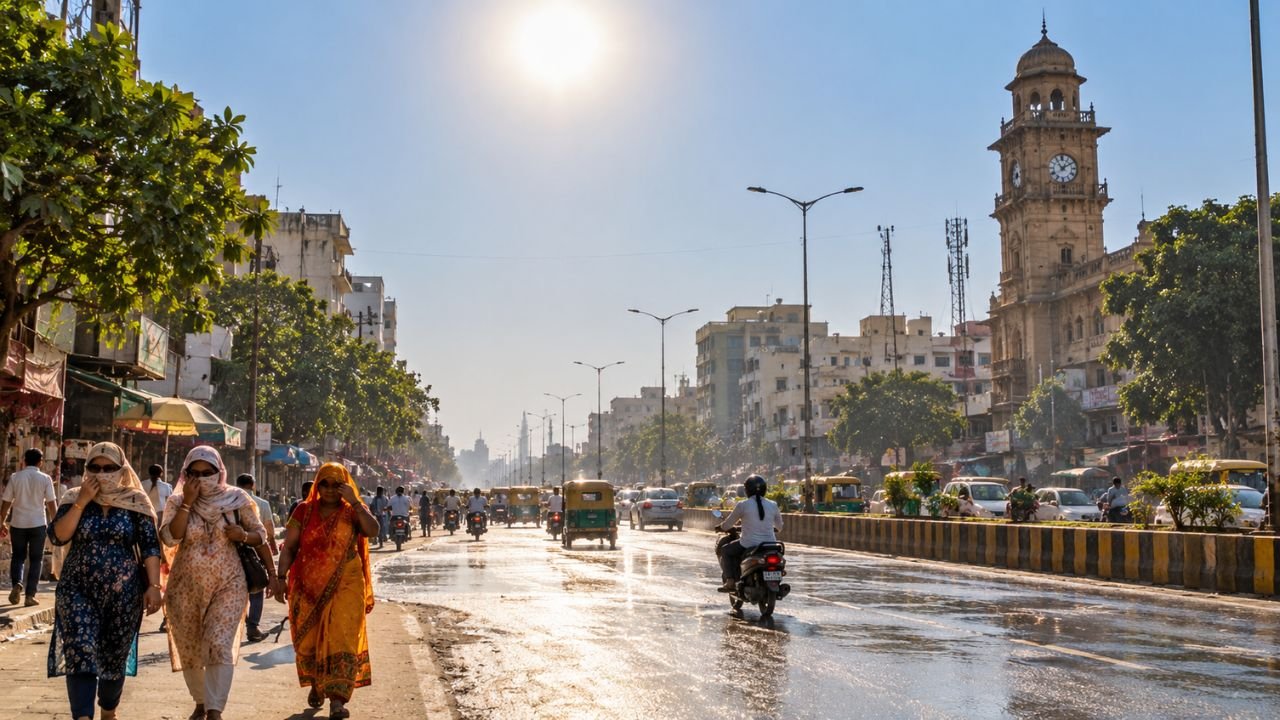
Gujarat is experiencing a period of intense post-monsoon heat, with temperatures rising across several major cities. Rajkot has recorded a maximum temperature of 39.7°C, placing it among the hottest urban centres in the state alongside Bhuj and Deesa. The sudden rise in temperatures, locally known as Bhadarva heat or the second summer, has followed the rapid withdrawal of the southwest monsoon. The dry weather transition has brought clear skies and increased daytime temperatures across the region. While Rajkot has experienced some of the highest readings, Bhuj and Deesa have also recorded temperatures ranging from 38.6°C to above 39°C. Ahmedabad and Vadodara are facing similarly uncomfortable conditions, with temperatures climbing above 37°C. The combination of high temperatures and lingering moisture after the monsoon has made the weather particularly uncomfortable for residents, especially during the afternoon.
City-Wise Temperature Update in Gujarat
Several cities across Gujarat are experiencing elevated temperatures as dry weather continues to dominate the region. The heat has been widespread, affecting both coastal and inland areas, with the highest readings coming from Saurashtra and Kutch.
Rajkot Records 39.7°C
Rajkot has reached a maximum temperature of 39.7°C, making it one of the hottest places in Gujarat. Consecutive days have recorded temperatures averaging around 39.6°C, creating difficult conditions for people carrying out outdoor activities. The steady heat over multiple days has made it harder for residents to get any relief, even during the evening hours.
Bhuj and Deesa Remain Among the Hottest Areas
Bhuj and Deesa have also experienced significant heat, with temperatures consistently ranging between 38.6°C and above 39°C. Dry winds settling over the Kutch and North Gujarat regions have contributed to the continued rise in daytime temperatures. These areas are known for their dry climate, and the current weather pattern has only added to the heat intensity.
Ahmedabad and Vadodara Experience High Temperatures
Ahmedabad and Vadodara are also facing hot weather, with temperatures rising beyond the 37°C mark. The widespread increase in temperatures highlights the intensity of the post-monsoon heat across different parts of Gujarat. Even cities that usually see slightly milder conditions during October are now recording higher-than-normal daytime temperatures.
Why Is Gujarat Experiencing Bhadarva Heat?
The intense post-monsoon heat has been attributed to two primary factors: the withdrawal of the southwest monsoon and the influence of El Niño. Together, these two factors have created the conditions that residents are now experiencing across the state.
Withdrawal of the Southwest Monsoon
As the southwest monsoon line retreats beyond Deesa and Naliya, cloud cover decreases and skies become clearer. With fewer clouds to block sunlight, direct solar radiation reaches the ground more effectively, allowing the surface to heat up rapidly. The arrival of dry winds and clear weather has therefore contributed to the sharp increase in temperatures across Gujarat. This transition has created the conditions commonly associated with Bhadarva heat, which typically occurs after the monsoon has ended but before winter sets in.
El Niño Influence
Weather experts have also identified the active El Niño system as a factor influencing temperatures this season. The system is expected to contribute to October temperatures remaining well above normal levels across the state. Together, the withdrawal of the monsoon and the influence of El Niño are contributing to the unusually warm conditions experienced across Gujarat. This combination means that the heat may not ease as quickly as it usually does in October.
Impact of the Heat on Daily Life
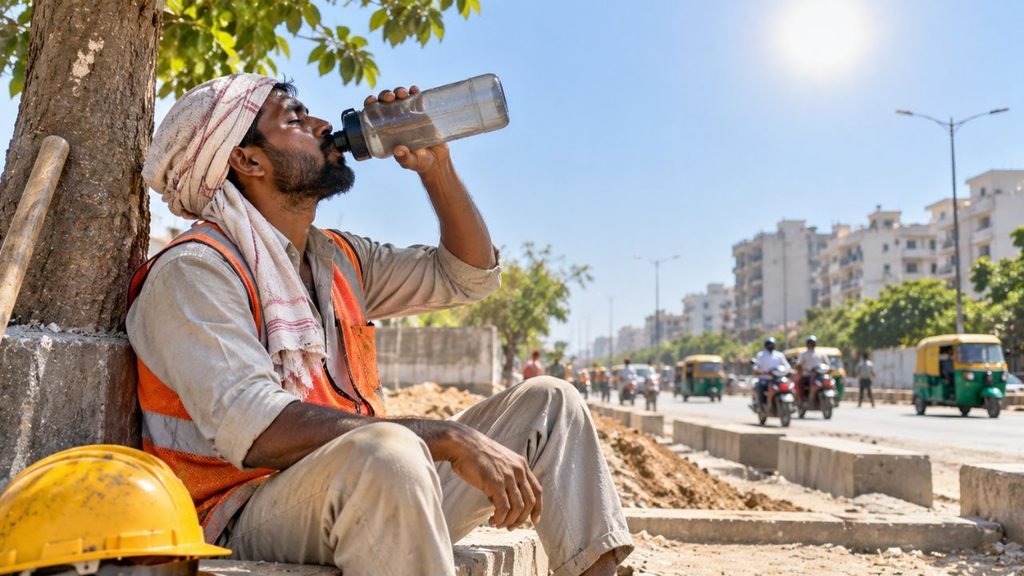
The combination of high daytime temperatures and residual post-monsoon moisture has increased discomfort for residents. Even when temperatures are considered alongside humidity, the resulting conditions can feel sticky and oppressive. People working outdoors may face particular difficulties during the hottest hours of the day. Children and elderly residents are also among the groups advised to take additional precautions against direct sun exposure. With Rajkot recording temperatures close to 40°C and other cities experiencing similar heat, outdoor activities can become more uncomfortable, particularly during the afternoon. The heat has also affected daily routines, with many people choosing to stay indoors during peak hours.
Health Precautions During Gujarat’s Post-Monsoon Heat
Residents are being advised to take precautions to reduce the effects of the high temperatures. Limiting direct exposure to sunlight between 12:00 PM and 4:00 PM is particularly important during this period. People are also advised to maintain adequate fluid intake and wear light cotton clothing. These measures are especially relevant for outdoor workers, children and elderly people, who may be more vulnerable to the effects of prolonged heat exposure. As temperatures remain elevated, taking precautions during the hottest part of the day can help residents manage the uncomfortable weather conditions. Simple steps like carrying a water bottle, using a hat or umbrella and avoiding heavy meals during the afternoon can also help reduce the impact of the heat.
Gujarat Weather Forecast for the Coming Week
The India Meteorological Department (IMD) forecasts that dry weather will continue to dominate Gujarat over the coming week. The outlook indicates no immediate relief from the elevated daytime temperatures. With clear skies and dry conditions expected to persist, temperatures may remain well above normal levels across the region. Residents should therefore continue to take precautions during the afternoon, particularly in cities such as Rajkot, Bhuj and Deesa, where temperatures have been especially high. The IMD’s forecast suggests that the Bhadarva heat pattern will stay in place for now, and any meaningful relief may only come once the weather system changes or winter approaches.
Conclusion
The latest Gujarat weather update highlights the intensity of the post-monsoon heat affecting the state. Rajkot has recorded a maximum temperature of 39.7°C, while Bhuj and Deesa have also experienced temperatures approaching or exceeding 39°C. Ahmedabad and Vadodara are facing temperatures above 37°C. The withdrawal of the southwest monsoon, clear skies, dry winds and the influence of El Niño have been identified as the main factors behind the hot conditions. With dry weather expected to continue over the coming week, residents are advised to limit direct sun exposure between 12 PM and 4 PM, drink sufficient fluids and wear light cotton clothing.
Frequently Asked Questions
Q1. Which city recorded the highest temperature in Gujarat’s latest weather update?
A1. Rajkot recorded the highest temperature at 39.7°C, making it one of the hottest urban centres in Gujarat, along with Bhuj and Deesa.
Q2. Why is Gujarat experiencing intense heat after the monsoon?
A2. The heat is caused by the withdrawal of the southwest monsoon, which has led to clear skies and dry winds, along with the influence of an active El Niño system that is keeping October temperatures above normal.
Q3. What is Bhadarva heat in Gujarat?
A3. Bhadarva heat, also called the second summer, is the period of intense heat that occurs after the monsoon withdraws but before winter begins. It is characterised by clear skies, dry winds and high daytime temperatures.
Q4. Which cities are most affected by the post-monsoon heat in Gujarat?
A4. Rajkot, Bhuj and Deesa are among the hottest cities, with temperatures between 38.6°C and 39.7°C. Ahmedabad and Vadodara are also affected, with temperatures above 37°C.
Q5. What precautions should residents take during Gujarat’s post-monsoon heat?
A5. Residents should limit direct sun exposure between 12:00 PM and 4:00 PM, drink sufficient fluids, wear light cotton clothing and take extra care of outdoor workers, children and elderly people during the hottest part of the day.