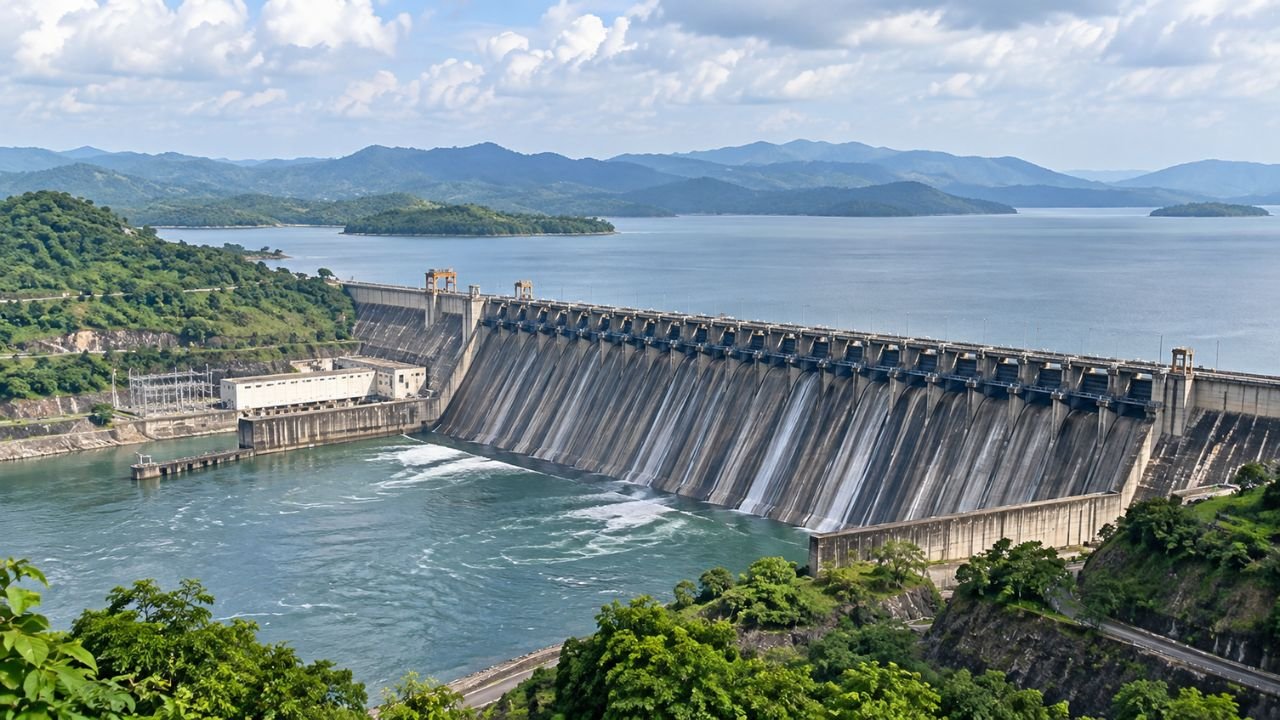
The Sardar Sarovar Dam on the Narmada River reached its Full Reservoir Level of 138.68 metres on September 30, 2026. This is a major moment for Gujarat water resources because the reservoir has now touched its maximum level for the seventh time since the completed dam was dedicated to the nation in 2017. To mark the occasion, Gujarat Chief Minister Bhupendra Patel visited Ekta Nagar, also known as Kevadia, and performed a traditional puja to welcome the Narmada waters. The full reservoir level matters because it directly affects water storage, drinking water supply and the many water distribution schemes that depend on the Narmada system. For the people of Gujarat, this milestone is not just about a number on a gauge, it is about the water that reaches homes, farms and villages across the state.
Sardar Sarovar Dam 2026: Key Facts at a Glance
| Feature | Details |
|---|---|
| Full Reservoir Level | 138.68 metres |
| Height | 163 metres |
| Length | 1,210 metres |
| Gross Storage Capacity | 9,460 million cubic metres |
| River | Narmada |
| Location | Ekta Nagar (Kevadia), Gujarat |
| Hydroelectric Capacity | 1,450 MW |
| 2026 Full Level Date | September 30, 2026 |
| Times Reached Full Capacity | Seven times since 2017 |
The Reservoir Reaches 138.68 Metres
The Sardar Sarovar reservoir reached its maximum operating level of 138.68 metres on September 30, 2026. This is the seventh time the reservoir has reached full capacity since the completed dam was dedicated to the nation in September 2017. The reservoir had earlier reached maximum capacity in 2019, 2020, 2022, 2023, 2024 and 2025, before achieving the same level again in 2026. At full capacity, the reservoir holds a gross water storage volume of around 9,460 million cubic metres. This achievement followed a strong monsoon season that brought substantial inflows into the Narmada system, filling the reservoir to its maximum level.
Water Availability in Gujarat
The available water in Gujarat is an important part of the 2026 situation. Based on the current monsoon inflows, Gujarat has around 7.9 million acre feet of water against a typical normal year allocation of approximately 9 million acre feet. This stored water supports the state wider water distribution network and various water related projects. The difference between the available water and the normal allocation shows that while the reservoir has reached its full level, the overall water availability for the year depends on how the monsoon performs across the Narmada basin.
Drinking Water Supply to More Than 4 Crore People
The Sardar Sarovar water distribution network plays an important role in supplying drinking water across Gujarat. The network currently distributes fresh drinking water to more than 4 crore people living across:
- 10,453 villages
- 191 towns
- 7 municipal corporations
This makes the reservoir water availability important not only for storage but also for the daily water needs of millions of people. From small villages to large cities, the Narmada water reaches households through an extensive pipeline and canal network, making it one of the most important sources of drinking water in the state.
SAUNI Scheme Helps Fill Water Bodies
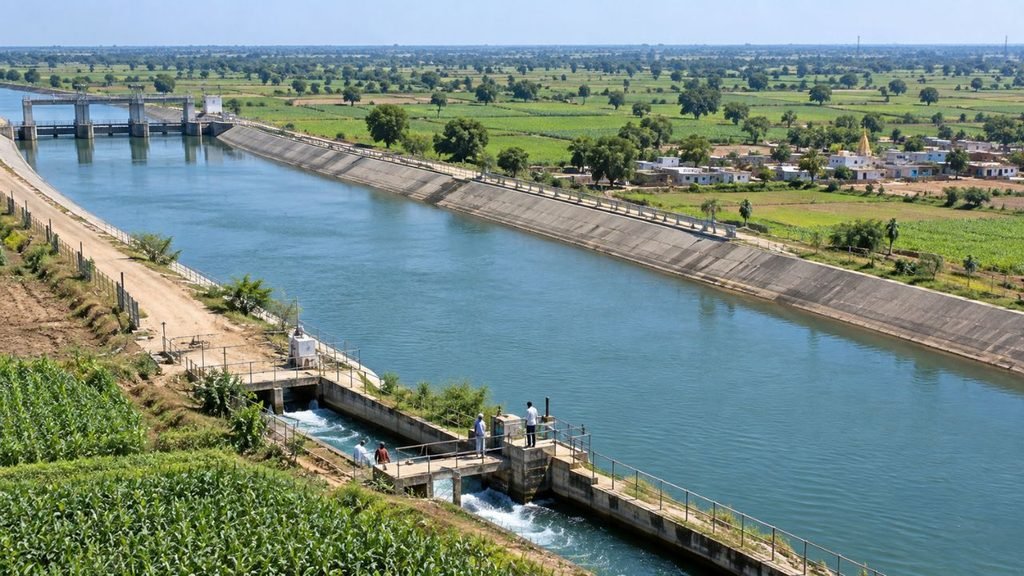
The SAUNI Scheme is another major part of Gujarat water distribution network. The scheme has injected around 288 million cubic metres of water to fill:
- 45 dams
- 167 lakes
- 1,014 check dams
These water bodies are located across North Gujarat, Saurashtra and Kutch. The movement of water through such networks helps extend the reach of available water beyond the immediate reservoir area. By filling local water bodies, the SAUNI Scheme supports agriculture, groundwater recharge and drinking water availability in regions that do not have direct access to the Narmada main canal.
Sujalam Sufalam Scheme
The Sujalam Sufalam Scheme has also been used to distribute water to water stressed parts of Gujarat. The scheme has supplied around 201 million cubic metres of water to fill an additional 1,028 lakes across drought prone areas of the state. Together, these water distribution initiatives connect reservoir storage with local water bodies and regional water requirements. The Sujalam Sufalam Scheme is particularly important for regions that face water scarcity during dry months, as it helps recharge groundwater and provides water for irrigation and daily use.
Sardar Sarovar Dam Project Overview
The Sardar Sarovar Dam is located on the Narmada River at Ekta Nagar in Gujarat. The project is described as an inter state multipurpose water resources initiative involving Gujarat, Madhya Pradesh, Maharashtra and Rajasthan. The main dam is a large concrete gravity structure measuring approximately 163 metres in height and 1,210 metres in length. The project also has a major hydroelectric component with a total installed capacity of 1,450 MW. Its power generation system includes an underground River Bed Power House and a Canal Head Power House. The River Bed Power House has six 200 MW Francis pump turbines, while the Canal Head Power House has five 50 MW Kaplan turbines. This combination of water storage and power generation makes Sardar Sarovar one of the most important infrastructure projects in western India.
Statue of Unity and Ekta Nagar
The Sardar Sarovar project area at Ekta Nagar is also associated with the Statue of Unity, which is dedicated to Sardar Vallabhbhai Patel. The statue has become a major tourism landmark in the area, placing the dam and its surrounding region within an important tourism setting in Gujarat. The 2026 full reservoir milestone was marked at Ekta Nagar, where the Narmada waters were welcomed through a traditional puja. The combination of the dam, the Statue of Unity and the surrounding tourism infrastructure has made Ekta Nagar a significant destination for visitors from across the country.
Sardar Sarovar Dam: A Long Historical Journey
The history of the Sardar Sarovar project stretches across several decades, making it one of the most discussed infrastructure projects in India.
Foundation Stone in 1961
The project was visualized as a way to use Narmada water resources and reduce the loss of excess water flowing toward the Arabian Sea. The foundation stone was laid by Pandit Jawaharlal Nehru on April 5, 1961. This marked the beginning of a long journey that would take several decades to complete.
Construction and Legal Delays
Construction work began in 1987, but the project later faced major legal and environmental challenges. The Supreme Court stalled construction in 1995 amid concerns and protests related to environmental issues and human displacement associated with the project. These issues became part of the long running public debate surrounding the dam. The delays and debates shaped the project timeline and influenced how the dam was eventually completed.
Gradual Increase in Dam Height
Between 2001 and 2017, the project went through several stages of clearance that allowed the dam height to increase. The height progressed from 111 metres to 121.92 metres, followed by approval for the installation of safety gates. The dam ultimately reached its maximum 138.68 metre level in 2017. Each stage of height increase required regulatory approvals and careful planning, making the final achievement a significant milestone.
Why the 2026 Full Reservoir Level Matters
Reaching the Sardar Sarovar Dam Full Reservoir Level in 2026 is significant because the reservoir stored water supports a large distribution network across Gujarat. The available water is connected with drinking water supply as well as schemes designed to transfer water to dams, lakes and check dams in different regions. The latest milestone also shows the reservoir reaching its maximum level for the seventh time since 2017. For Gujarat, the combination of reservoir storage and water distribution infrastructure remains an important part of managing water availability across different regions. This achievement provides confidence that the state water needs for the coming months will be supported by adequate storage.
Sardar Sarovar Dam and Gujarat Water Network
The Sardar Sarovar project is more than the main concrete dam structure. Its wider system includes storage, water distribution networks, hydroelectric power infrastructure and schemes that transfer water to other reservoirs and local water bodies. The SAUNI Scheme and Sujalam Sufalam Scheme are examples of how water is moved beyond the main reservoir network. The drinking water network also connects the system with villages, towns and municipal areas across Gujarat. Together, these components form a comprehensive water management system that supports agriculture, industry and household needs across the state.
Key Points About Sardar Sarovar Dam 2026
- Sardar Sarovar Dam reached its Full Reservoir Level of 138.68 metres on September 30, 2026
- The reservoir has reached maximum capacity for the seventh time since 2017
- Gross storage capacity is around 9,460 million cubic metres
- The dam is 163 metres high and 1,210 metres long
- The project has 1,450 MW of installed hydroelectric capacity
- The drinking water network serves more than 4 crore people across villages, towns and municipal corporations
- The SAUNI Scheme transferred around 288 million cubic metres of water to dams, lakes and check dams
- The Sujalam Sufalam Scheme supplied around 201 million cubic metres to 1,028 lakes
- The project has a long history dating back to the foundation stone ceremony in 1961
- The dam development involved several decades of construction, legal proceedings and phased height increases
Conclusion
The Sardar Sarovar Dam Full Reservoir Level 2026 milestone was recorded on September 30, when the reservoir reached 138.68 metres. It was the seventh time the reservoir had reached its maximum level since 2017. With a gross storage capacity of about 9,460 million cubic metres, the project forms a major part of Gujarat water infrastructure. Its connected distribution network supplies drinking water to more than 4 crore people, while schemes such as SAUNI and Sujalam Sufalam extend water to dams, lakes and check dams across different regions. The 2026 achievement therefore marks another important point in the long history of the Sardar Sarovar project and Gujarat wider water distribution network. For the people of Gujarat, this milestone represents not just a technical achievement but a source of water security for the months ahead.
Frequently Asked Questions
Q1. When did Sardar Sarovar Dam reach its Full Reservoir Level in 2026?
A1. The Sardar Sarovar Dam reached its Full Reservoir Level of 138.68 metres on September 30, 2026.
Q2. How many times has the Sardar Sarovar reservoir reached full capacity since 2017?
A2. The reservoir has reached full capacity seven times since 2017, with previous instances in 2019, 2020, 2022, 2023, 2024 and 2025.
Q3. How many people receive drinking water from the Sardar Sarovar network?
A3. The drinking water network serves more than 4 crore people across 10,453 villages, 191 towns and 7 municipal corporations.
Q4. What is the gross storage capacity of Sardar Sarovar Dam?
A4. The gross storage capacity of Sardar Sarovar Dam is around 9,460 million cubic metres.
Q5. What is the hydroelectric capacity of the Sardar Sarovar project?
A5. The project has a total installed hydroelectric capacity of 1,450 MW, including an underground River Bed Power House and a Canal Head Power House.