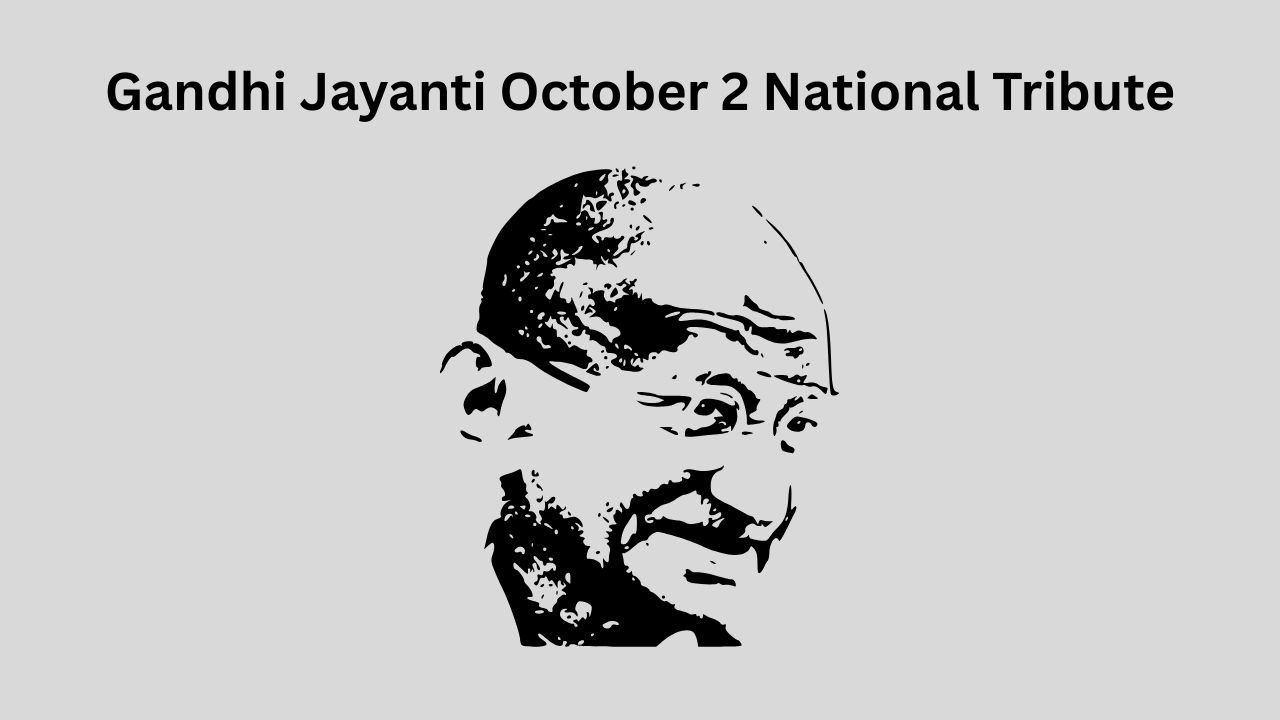
Gandhi Jayanti 2026 falls on October 2, a day observed across India to mark the birth anniversary of Mohandas Karamchand Gandhi, fondly remembered as Mahatma Gandhi, Bapu or the Father of the Nation. It is one of India’s three official national holidays, alongside Republic Day and Independence Day. The day honours Gandhi’s leadership in India’s freedom struggle and his philosophy of non-violent resistance. October 2 is also recognised worldwide as the International Day of Non-Violence. From national tributes at Raj Ghat to cleanliness drives and school programmes, the occasion is marked with respect and reflection throughout the country.
Gandhi Jayanti and October 2
Gandhi Jayanti is observed every year in India on October 2 to commemorate the birth anniversary of Mohandas Karamchand Gandhi, widely known as Mahatma Gandhi, Bapu or the Father of the Nation. It is one of India’s three official national holidays, along with Republic Day and Independence Day. The day remembers Gandhi’s major role in India’s independence movement and his philosophy of non-violent resistance. October 2 is also recognised globally as the International Day of Non-Violence, which gives the occasion a meaning that extends beyond India’s borders.
Birth of Mahatma Gandhi
Mahatma Gandhi was born on October 2, 1869, in Porbandar, Gujarat. He later became a lawyer, political ethicist and social activist, and played a major role in India’s struggle for freedom. His approach to challenging British colonial rule was based not on military force but on ideas such as Satya (Truth), Ahimsa (Non-violence) and Satyagraha (Truth-force or Soul-force). These ideas became important parts of his movement and later inspired freedom and civil rights movements across the world.
Why October 2 Is Also the International Day of Non-Violence
In 2007, the United Nations General Assembly declared October 2 as the International Day of Non-Violence. Gandhi’s philosophy of non-violence has also inspired historic civil rights leaders around the world, including Martin Luther King Jr. and Nelson Mandela. The global recognition of October 2 connects Gandhi Jayanti with the broader message of resolving conflicts through non-violence and peaceful resistance. This international dimension makes the day relevant not just for India but for people across the globe who believe in peaceful change.
How Gandhi Jayanti Is Observed in India
Gandhi Jayanti is observed with respect across India through spiritual, educational and civic activities. Different regions and institutions follow their own traditions, but the common thread is a focus on Gandhi’s life, values and contribution to the nation.
National Tributes at Raj Ghat
The President, Prime Minister and other high-profile dignitaries gather at Raj Ghat in New Delhi, Gandhi’s memorial and cremation site, to offer prayers and floral tributes. These national tributes form an important part of the observance and are widely covered across the country.
Prayer Meetings
All-religion prayer meetings and spiritual assemblies are held across the country. People also sing Gandhi’s favourite devotional songs, particularly “Raghupati Raghav Raja Ram.” These gatherings bring together people from different faiths and reflect Gandhi’s belief in unity and mutual respect.
Cleanliness Drives
Gandhi Jayanti is closely associated with community service and cleanliness initiatives. Cleanliness drives are linked with the emphasis on hygiene and self-reliance associated with Gandhi’s principles. Schools, colleges, local bodies and volunteer groups often take part in these drives to mark the occasion.
Educational Programmes
Schools, colleges and government institutions conduct different educational and cultural activities. These can include cultural programmes, essay competitions, historical skits and street plays. Such programmes are used to educate younger generations about Gandhi’s principles and to keep his ideas alive in everyday life.
Gandhi’s Core Values
Gandhi Jayanti also serves as an annual reminder of the basic principles associated with Gandhi’s life and philosophy. These values continue to guide discussions on peace, sustainability and social justice in modern India.
Ahimsa: Non-Violence
Ahimsa, or non-violence, focuses on resolving conflicts and socio-political issues through peaceful dialogue and resistance rather than aggression. It remains one of the most recognised aspects of Gandhi’s teachings.
Swadeshi: Self-Reliance
Swadeshi, or self-reliance, emphasises local economies, local products such as Khadi cloth, and sustainable living practices. This principle continues to influence conversations around local manufacturing and sustainable consumption.
Sarvodaya: Progress of All
Sarvodaya, or progress of all, focuses on the upliftment of the most vulnerable and marginalised communities in society. It reflects Gandhi’s belief that true progress is measured by how the weakest sections of society are supported.
Gandhi Jayanti and Its Modern Relevance
The observance of Gandhi Jayanti goes beyond remembering a historical figure. The day also brings attention to principles such as non-violence, self-reliance and the upliftment of vulnerable communities. Through prayer meetings, cleanliness initiatives, educational programmes and cultural activities, these ideas continue to be presented to people across different parts of India. For many, the day serves as a reminder that Gandhi’s message still holds meaning in today’s world, where peaceful dialogue and sustainable living remain important goals.
Gandhi Jayanti 2026: Key Details
| Detail | Information |
|---|---|
| Occasion | Gandhi Jayanti |
| Date | October 2 |
| Birth Anniversary | Mohandas Karamchand Gandhi |
| Year of Birth | 1869 |
| Birthplace | Porbandar, Gujarat |
| National Status | One of India’s three official national holidays |
| Global Recognition | International Day of Non-Violence |
| Key Principles | Satya, Ahimsa, Satyagraha |
| Other Core Values | Swadeshi and Sarvodaya |
| Major Memorial | Raj Ghat, New Delhi |
What People Need to Know
Gandhi Jayanti is more than a public holiday. It is a day when the nation pauses to remember the values that shaped India’s freedom movement. For students, it is a chance to learn about Gandhi’s life and ideas through school programmes and competitions. For citizens, it is an opportunity to take part in prayer meetings and cleanliness drives. For the world, October 2 stands as the International Day of Non-Violence, a reminder that peaceful resistance remains a powerful tool for change. Whether through quiet reflection or community service, the day invites everyone to carry forward the message of truth, non-violence and self-reliance.
Conclusion
Gandhi Jayanti 2026 is observed on October 2 to commemorate the birth anniversary of Mohandas Karamchand Gandhi. Born in Porbandar, Gujarat, in 1869, Gandhi became an important figure in India’s independence movement through principles including Satya, Ahimsa and Satyagraha. The day is marked by national tributes, prayer meetings, cleanliness drives and educational programmes. It also highlights the values of non-violence, self-reliance and progress for all, while October 2 is recognised internationally as the International Day of Non-Violence.
Frequently Asked Questions
Q1. When is Gandhi Jayanti observed?
A1. Gandhi Jayanti is observed every year on October 2 to mark the birth anniversary of Mahatma Gandhi.
Q2. Where was Mahatma Gandhi born?
A2. Mahatma Gandhi was born on October 2, 1869, in Porbandar, Gujarat.
Q3. Why is October 2 known as the International Day of Non-Violence?
A3. In 2007, the United Nations General Assembly declared October 2 as the International Day of Non-Violence to honour Gandhi’s philosophy of non-violence and its global impact.
Q4. How is Gandhi Jayanti celebrated in India?
A4. The day is marked by national tributes at Raj Ghat, all-religion prayer meetings, cleanliness drives and educational programmes in schools and colleges.
Q5. What are the core values associated with Gandhi Jayanti?
A5. The core values include Ahimsa (non-violence), Swadeshi (self-reliance) and Sarvodaya (progress of all), along with the principles of Satya and Satyagraha.