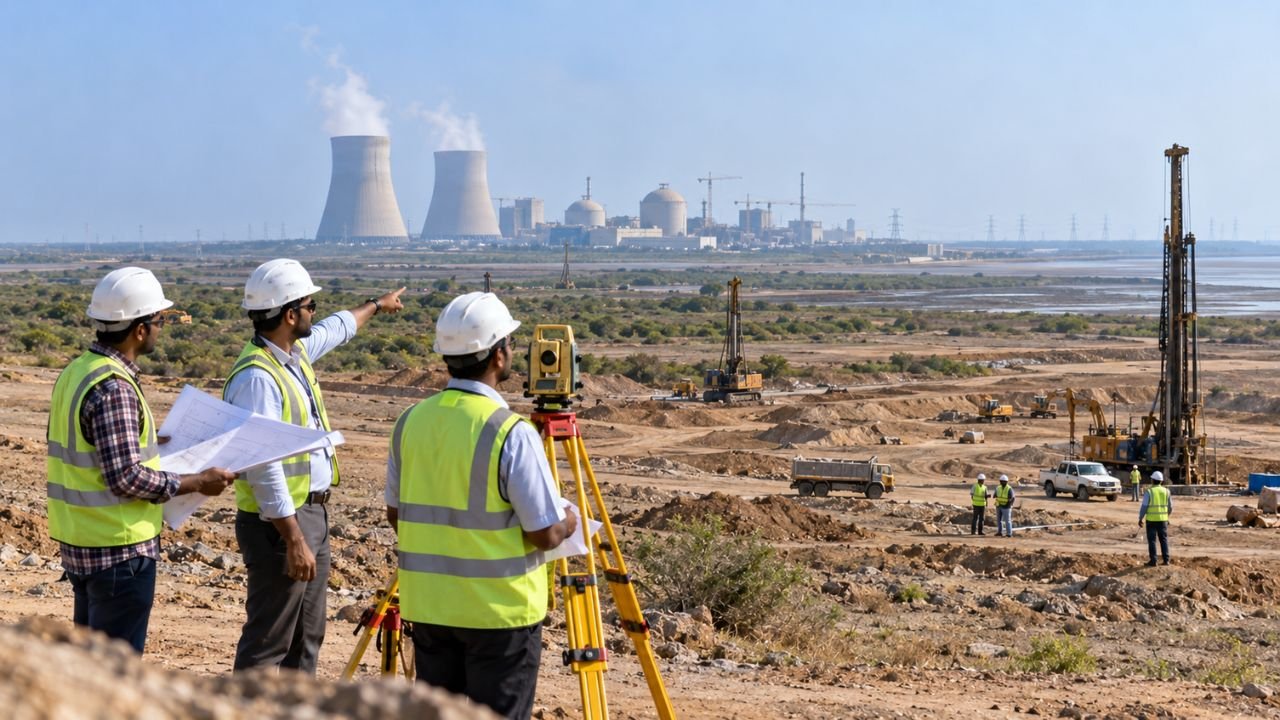
On October 1, 2026, the Gujarat State Electricity Corporation Limited and the Nuclear Power Corporation of India Limited signed a Memorandum of Understanding to develop a new nuclear power project in Gujarat. The proposed project is planned at Dhuvaran in Khambhat taluka of Anand district. The target capacity is around 4,000 MW, with an estimated investment of nearly ₹1 lakh crore. For GSECL, this agreement marks its official entry into the nuclear energy sector. For Gujarat, it signals a possible shift in how the state plans to meet its long term power needs. The project is still at an early stage, but the scale of the plan and the partners involved make it one of the most significant energy announcements in the state this year.
How GSECL and NPCIL Will Work Together
The partnership is structured as a Centre State initiative. Discussions are underway to establish a dedicated Joint Venture company that would build, construct and operate the facility. Both partners will have clearly defined responsibilities. GSECL will assess land availability and work on securing supporting infrastructure. It will also provide local logistical support for the project. NPCIL will lead site surveys and detailed technical assessments, including seismology, geotechnical analysis and cooling water availability. NPCIL will also provide overall expert guidance for the proposed project. This division of work allows GSECL to use its local knowledge and state level reach, while NPCIL brings its nuclear engineering expertise and regulatory experience to the table.
Key Details of the Dhuvaran Project
| Project Detail | Information |
|---|---|
| Proposed Location | Dhuvaran, Khambhat taluka, Anand district |
| Target Capacity | Around 4,000 MW |
| Estimated Investment | Nearly ₹1 lakh crore |
| Project Partners | GSECL and NPCIL |
| Project Stage | Preliminary and feasibility stage |
| Regulatory Framework | SHANTI Act, 2025 |
The project is currently not at the construction stage. The land has been identified, while further progress will depend on technical reports, economic viability assessments and statutory environmental and safety clearances. This means that while the plan has been formally announced, the actual building work is still some distance away.
Project Will Operate Under the SHANTI Act, 2025
The proposed project will operate under the SHANTI Act, 2025. The rules under this framework were formally notified in August 2025 to enable licensed central joint ventures to handle nuclear materials and fuel production. This regulatory framework is important because nuclear projects in India have traditionally been handled only by central government bodies. The SHANTI Act opens the door for joint ventures involving state utilities, which is exactly the model being proposed at Dhuvaran. The regulatory framework will therefore form part of the proposed project development and operation.
Why the Project Is Considered Important for Gujarat
One of the stated strategic objectives is to support grid stability and the energy mix. Gujarat has a target of setting up more than 100 GW of renewable energy by 2030. Solar and wind power depend on weather conditions. During cloudy days or low wind periods, renewable generation can drop sharply. The proposed 4,000 MW nuclear plant is expected to act as a continuous baseload power source to support grid stability. Nuclear plants run continuously for long periods and do not depend on sunlight or wind. This makes them a useful complement to a renewable heavy grid.
The project is also linked to the broader National 2047 Vision. The initiative aligns with the Government of India target of reaching 100 GW of total nuclear power capacity by 2047. If the Dhuvaran project moves forward, it would contribute a significant share to that national goal.
Current Status of the Project
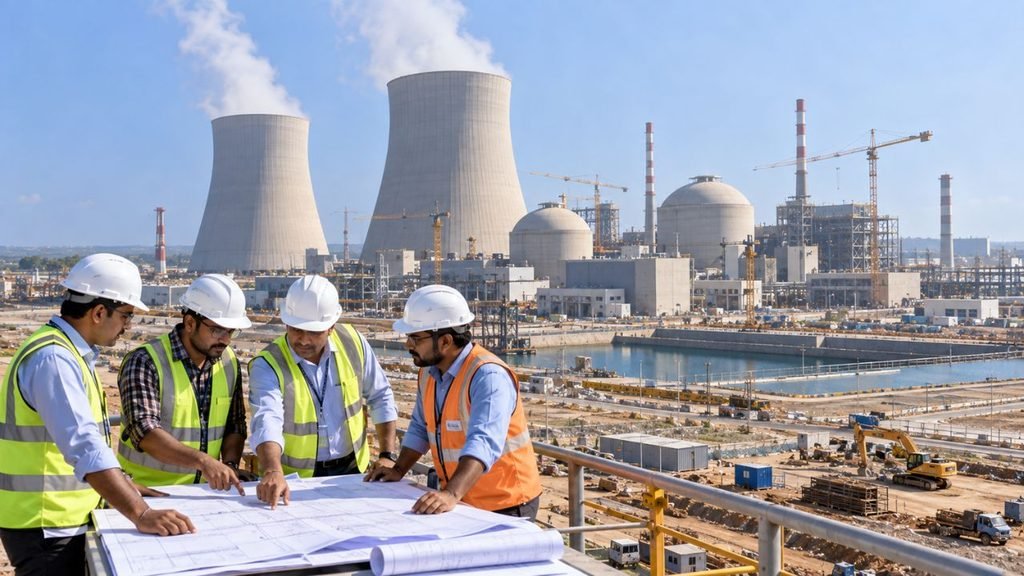
The Gujarat 4,000 MW Nuclear Project is currently at the preliminary and feasibility stage. Although the land has been identified, the project still requires further technical and economic assessment before construction can move forward. Progress toward actual construction will depend on final technical reports, economic viability assessments, statutory environmental clearances and statutory safety clearances. This means the proposed project is still in its assessment stage, with further development dependent on the required studies and clearances. For now, the MoU is a statement of intent rather than a construction schedule.
GSECL Entry Into the Nuclear Energy Sector
The MoU represents GSECL entry into the nuclear energy sector. Until now, GSECL has focused on conventional thermal power and renewable energy projects. Through the proposed partnership with NPCIL, GSECL will participate in the assessment of land and supporting infrastructure, while NPCIL will handle site surveys, technical assessments and expert guidance. The planned Joint Venture would be responsible for building, constructing and operating the facility if the project progresses through the required stages. For a state utility, entering the nuclear sector is a major step, and it reflects the growing role of state level participation in India nuclear power plans.
Conclusion
The proposed Gujarat 4,000 MW Nuclear Project at Dhuvaran is planned as a major nuclear power development with an estimated investment of nearly ₹1 lakh crore. GSECL and NPCIL have signed an MoU, with discussions underway for a dedicated Joint Venture to develop and operate the facility. The project is currently in the preliminary and feasibility stage. Its movement toward construction will depend on technical reports, economic viability assessments and statutory environmental and safety clearances. If it moves ahead, the project could play a key role in supporting Gujarat grid stability alongside the state renewable energy expansion.
Frequently Asked Questions
Q1. Where is the proposed 4,000 MW nuclear project in Gujarat planned?
A1. The project is planned at Dhuvaran in Khambhat taluka of Anand district.
Q2. Which two organisations signed the MoU for this project?
A2. The Gujarat State Electricity Corporation Limited and the Nuclear Power Corporation of India Limited signed the MoU on October 1, 2026.
Q3. What is the estimated investment for the Dhuvaran nuclear project?
A3. The estimated investment is nearly ₹1 lakh crore, with a target capacity of around 4,000 MW.
Q4. What is the current status of the project?
A4. The project is at the preliminary and feasibility stage. The land has been identified, but construction will depend on technical reports, economic viability assessments and statutory environmental and safety clearances.
Q5. Under which law will the proposed project operate?
A5. The project will operate under the SHANTI Act, 2025, whose rules were notified in August 2025 to enable licensed central joint ventures to handle nuclear materials and fuel production.