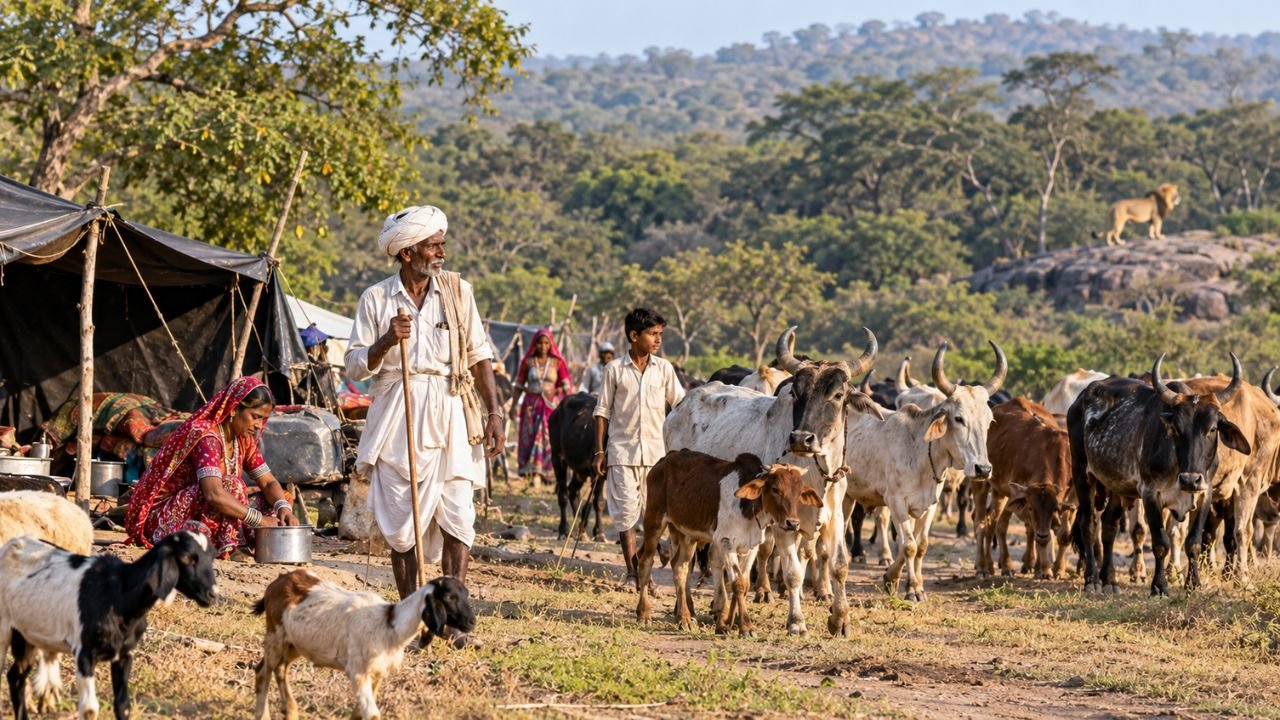
For generations, the Maldhari community has lived inside the Barda Wildlife Sanctuary with its cattle and livestock. Now the Gujarat government has opened a path for these families to move out on their own terms. Chief Minister Bhupendra Patel announced the Barda Maldhari Relocation Scheme on October 1, 2026, during the 77th Van Mahotsav in Porbandar. The scheme offers a substantial financial package and new land to families that choose to relocate. At the same time, it is designed to help Barda grow into a second home for the Asiatic lion. This is a rare situation where wildlife protection and family welfare are being addressed together, and the details of the scheme show how carefully the balance has been planned.
What the Scheme Offers to Each Family
The financial assistance under the scheme is ₹15 lakh per eligible family. The payment follows the guidelines of the National Tiger Conservation Authority and is made in a single instalment. Along with the cash amount, each relocating family is entitled to a free residential plot of 100 square yards. This plot will be located outside the boundaries of the Barda Wildlife Sanctuary and its Eco Sensitive Zone. The main benefits include a ₹15 lakh financial assistance per eligible family, payment in a single instalment, a free 100 square yard residential plot, additional livestock land based on requirement, relocation outside the sanctuary and Eco Sensitive Zone, and a fully voluntary relocation process. The combination of cash and land is meant to give families a realistic start in their new location rather than only a one time payment.
Why the Relocation Is Being Proposed
The main aim of the scheme is to develop Barda Wildlife Sanctuary as a second home for Asiatic lions. The sanctuary covers 192.31 square kilometres across the Porbandar and Devbhumi Dwarka districts. By moving pastoralist families outside the sanctuary, the government hopes to free up critical land and reduce human wildlife conflict. Another goal is to reduce biotic pressure on the forest. When human and livestock populations live inside a protected area, the natural ecosystem faces constant strain. Moving these populations outside is expected to protect the forest and create a safer environment for wildlife. This is not only about lions. It is about restoring the entire ecosystem that supports them.
Where the New Homes Will Be Located
The residential plots will be provided outside the sanctuary and its Eco Sensitive Zone. To keep the relocated families close to urban facilities, the plots will be located at least 10 kilometres away from Municipal Corporation limits and 5 kilometres away from Municipality limits. This distance rule ensures that families are not placed in another remote area with no access to schools, hospitals or markets. The idea is to move them closer to towns and cities where basic services are available, while still keeping them outside the protected forest zone. For families that have spent decades in forest settlements, this shift can make a real difference to daily life.
Scheme Details at a Glance
| Particular | Details |
|---|---|
| Community | Maldhari |
| Area | Barda Wildlife Sanctuary |
| Relocation | Voluntary |
| Financial Assistance | ₹15 lakh per eligible family |
| Payment | Single instalment |
| Residential Plot | 100 square yards |
| Livestock Plot | Up to 100 square yards, based on requirement |
| Livestock Plot Adjustment | Market value deducted from ₹15 lakh |
| Residential Location | Outside sanctuary and Eco Sensitive Zone |
| Municipal Corporation Distance | At least 10 km |
| Municipality Distance | At least 5 km |
| Sanctuary Area | 192.31 square kilometres |
| Districts | Porbandar and Devbhumi Dwarka |
Extra Land for Livestock, With a Condition
Many Maldhari families depend on animal husbandry for their livelihood. To support this, the scheme provides a separate plot of up to 100 square yards for livestock use, depending on the family requirement. However, there is an important condition attached to this benefit. The market value of the livestock plot will be deducted from the ₹15 lakh financial assistance. In simple terms, if a family takes the livestock land, that value is adjusted against the cash amount. Families should understand this adjustment clearly before deciding how much livestock land they want to claim. This condition ensures that the total benefit remains within the framework set for the scheme.
Better Access to Basic Services
Life in remote forest settlements often means limited access to healthcare, education and employment. The relocation plan is designed to place Maldhari families in areas where these services are available. The scheme is being described as a step toward mainstream integration, where families can join the wider economy and society without losing their connection to livestock based livelihoods. For children, this could mean regular schooling. For adults, it could mean better medical care and more opportunities to earn. The scheme therefore combines relocation assistance with housing and land provisions, keeping the needs of a pastoralist community in mind.
The Relocation Is Completely Voluntary
It is important to note that the relocation is entirely voluntary. No family is being forced to leave the sanctuary. However, there is an important condition for those who accept the package and move. Once a family accepts the package and relocates, all of its traditional rights, claims or interests within the Barda sanctuary area will be permanently terminated. Such families will also not be eligible for any further payouts related to the relocation. This means the decision is final in legal terms. Families should weigh the offer carefully, because accepting it closes the door on any future claim inside the sanctuary.
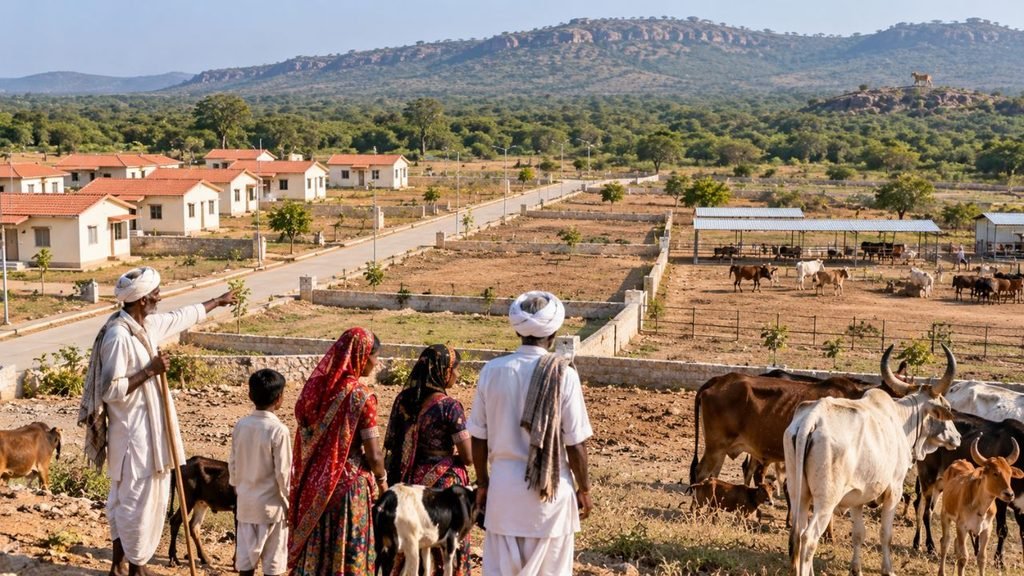
How the Scheme Will Be Implemented
The state government has set up specialised committees at both the state and district levels to oversee the programme. At the district level, the committee will be led by the respective District Collector. Its responsibilities include verifying identification documents, checking eligibility and finalising the list of families volunteering for relocation. This administrative structure is meant to keep the process transparent and to make sure that only genuinely eligible families receive the benefits. Families interested in the scheme will need to work with the district committee for document verification and final approval.
The Three Main Objectives
The scheme has three clear objectives.
- Developing a Second Home for Asiatic Lions: Barda Wildlife Sanctuary is being prepared as a second habitat for Asiatic lions outside the Gir Forest. Relocating pastoralist families will free up critical land and reduce human wildlife conflict
- Mainstream Integration: The government aims to help Maldhari families living in remote forest settlements gain better access to healthcare, education, employment and basic infrastructure
- Reducing Biotic Pressure: Moving human and livestock populations outside the sanctuary is intended to protect the natural ecosystem and provide a safer and more sustainable environment for wildlife
Conclusion
The Barda Maldhari Relocation Scheme offers eligible Maldhari families a substantial package that includes ₹15 lakh in single instalment financial assistance, a 100 square yard residential plot and provisions for livestock land. The relocation is voluntary, but families that accept the package and move out will permanently give up their traditional rights, claims and interests within the Barda sanctuary area. The scheme is designed to serve three goals at once. It prepares Barda Wildlife Sanctuary as a second home for Asiatic lions, it reduces pressure on the forest ecosystem, and it gives Maldhari families a chance to live closer to schools, hospitals and employment. Whether families choose to stay or move, the decision now rests with them.
Frequently Asked Questions
Q1. How much financial assistance is provided under the Barda Maldhari Relocation Scheme?
A1. Each eligible family that voluntarily relocates receives ₹15 lakh in financial assistance, paid in a single instalment as per National Tiger Conservation Authority guidelines.
Q2. What land benefits are included in the scheme?
A2. Each relocating family gets a free 100 square yard residential plot outside the sanctuary and Eco Sensitive Zone, plus a separate livestock plot of up to 100 square yards based on requirement.
Q3. Is the relocation mandatory for Maldhari families?
A3. No, the relocation is completely voluntary. Families can choose whether or not to accept the package.
Q4. What happens to the traditional rights of families who relocate?
A4. Once a family accepts the package and moves out, all traditional rights, claims and interests within the Barda sanctuary area are permanently terminated, and the family is not eligible for further relocation payouts.
Q5. Why is the Gujarat government proposing this relocation?
A5. The scheme aims to develop Barda Wildlife Sanctuary as a second home for Asiatic lions, reduce human wildlife conflict, reduce biotic pressure on the forest, and help Maldhari families access better healthcare, education and employment.