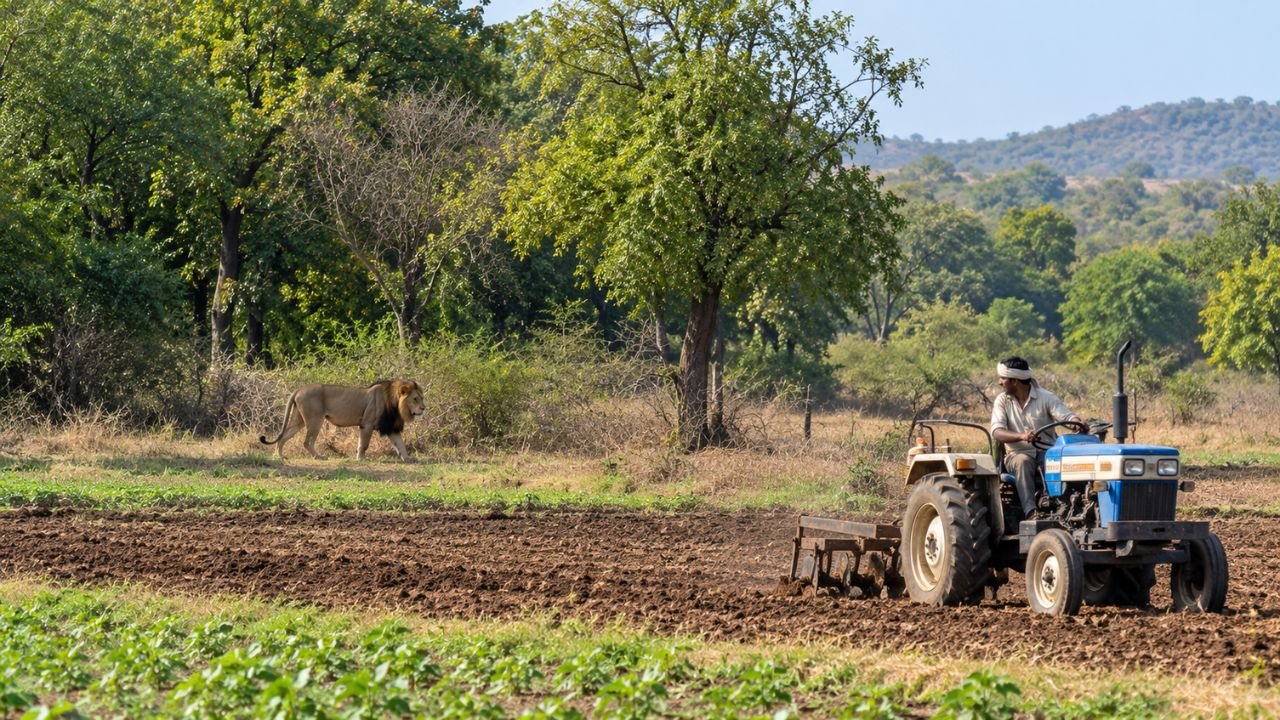
The Gujarat government has proposed changes to ecological regulations around the Gir National Park and Sanctuary to address concerns related to local agriculture and wildlife conservation. The issue is closely connected with the proposed Eco Sensitive Zone around the Gir forest, which had raised concerns among farmers and local communities in Gir Somnath, Junagadh and Amreli districts about possible restrictions on farming, property construction and everyday activities. The revised approach provides more flexibility for routine agricultural activities while keeping specific safety conditions to protect Asiatic lions. This balance is important because the Gir landscape is not just a protected forest area, it is also home to thousands of farming families whose daily lives and livelihoods depend on agricultural activities in the surrounding regions.
Gir ESZ Area Reduced Under the Revised Proposal
An earlier proposal covered around 3,328 square kilometres around Gir as an Eco Sensitive Zone. The revised proposal reduces the proposed protected buffer area to around 2,061 square kilometres. The change removes a substantial amount of human occupied agricultural land from the stricter environmental oversight described in the earlier proposal. The main purpose of the revised approach is to address the basic needs of people living and farming around the Gir landscape while continuing wildlife protection measures. This reduction reflects the government’s recognition that overly strict regulations could create unnecessary difficulties for local communities while still allowing for meaningful conservation efforts.
New Gir ESZ Rules for Farmers
The Gujarat government has clarified that routine agricultural activities will not be prohibited under the proposed approach. The rules divide activities into different categories, including activities that are permitted normally and activities that are allowed only after following specific safety conditions. For farmers, some of the important changes relate to machinery, electricity, movement, wells and fencing. This classification helps farmers understand exactly what they can do without additional permissions and what requires specific safety measures.
Use of Tractors and Farm Machinery
Farmers will be permitted to use tractors and traditional farming equipment on their agricultural land. This allows normal farming work to continue without treating the use of agricultural machinery as a prohibited activity. Farmers can therefore continue using the equipment needed for their regular agricultural operations. The use of tractors and traditional tools remains an essential part of daily farming, and the proposed rules recognise this by permitting their continued use.
Farm Electricity Connections
Normal agricultural electricity connections will also face no new policy hurdles under the proposed rules. Farmers will be able to obtain and operate regular farm electricity connections as part of their agricultural activities. This ensures that farmers can continue to power their irrigation systems, farm equipment and other essential agricultural infrastructure without facing additional regulatory obstacles.
Movement on Agricultural Land
The proposed rules do not place restrictions on regular human or resource movement within private agricultural land. This means normal movement connected with farming activities can continue on agricultural properties. Farmers and their workers can move freely across their land as needed for agricultural operations.
Rules for Digging Wells
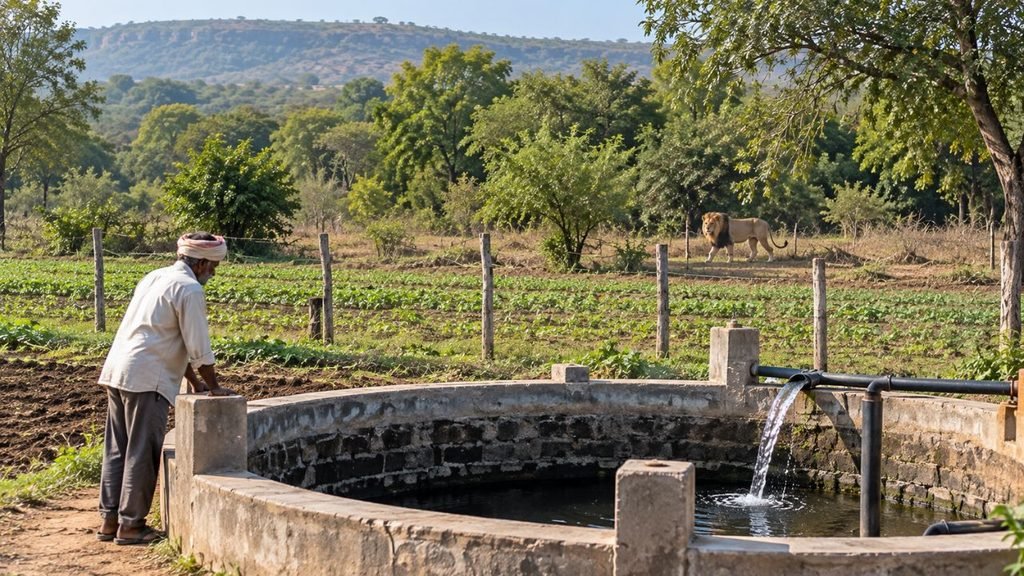
Farmers can dig open wells for irrigation, but safety conditions will apply. One of the important requirements is that farmers must construct parapet walls around open wells. The safety measure is intended to prevent Asiatic lions from accidentally falling into open wells while moving through areas around agricultural land. This requirement is particularly relevant because wildlife can move through areas outside the main forest landscape. The parapet wall requirement shows how the policy balances agricultural needs with wildlife protection.
Fencing Rules for Agricultural Land
Farmers can use fencing to protect their crops from wild animals. However, barbed wire fencing remains prohibited. The restriction is intended to prevent wildlife from being wounded or trapped by dangerous fencing. Farmers therefore need to use non hazardous fencing alternatives when protecting agricultural fields. This rule reflects the importance of ensuring that crop protection measures do not harm the very wildlife that the ESZ is designed to protect.
Commercial Activities Near the Forest Boundary
The rules for commercial activities are different from the rules for routine farming. Commercial real estate and tourism related activities face stricter conditions near the forest boundary. The proposed framework creates specific restrictions depending on the distance from the forest boundary.
- Commercial Activities Within 1 Kilometre: Within 1 kilometre of the forest boundary, commercial activities are strictly restricted. This includes new licences for commercial establishments such as hotels and resorts
- Construction Between 1 and 2 Kilometres: Between 1 kilometre and 2 kilometres from the forest boundary, only low rise construction is permitted under the conditions described in the policy. Such construction requires clearance from a district level regulatory committee led by the District Collector and the Deputy Conservator of Forests
This creates a separate set of conditions for construction compared with routine agricultural activities.
Why Were the Gir ESZ Policy Changes Made
The policy changes followed discussions between forest officials, environment ministers and local legislators. The state government recognised concerns that very strict restrictions could create difficulties for local communities. Another important factor is the movement of Asiatic lions outside official sanctuary boundaries. Lions can move into nearby agricultural areas, which means farmers and wildlife can sometimes share the same landscape. Because of this, the proposed approach combines greater flexibility for routine farming with safety conditions designed to reduce risks to wildlife. The revised policy acknowledges the reality of human wildlife coexistence in the Gir region.
Farming and Wildlife Safety Under the New Approach
The proposed rules show a clear difference between normal agricultural activities and activities that could create greater risks for wildlife.
Farmers can continue routine work such as:
- Using tractors
- Using traditional farming equipment
- Obtaining normal farm electricity connections
- Moving people and agricultural resources within private farmland
- Digging irrigation wells with required safety measures
- Using permitted fencing to protect crops
At the same time, certain safety restrictions remain in place. Open wells need parapet walls, while barbed wire fencing remains prohibited. These rules allow farming to continue while ensuring that wildlife safety is not compromised.
Gir ESZ Rules: Farming vs Commercial Development
| Activity | Proposed Rule |
|---|---|
| Tractors | Permitted for farming |
| Traditional farm equipment | Permitted |
| Normal farm electricity | No new policy hurdle |
| Movement on private agricultural land | No restriction mentioned |
| Irrigation wells | Allowed with safety conditions |
| Parapet walls around wells | Required |
| Crop protection fencing | Permitted with conditions |
| Barbed wire fencing | Prohibited |
| Commercial activity within 1 km | Strictly restricted |
| Hotels and resorts within 1 km | New commercial licences restricted |
| Low rise construction between 1 km and 2 km | Subject to district level clearance |
What Farmers Should Know
The proposed changes mean that routine farming activities will not automatically be treated as prohibited activities within the affected areas. However, farmers still need to follow the specific safety requirements attached to certain activities. For example, a farmer who digs an open irrigation well must provide the required parapet wall. Similarly, farmers protecting crops with fencing cannot use barbed wire. These conditions are designed to allow farming while reducing avoidable risks to Asiatic lions. Farmers should familiarise themselves with these requirements to ensure compliance while continuing their agricultural work.
What Property Owners and Businesses Should Know
Commercial development is subject to stricter conditions than routine agricultural work. Hotels, resorts and other commercial activities close to the forest boundary face restrictions. Construction between 1 kilometre and 2 kilometres from the forest boundary can be considered only under the required conditions and after clearance from the relevant district level regulatory committee. Therefore, commercial construction and normal farming should be understood as separate categories under the proposed Gir ESZ approach. Property owners and businesses planning development in the region should check the applicable rules before proceeding.
Why Wildlife Safety Remains Important
The Gir landscape includes agricultural areas where Asiatic lions may move outside the main forest and sanctuary boundaries. This creates the need for practical safety measures on farmland. An open well without protective walls can become dangerous for a roaming lion. Similarly, barbed wire fencing can cause injuries or trap wildlife. The proposed requirements for parapet walls and safer fencing are intended to reduce these risks while allowing farmers to continue their regular activities. These measures reflect the importance of coexistence between human communities and the wildlife that shares their landscape.
Gir ESZ Rules 2026: Important Points
The main points of the proposed changes are:
- The earlier ESZ proposal covered around 3,328 square kilometres
- The revised proposed area is around 2,061 square kilometres
- Routine agricultural activities are not intended to be prohibited
- Farmers can use tractors and traditional farming equipment
- Normal farm electricity connections will face no new policy hurdles
- Regular movement within private agricultural land is not restricted
- Farmers can dig open irrigation wells with required safety measures
- Parapet walls around wells are required
- Crop protection fencing is permitted with conditions
- Barbed wire fencing remains prohibited
- Commercial activities within 1 kilometre of the forest boundary are strictly restricted
- New hotel and resort licences within the restricted area are not permitted
- Low rise construction between 1 kilometre and 2 kilometres can be allowed with the required clearance
- The policy changes aim to address local farming needs while maintaining wildlife safety measures
Conclusion
The Gir ESZ Rules 2026 proposed changes are focused on balancing routine agricultural activities with wildlife safety around the Gir landscape. Farmers will be able to continue important activities such as using tractors, operating farm machinery, obtaining electricity connections and moving within their agricultural land. Irrigation wells can also be constructed, but required safety measures such as parapet walls must be followed. At the same time, barbed wire fencing remains prohibited, and commercial development close to the forest boundary continues to face stricter conditions. The proposed approach therefore separates routine farming from commercial development while keeping specific measures in place to reduce risks to Asiatic lions.
Frequently Asked Questions
Q1. What is the revised area of the proposed Gir ESZ?
A1. The revised proposal reduces the proposed protected buffer area to around 2,061 square kilometres from the earlier proposal of around 3,328 square kilometres.
Q2. Can farmers use tractors and farm machinery under the new rules?
A2. Yes, farmers will be permitted to use tractors and traditional farming equipment on their agricultural land.
Q3. Are there any restrictions on digging wells for irrigation?
A3. Farmers can dig open wells for irrigation, but they must construct parapet walls around the wells to prevent Asiatic lions from accidentally falling into them.
Q4. Is barbed wire fencing allowed for crop protection?
A4. No, barbed wire fencing remains prohibited to prevent wildlife from being wounded or trapped. Farmers can use permitted non hazardous fencing alternatives.
Q5. What are the restrictions on commercial activities near the forest boundary?
A5. Commercial activities within 1 kilometre of the forest boundary are strictly restricted, including new hotel and resort licences. Between 1 and 2 kilometres, only low rise construction is permitted with clearance from a district level regulatory committee.