
What is a personal loan, and when does it make sense to take one? For many people, it is a fast, structured way to borrow a fixed amount for a specific need, such as consolidating debt, paying for a medical bill or covering a major repair. But a personal loan also costs money, and a poor choice can leave you worse off.
This guide explains what is a personal loan in plain English, how it works from application to final payment, what it really costs, and how to avoid common traps. The core ideas apply worldwide, and we flag where rules differ by country. This article is general education, not personalised financial advice.
Table of Contents
- What is a personal loan? A simple definition
- How does a personal loan work?
- Key terms you need to know
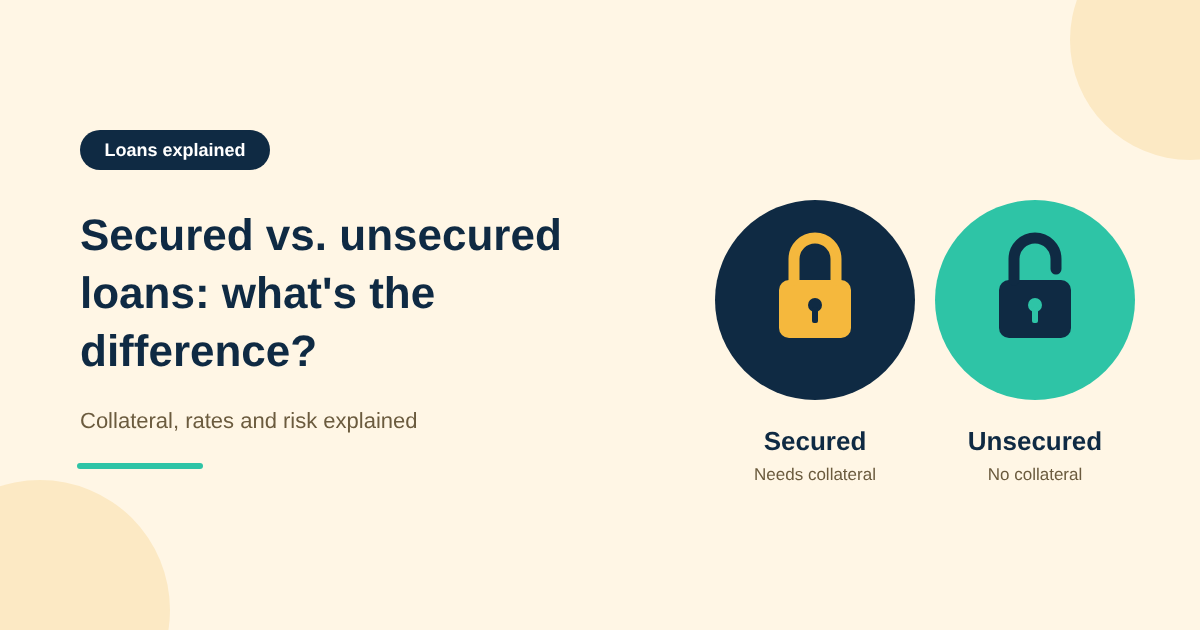
- Secured vs. unsecured personal loans
- What is a personal loan used for?
- A worked example: the real cost of borrowing
- How to qualify and apply in 9 steps
- Pros and cons
- Alternatives to consider
- How to spot loan scams
- Common mistakes to avoid
- Worldwide advice vs. country-specific rules
- Frequently asked questions
- Conclusion
What Is a Personal Loan? A Simple Definition
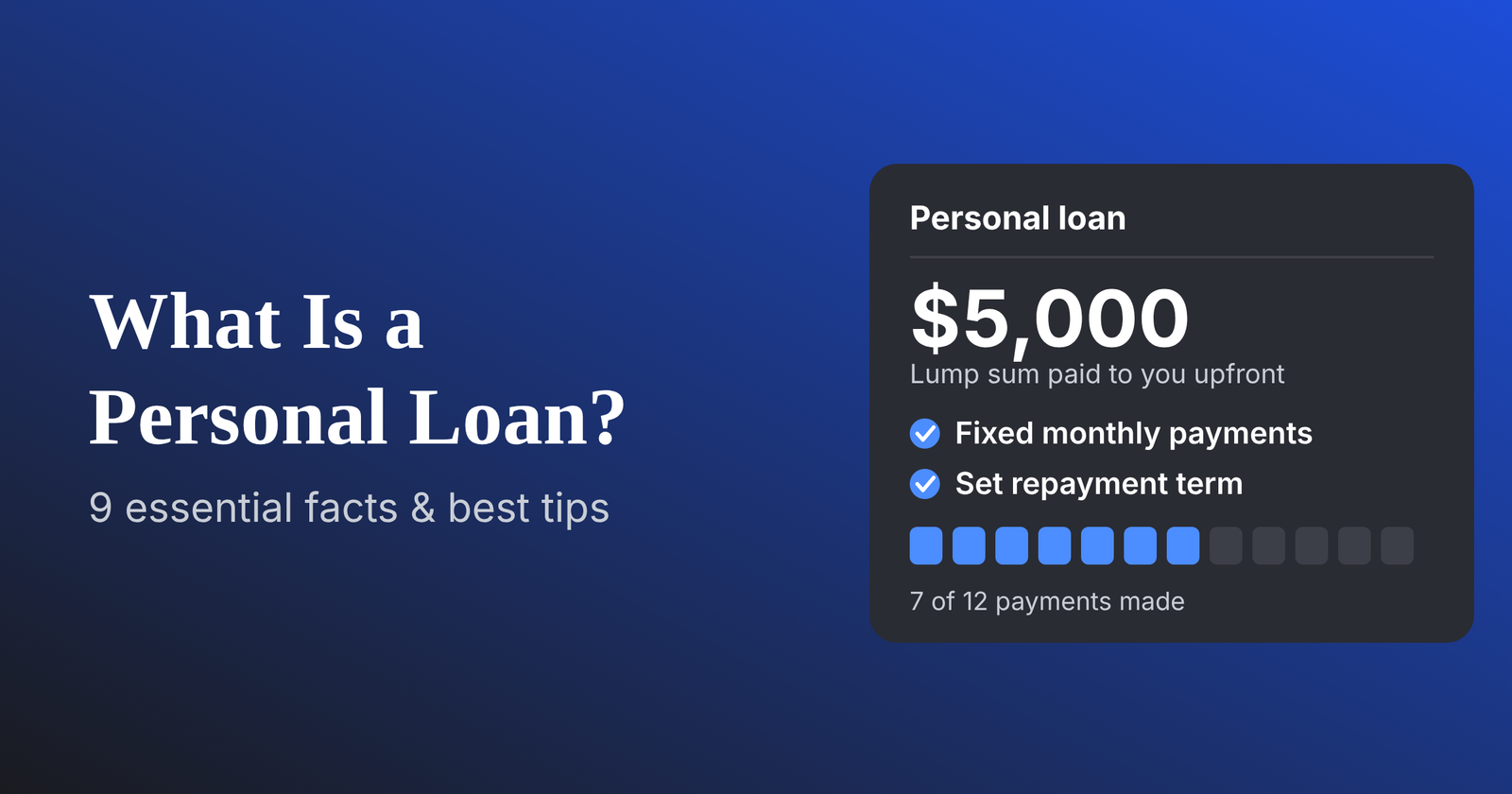
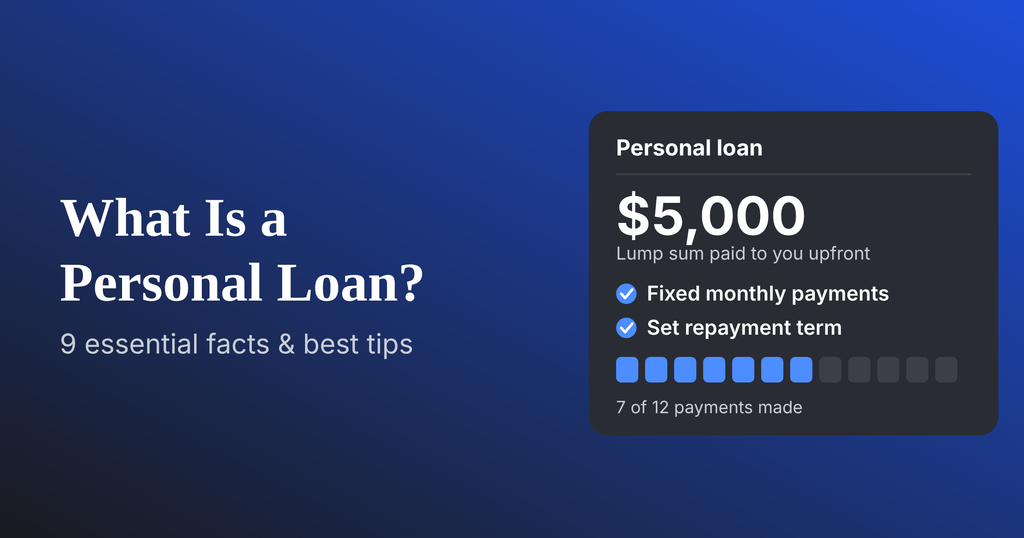
So, what is a personal loan in plain terms? It is money you borrow from a bank, credit union or online lender and repay over a set period, usually in equal monthly instalments, with interest. Because you borrow a fixed amount and repay on a fixed schedule, it is a type of instalment loan.
Unlike a mortgage or a car loan, a personal loan is not tied to a specific purchase. The lender usually gives you the money as a lump sum, and you decide how to use it, within the lender’s rules. In many countries the same product has other names, such as a consumer loan or a term loan.
How Does a Personal Loan Work?
Knowing what is a personal loan is only half the picture. You also need to understand the process:
- You apply. You tell the lender how much you want to borrow, for how long, and give details about your income, employment and existing debts.
- The lender reviews your application. It usually checks your credit history, your income and your ability to repay.
- You receive an offer. If approved, you are shown the loan amount, the interest rate, the APR, the term, the monthly payment and any fees.
- You accept and sign. Read the agreement carefully before you agree.
- You receive the funds. The money is usually paid into your bank account, sometimes minus an upfront fee. Some lenders can pay your creditors directly if the loan is for debt consolidation.
- You repay in instalments. Each payment covers part of the amount you borrowed plus interest. Early payments usually contain more interest, and later payments contain more principal.
- The loan ends. Once you have made all the payments, the debt is cleared.
Key Terms You Need to Know
| Term | What it means |
|---|---|
| Principal | The amount you borrow |
| Interest rate | The cost of borrowing, shown as a percentage of the amount owed |
| APR (annual percentage rate) | A broader cost measure that includes the interest rate plus certain fees |
| Term | The length of time you have to repay, such as 12, 36 or 60 months |
| Origination fee | A fee some lenders charge to set up the loan, often deducted from the amount you receive |
| Collateral | An asset, such as a car or savings, that backs a secured loan |
| Prepayment penalty | A fee some lenders charge if you repay early |
| Late fee | A charge for missing a payment deadline |
The U.S. Consumer Financial Protection Bureau explains that a loan’s APR is the interest rate plus additional fees charged with the loan, which is why comparing APRs gives a fairer picture than comparing interest rates alone. Other countries use similar measures, sometimes under different names, so check what your lender must disclose locally.
Secured vs. Unsecured Personal Loans
Most personal loans are unsecured, but secured versions exist.
| Feature | Unsecured personal loan | Secured personal loan |
|---|---|---|
| Collateral required | No | Yes |
| Risk if you cannot repay | Damage to credit, collection action | Same, plus you may lose the asset |
| Typical cost | Often higher rates, because the lender takes more risk | Often lower rates |
| Approval | Based mainly on credit and income | Also based on the value of the collateral |
If you consider a secured loan, be sure you are comfortable risking the asset. A lower rate is not worth losing something important.
What Is a Personal Loan Used For?
People use personal loans for many reasons. Common examples include:
- Debt consolidation: Combining several high-interest debts into one loan with a single payment, ideally at a lower overall cost
- Medical or dental bills: Covering unexpected treatment costs
- Home repairs or improvements: Paying for essential fixes or upgrades
- Large one-off expenses: Moving costs, funeral costs or urgent travel
- Education or training costs: Short courses or certification programmes
Lenders may restrict some uses, such as paying for certain investments or business costs, so read the terms. When people ask what is a personal loan good for, the best answer is usually a planned, necessary expense that you can comfortably repay, not routine spending or a luxury you could save for.
A Worked Example: The Real Cost of Borrowing
To see what is a personal loan in numbers, consider this hypothetical example. Suppose you borrow 5,000 at a fixed 12% annual rate with no fees, repaid monthly.
| Term | Monthly payment | Total interest | Total repaid |
|---|---|---|---|
| 24 months | about 235.37 | about 649 | about 5,649 |
| 36 months | about 166.07 | about 979 | about 5,979 |
A longer term lowers the monthly payment but increases the total interest. That is the trade-off at the heart of most loans.
Fees also matter. If the same lender charged a 5% origination fee on 5,000, that is 250 deducted from the loan. You would receive 4,750 but still repay the full 5,000 plus interest. This is why comparing APRs, which include certain fees, is so important.
These figures are for illustration only. Actual offers depend on your lender, credit profile, country and loan terms.
How to Qualify and Apply in 9 Steps
Lenders look at several factors, including your credit history, income, employment and existing debts. Here is how to prepare:
- Decide whether you really need the loan. Consider the purpose, the amount and whether you can wait and save instead.
- Check your budget. Make sure the monthly payment fits comfortably. Our guide on how to create a monthly budget can help you find a safe payment.
- Check your credit reports. Look for errors and fix them before you apply. Our guide on how to improve your credit score explains how.
- Calculate how much you need. Borrow only what is necessary, since every extra unit costs interest.
- Use prequalification tools, if available. Many lenders offer a soft check that shows likely rates without affecting your credit score. Confirm that it is a soft check before you proceed.
- Compare offers. Look at the APR, fees, term, monthly payment, prepayment rules and customer reviews from multiple lenders.
- Choose a regulated lender. Confirm that the lender is licensed in your country.
- Read the loan agreement. Check the APR, total repayment amount, fees, late payment rules and what happens if you miss a payment.
- Set up automatic payments. Missed payments can lead to fees and damage your credit.
Many lenders pay the funds into your bank account. If you need help deciding where to keep the money and how to separate it from daily spending, see our guide to checking account vs savings account.
Pros and Cons
Advantages
- Predictable payments over a fixed term
- Often a lower rate than credit cards or payday loans, depending on your profile
- Usually no collateral for unsecured loans
- Can simplify finances through debt consolidation
- Funds can arrive quickly with some lenders
Disadvantages
- Interest and fees increase the total cost
- Missed payments can damage your credit and lead to charges
- Lower credit scores usually mean higher rates
- Easy access can encourage borrowing more than you need
- Secured loans put your asset at risk
Alternatives to Consider
Before you borrow, check whether another option works better:
- Emergency savings. Using your own money avoids interest completely. If you have none yet, our guide to saving money on a low income shows how to build a cushion from small amounts.
- Cutting costs. You may be able to free up cash by trimming spending. See our list of everyday expenses you can cut.
- Talking to your creditor. If you are struggling with a bill, ask about payment plans or hardship options.
- Credit union or community lender loans. These can sometimes offer more affordable terms.
- Borrowing from family or friends. If you choose this route, agree on terms clearly and in writing to protect the relationship.
- Free credit counselling. Look for non-profit or government-approved services in your country.
Avoid high-cost short-term loans, such as payday loans, unless you fully understand the charges. They can trap borrowers in repeat borrowing.
How to Spot Loan Scams
Scammers exploit people who are searching for what is a personal loan and how to get one fast. Watch for these red flags:
- Guaranteed approval, especially for people with poor or no credit
- Upfront fees that you must pay before receiving any money
- Unsolicited offers by phone, text, email or social media
- Pressure to act immediately
- Requests for unusual payment methods, such as gift cards, wire transfers or cryptocurrency
- Lenders you cannot verify with a financial regulator
The U.S. Federal Trade Commission warns about advance-fee loan scams, in which a company asks you to pay a fee before the loan, then disappears. Its consumer guide, Advance-Fee Loans, explains how to recognise them. Legitimate lenders may charge an origination fee, but it is normally disclosed in writing and often deducted from the loan, not paid in advance to “guarantee” approval. Always verify any lender with your national financial regulator.
Common Mistakes to Avoid
- Borrowing more than you need. Extra money means extra interest.
- Focusing only on the monthly payment. A lower payment often means a longer term and higher total cost.
- Skipping the APR. One common mistake after learning what is a personal loan is to compare only the interest rate and ignore fees.
- Applying everywhere at once. Multiple hard credit checks can lower your score. Use prequalification tools first.
- Using a loan to fund regular spending. Borrowing to cover ongoing expenses can start a debt cycle.
- Consolidating debt without changing habits. If you clear your cards with a loan and then run them up again, you can end up with more debt.
- Ignoring the contract. Read the fees, penalties and what happens after a missed payment.
- Co-signing without understanding the risk. If the borrower misses payments, you are responsible.
For a bigger picture of how borrowing fits into your finances, read our guide on how to manage your money better.
Worldwide Advice vs. Country-Specific Rules
The answer to what is a personal loan is broadly the same worldwide: borrowed money repaid in fixed instalments with interest. But many details depend on your country:
- Interest rate caps and fee rules: Some countries limit rates or certain fees. Others do not.
- Cost disclosures: The way lenders must show costs (such as APR) and what they must include differs.
- Credit systems: Credit scoring, reporting and eligibility rules vary widely.
- Early repayment rules: Prepayment penalties and rights differ by country and contract.
- Consumer protection and complaints: Regulators and dispute processes are national.
- Tax treatment: Interest on personal loans is usually not deductible, but local rules can differ.
Always check your national regulator or consumer protection agency for official information. Please also read our Disclaimer for more detail.
Frequently Asked Questions
What is a personal loan in simple words?
In simple words, what is a personal loan? It is a sum of money you borrow from a lender and repay in regular instalments over a set time, with interest. You typically receive the money all at once and can use it for many purposes, subject to the lender’s rules.
Is a personal loan the same as a credit card?
No. A personal loan gives you a lump sum with a fixed repayment schedule. A credit card is revolving credit, which lets you borrow repeatedly up to a limit and repay flexibly, usually with a variable rate. The better choice depends on your needs and the cost of each.
What is a personal loan used for most often?
Common uses include consolidating debt, paying for medical bills, covering home repairs and funding large one-off expenses. The best uses are planned, necessary costs that you can comfortably repay.
Will a personal loan hurt my credit score?
It can affect your score in different ways. Applying may create a hard inquiry, and a new loan adds debt. Making on-time payments can help your credit over time, while missed payments can hurt it. The effect depends on your overall profile and your country’s scoring system.
Can I get a personal loan with bad credit?
Some lenders offer loans to borrowers with lower credit scores, but rates and fees are usually higher, and some offers are predatory. Compare the total cost carefully, consider alternatives such as a credit union, and never pay an upfront fee for “guaranteed” approval.
Should I use a personal loan to pay off credit cards?
It can make sense if the loan has a lower total cost than your current debts and you can keep up with the payments. Compare the APR, fees and total repayment, and avoid running up the cards again afterwards. If you are still wondering what is a personal loan worth in your situation, add up the full cost first and weigh it against other options.
Conclusion
What is a personal loan? It is a fixed amount of borrowed money, repaid in regular instalments with interest. It can be a useful tool when it fits a planned need and your budget, but it is never free money. The cost depends on the interest rate, fees and term, so always compare the APR and the total amount you will repay.
Before you borrow, check your budget, review your credit, compare several regulated lenders and read the contract carefully. If a loan still makes sense after that, you will be borrowing with confidence rather than pressure. And if you are unsure, take time to explore the alternatives. Understanding what is a personal loan and what it really costs is the best protection you have.