
Learning to manage your money better is one of the most valuable skills you can build, and you do not need a high income or a finance degree to do it. Most people were never taught the basics at school. They learn by trial and error, and the lessons can be expensive.
This beginner’s guide shows you how to manage your money better in 10 clear steps. You will learn how to set goals, build a budget, create an emergency fund, handle debt and protect your future. The advice is designed to work in any country, and we flag where rules or products differ by location. This article is general education, not personalised financial advice.
Table of Contents
- What it means to manage your money better
- 10 steps to manage your money better
- A simple money routine you can follow
- Common mistakes beginners make
- Worldwide advice vs. country-specific rules
- Frequently asked questions
- Conclusion
What It Means to Manage Your Money Better
Managing money is not about being rich or never spending on fun. The U.S. Consumer Financial Protection Bureau (CFPB) describes financial well-being as how much your financial situation and money choices give you security and freedom of choice. In its research, the CFPB identifies four building blocks: having control over your day-to-day finances, being able to absorb a financial shock, being on track to meet your goals, and having the freedom to make choices that let you enjoy life. You can read more in the CFPB’s financial well-being digest.
That is a useful way to think about it. To manage your money better, you do not need perfect spreadsheets. You need to know where your money goes, handle surprises without panic and make steady progress toward what matters to you.
10 Steps to Manage Your Money Better
Step 1: Know Your Starting Point
You cannot plan a route without knowing where you are. Spend an hour gathering the facts:
- Income: Your monthly take-home pay from all sources, after tax and deductions.
- Spending: What you actually spent over the last two or three months.
- Savings: Balances in all your accounts.
- Debts: Every loan, card or overdraft, with the balance, interest rate and minimum payment.
Write it all down in one place. Some people feel uncomfortable at this stage, but a clear picture is far less stressful than the unknown.
Step 2: Set Clear Money Goals
Goals give your money a purpose and make it easier to say no to impulse spending. Divide them by time:
- Short term (up to 1 year): Build a starter emergency fund, clear a small debt, or save for a planned purchase.
- Medium term (1 to 5 years): A house deposit, a course, a car or a wedding.
- Long term (5+ years): Retirement, children’s education or financial independence.
Make each goal specific. “Save more” is vague, but “save 600 for emergencies by December” is something you can track.
Step 3: Build a Budget That Helps You Manage Your Money Better
A budget is simply a plan for your income. It tells every unit of money where to go before it disappears. To manage your money better, start with a simple structure:
- Add up your monthly take-home income.
- List essentials first: housing, utilities, food, transport and minimum debt payments.
- Set a fixed amount for savings and debt repayment.
- Give the remainder a limit for flexible spending.
If you want a detailed walkthrough, read our guide on how to create a monthly budget. The CFPB also publishes a free guide to creating a budget and sticking with it.
Step 4: Track Spending and Trim the Leaks
A budget only works if you compare it with reality. Track your spending for at least a month, using a notebook, a spreadsheet or a banking app. You will probably find small leaks, such as unused subscriptions, unnecessary fees and forgotten renewals.
Our guide to 15 everyday expenses you can cut lists common leaks and how to fix them. The goal is not to remove every pleasure. It is to stop paying for things that do not matter to you.
Step 5: Set Up the Right Bank Accounts
Separating your money makes it easier to manage. Most people benefit from:
- A checking account for income and everyday bills
- A savings account for emergencies and goals
- Automatic transfers from checking to savings on payday
Our guide to checking account vs savings account explains how each works, what fees to watch for and how to use them together. Choose a regulated provider with low fees and check that your deposits are protected under your country’s scheme.
Step 6: Build an Emergency Fund
An emergency fund is the foundation of good money management. Without one, a surprise bill can push you into debt. In its 2017 household survey, the U.S. Federal Reserve found that 40 percent of adults said they could not cover a $400 emergency expense, or would have to borrow or sell something to do so. The pattern of thin savings is common in many countries.
You do not have to build a large cushion overnight. The CFPB’s Start Small, Save Up initiative encourages people to start with whatever they can, even $10. Try this order:
- A starter fund equal to one small emergency, such as a car repair or a utility bill
- One month of essential expenses
- Three or more months of essential expenses, as your situation allows
If money is very tight, our guide on how to save money on a low income shows you how to begin with small, regular amounts.
Step 7: Handle Debt Strategically
Debt is not always bad, but expensive debt can hold you back. To manage your money better, make sure you pay at least the minimum on every account, then focus extra payments on one debt at a time. Two popular methods are:
| Method | How it works | Best for |
|---|---|---|
| Debt avalanche | Pay extra toward the debt with the highest interest rate first | Saving the most in interest |
| Debt snowball | Pay extra toward the smallest balance first | Staying motivated with quick wins |
Both work. The best method is the one you will stick with. Avoid taking new high-cost debt, such as payday loans, and contact your lender early if you are struggling, since many offer hardship options.
Step 8: Protect and Build Your Credit
Your credit history affects your ability to borrow and sometimes the price you pay. In the United States, you can request a free credit report from each of the nationwide agencies at least once every 12 months through AnnualCreditReport.com. Check each report for errors and dispute any mistakes you find. The US government’s credit score guide explains how scores work.
The core habits are simple: pay on time, keep card balances low and apply for new credit only when you need it. For a full walkthrough, see our guide on how to improve your credit score. Credit systems differ by country, so look up your local agencies and rules.
Step 9: Protect Yourself from Big Risks and Scams
One big problem can undo years of progress. Two simple protections help:
- Insurance: Review the cover that is appropriate for your situation, such as health, home, vehicle or life insurance, depending on your country and responsibilities. Compare quotes each year, but do not reduce cover that protects you from serious loss.
- Scam awareness: Be suspicious of guaranteed returns, urgent demands for payment, unsolicited investment tips and requests for passwords, PINs or one-time codes. If in doubt, stop and verify through an official channel.
Step 10: Plan for the Long Term
Once your emergency fund and expensive debts are under control, look ahead. Long-term planning usually includes:
- Retirement savings: Use any employer plan or tax-advantaged account available in your country, especially if your employer adds contributions.
- Investing for growth: Money you will not need for many years may be suited to long-term investing, but investments can fall in value, so learn the basics and consider regulated providers.
- Reviewing your plan: Update your goals when your income, family or priorities change.
Long-term investing and retirement rules differ widely by country, so check official guidance or speak with a qualified local adviser.
A Simple Money Routine You Can Follow
Good habits are easier when they are small and scheduled. The table below shows a routine that takes only a few minutes at a time.
| Frequency | What to do | Time needed |
|---|---|---|
| Weekly | Check balances, note spending and plan meals | About 10 minutes |
| Monthly | Compare your budget with actual spending, pay bills, move money to savings and check debt progress | About 30 minutes |
| Quarterly | Cancel unused subscriptions, review fees and update your goals | About 30 minutes |
| Yearly | Review credit reports, compare insurance, check retirement contributions and reset your budget | About 1 to 2 hours |
The best way to manage your money better is to make it routine, not a once-a-year panic. Schedule these check-ins on your calendar and treat them like any other appointment.
Common Mistakes Beginners Make
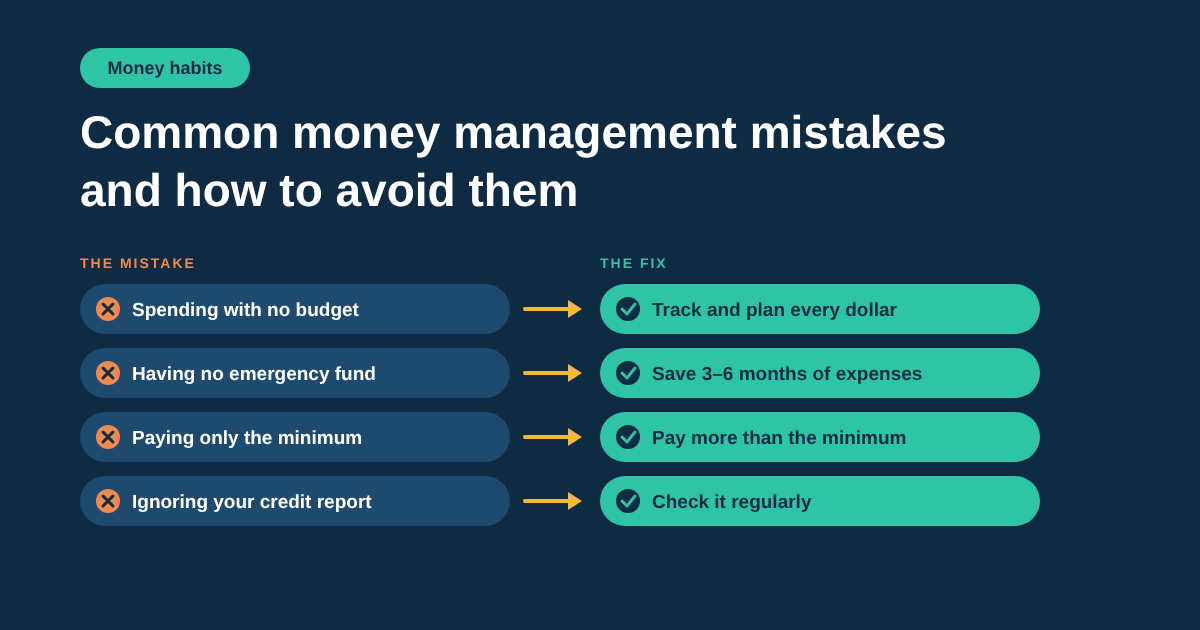
- Skipping the budget. Without a plan, money tends to disappear.
- Spending first and saving what is left. Pay yourself first by automating transfers on payday.
- Ignoring small expenses. Small leaks add up, as our guide on everyday expenses you can cut shows.
- Using only minimum payments on debt. This can keep you in debt for much longer.
- Investing before building a safety net. A surprise bill could force you to sell at a bad time.
- Setting unrealistic rules. A plan that is too strict is hard to keep. Allow a small amount for enjoyment.
- Following trends instead of a plan. Hot tips and viral advice rarely suit your situation.
- Never reviewing. Income, prices and goals change, so your plan should too.
Worldwide Advice vs. Country-Specific Rules
The basic principles to manage your money better apply almost everywhere: know your numbers, budget, save for emergencies, handle debt, protect yourself and plan ahead. Many details, however, depend on where you live:
- Taxes and benefits: Your take-home pay, tax credits and public support depend on local law.
- Banking and deposit protection: Account types, fees and protection limits vary by country.
- Credit systems: Scores, reports and consumer rights differ widely.
- Retirement and investing: Account types, tax treatment and available products are country-specific.
- Insurance: Required cover and common products depend on local rules.
For decisions involving tax, legal rights, contracts or investments, use official sources or a qualified local adviser. Please also read our Disclaimer for more detail.
Frequently Asked Questions
What is the first step to manage your money better?
The first step to manage your money better is to find out where you stand. Gather your income, spending, savings and debts in one place. Once you can see the full picture, creating a budget and setting goals becomes much easier.
How long does it take to manage your money better?
You can start seeing results within one or two months, such as fewer overdrafts and a clearer view of your spending. Bigger outcomes, like a full emergency fund or paying off a large debt, take longer. The habits matter more than speed.
What is the best budgeting method for beginners?
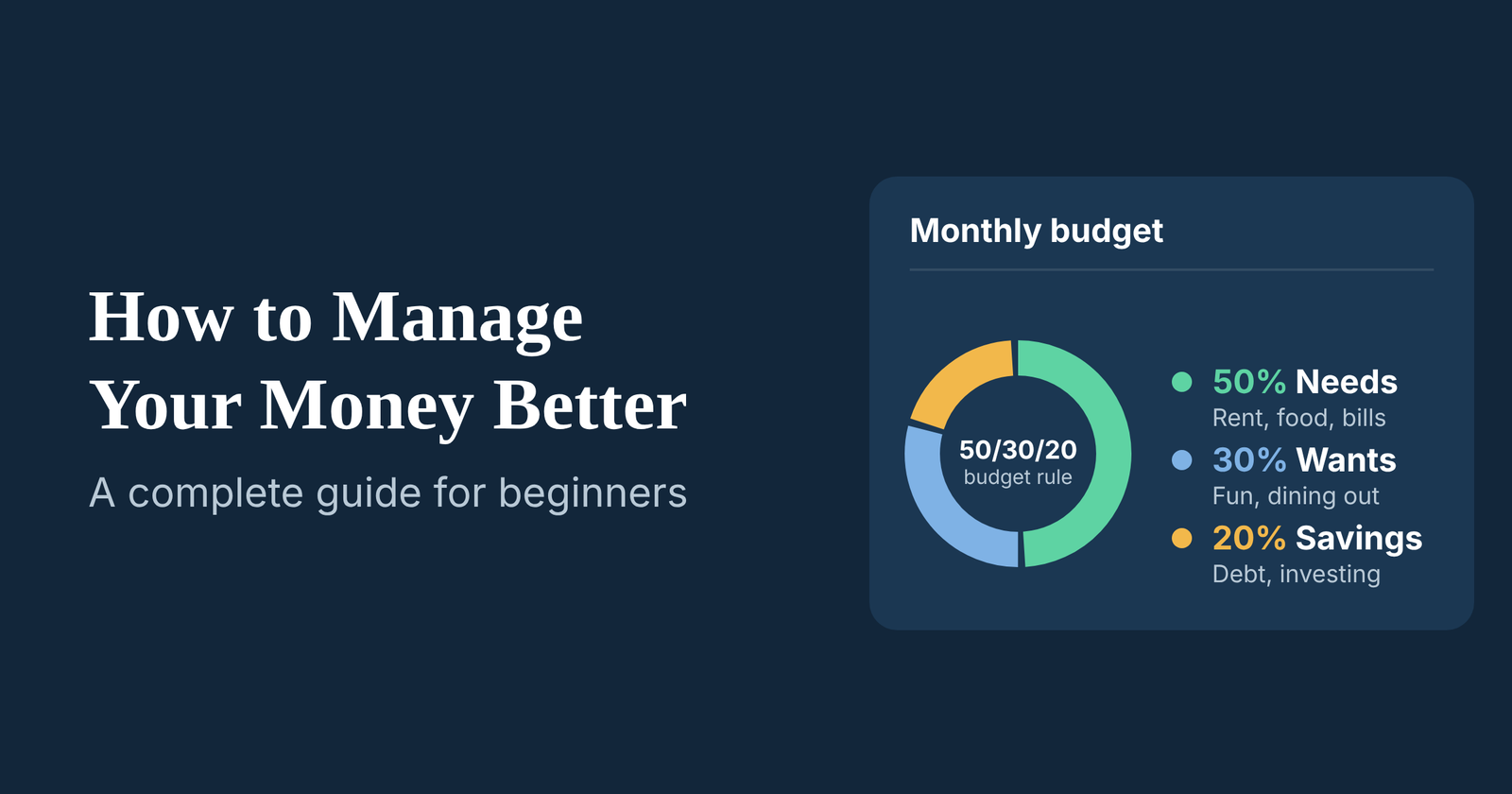
A simple plan works best. Many beginners start with the 50/30/20 approach, which divides income into needs, wants and savings or debt, then adjust the percentages to fit their reality. If your income is tight, start with essentials and a small fixed savings amount.
Should I save or pay off debt first?
For most people, the best approach is to do both in stages. Build a small emergency fund first so a surprise bill does not force more borrowing. Then pay down high-interest debt aggressively while still making minimum payments on everything else.
Can I manage my money better with a low or irregular income?
Yes. Budget from your lowest typical month, cover essentials first, and save extra income in stronger months to cover weaker ones. Small, regular savings still help, even if the amounts are modest.
Do I need an app to manage my money?
No. A notebook or spreadsheet works well. Apps can help with tracking and automation, but choose one with a clear privacy policy and no hidden fees, and remember that no tool replaces the habit of reviewing your money regularly.
Conclusion
To manage your money better, you do not need to be perfect. You need a clear starting point, a few meaningful goals, a simple budget, an emergency fund and a plan for debt. Add steady habits, such as a weekly check-in and automatic savings, and you will be well ahead of where most people begin.
Pick one or two steps from this guide to start this week, such as writing down your numbers or opening a separate savings account. Then build from there, one step at a time. Each small step makes it easier to manage your money better, and the confidence that comes with it is worth as much as the money itself.