What is a credit report, and why does every lender seem to care about it? A credit report is a detailed record of how you have borrowed and repaid money. It quietly influences whether you can get a loan, a credit card, a rental home and, in some places, even certain jobs or services. Understanding what it says, and checking it regularly, is one of the simplest ways to protect your finances.
Whether you are asking what is a credit report for the first time or you want to check yours properly, this guide walks you through it step by step. The principles apply worldwide, but the names of the agencies, your legal rights and how often you can get a free copy differ by country, so we flag those differences as we go. This article is general education, not personal financial advice.
Table of Contents
- What Is a Credit Report? A Plain-English Definition
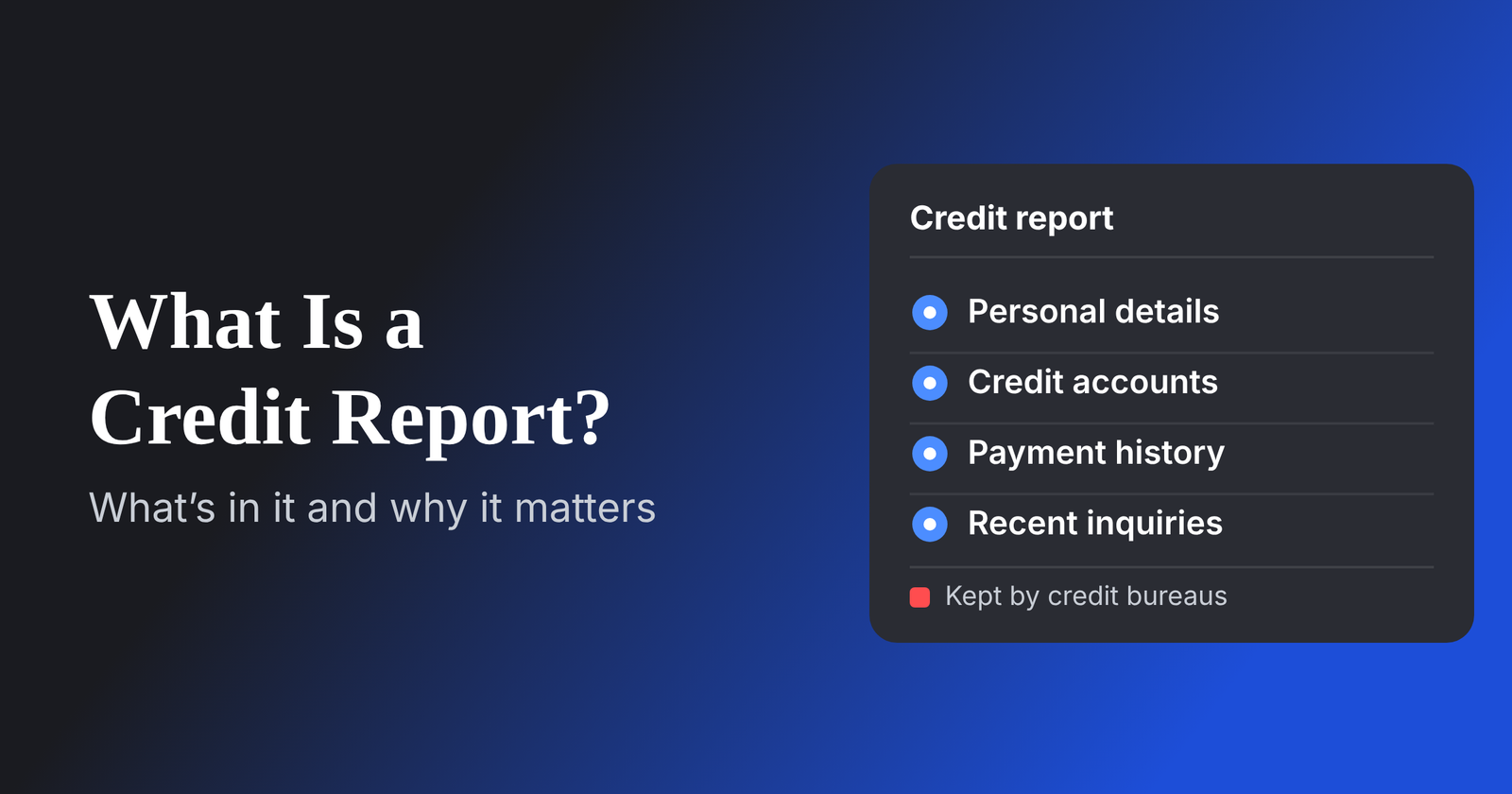
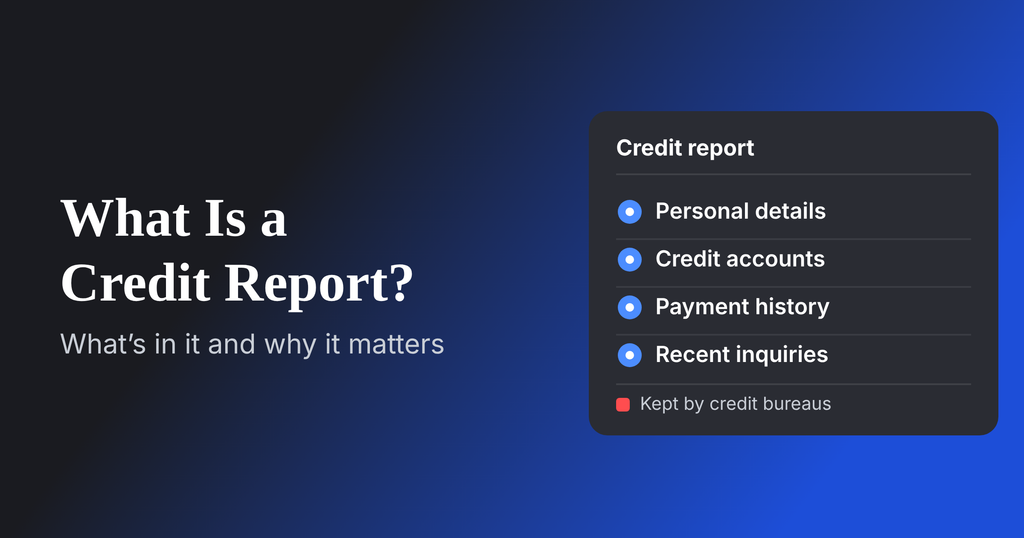
- What Is a Credit Report Made Of? Main Sections Explained
- Credit Report vs. Credit Score: What Is the Difference?
- What Is a Credit Report Used For, and Who Can See It?
- How to Check Your Credit Report Step by Step
- How to Read Your Report, Spot Errors and Fix Them
- A Hypothetical Example: What One Error Could Cost
- Common Mistakes People Make With Credit Reports
- Worldwide Advice vs. Country-Specific Rules
- Frequently Asked Questions
- Conclusion: Your Next Step
What Is a Credit Report? A Plain-English Definition
A credit report is a record of your credit history, compiled by companies usually called credit bureaus or credit reference agencies. Lenders and other businesses send these companies information about the accounts you hold and how you pay them. The agency organises that information into a file linked to your name and personal details.
Quick Answer: What Is a Credit Report in One Sentence?
It is a summary of your borrowing and repayment history that lenders use to judge how risky it may be to lend to you.
Think of it as a school report for how you use credit. In many countries it does not record your salary, your savings or your personal opinions. It records facts such as which accounts you have opened, whether payments arrived on time and how much you owe.
If you have never borrowed, your file may be very thin or empty. That can make a first application harder, because a lender has little to go on. Now that you know what is a credit report in plain terms, the rest of this guide shows you how to read and check one.
What Is a Credit Report Made Of? Main Sections Explained
Reports differ from country to country, but most include the same building blocks.
| Section | What it typically shows |
|---|---|
| Personal details | Your name, current and past addresses, date of birth and sometimes employment details |
| Credit accounts | Credit cards, loans, mortgages and overdrafts, with limits, balances and opening dates |
| Payment history | Whether payments were made on time, late or missed |
| Enquiries | A record of businesses that checked your report when you applied for credit |
| Public records and collections | Court judgments, insolvency records or debts passed to collectors, depending on local rules |
How long negative items stay on a report depends on where you live. In many countries it is several years, but the exact period varies, so check your local rules rather than assuming.
Credit Report vs. Credit Score: What Is the Difference?
People often mix up the two. Once you understand what is a credit report, the score is easy to place: it is a number or rating that summarises the report.
| Credit report | Credit score | |
|---|---|---|
| What it is | A detailed record of your accounts and payments | A number or band summarising your risk |
| Format | Pages of information | A single figure or rating |
| How it is produced | Compiled by credit agencies | Calculated using models that differ between agencies and lenders |
| Best used for | Checking accuracy and spotting fraud | Getting a quick sense of your standing |
Because each agency and lender may use its own model, the same person can have different scores in different places. In some countries a free report does not include a score, so look at what your provider actually offers. If you want to raise your score once you have checked your report, our guide on how to improve your credit score covers the habits that matter most.
What Is a Credit Report Used For, and Who Can See It?
So what is a credit report used for in practice? Mostly, decisions about you. Lenders may use it to decide whether to approve an application, how much to offer and what interest rate to charge. If you are thinking about borrowing, our explainer on what is a personal loan shows how lenders weigh this kind of information.
Who can see your report depends on local law, but these are common patterns:
- Lenders usually check it when you apply for credit, often with your permission.
- Landlords, employers and some service providers may be able to see some information in certain countries, often limited. In the UK, for example, MoneyHelper says employers and landlords can usually see only public record information.
- You have the right, in many countries, to see your own report.
Anyone checking your file normally needs a legitimate reason or your consent. If someone looks at your report without a reason you recognise, treat it as a warning sign.
How to Check Your Credit Report Step by Step
In most systems, looking at your own report is treated as a soft check and does not lower your score. Confirm this with your local agency or regulator before you start. If you have been wondering what is a credit report really showing about you, the only way to find out is to request it.
- Find the official route for your country. Start with your national consumer protection agency, financial regulator or government money guidance site. In the United States, the Federal Trade Commission explains that free credit reports are available through AnnualCreditReport.com, including a permanent weekly option from each nationwide bureau. In the UK, MoneyHelper explains that credit reference agencies must provide you with a free copy. In Australia, the OAIC says you can get a free copy once every three months.
- Gather your details. You may need your full name, date of birth, current address and previous addresses. Only enter them on an official or well-verified site.
- Request your report from every agency. Agencies can hold different information, so it is often worth checking all of them, as MoneyHelper notes.
- Use a private device and network. Save or print your report and store it securely, because it contains sensitive personal data.
- Set a reminder. Check at least once a year, and again a couple of months before any major application such as a mortgage.
Beware Imposter Sites and Scams
Scammers set up fake “free report” websites to harvest personal details. The FTC warns that imposter sites may use “free report” in their names or copy official addresses. Never pay to see a report you are legally entitled to receive free, and do not give your identity details to unsolicited callers, texts or emails. Always type the official web address yourself or reach it through a regulator’s page.
How to Read Your Report, Spot Errors and Fix Them
When your report arrives, go through it slowly with a highlighter. Look for:
- Personal details: misspelled names, wrong dates of birth and addresses where you never lived
- Unfamiliar accounts: these may signal identity theft
- Paid or closed accounts still shown as open or overdue
- Late payments you made on time
- Duplicate debts listed more than once
- Wrong balances or limits
- Enquiries from companies you do not remember dealing with
If you find a mistake, follow a clear process:
- Collect evidence. Gather statements, receipts and letters that prove your case.
- Contact the agency. Use its official dispute process and ask for the entry to be investigated and corrected.
- Contact the lender. The business that supplied the information can often correct it at source.
- Keep records. Note dates, reference numbers and who you spoke to, and follow up if you do not hear back.
- Report suspected fraud. If an account is not yours, tell the lender, your local authorities and your national consumer agency. Check whether your country offers fraud alerts or freezes.
Rules and timeframes for disputes vary, so look up the process on your official agency or regulator site.
A Hypothetical Example: What One Error Could Cost
Imagine a hypothetical borrower, Sam, who plans to borrow 10,000 currency units over three years. Sam’s report wrongly shows a late payment on an account that was paid on time. Because of this error, the lender offers a hypothetical rate of 12 per cent instead of the 9 per cent it would have offered on an accurate file.
To keep the maths simple, this example uses simple interest on the full amount for the whole period.
| Scenario | Hypothetical rate | Calculation | Interest over 3 years |
|---|---|---|---|
| Accurate report | 9% | 10,000 × 0.09 × 3 | 2,700 |
| Report with the error | 12% | 10,000 × 0.12 × 3 | 3,600 |
| Difference | 3 percentage points | 3,600 − 2,700 | 900 |
Real loans usually charge interest on a shrinking balance, so the actual difference would be smaller, and lenders consider more than just the report. Even so, this hypothetical shows why it pays to learn what is a credit report holding about you before you apply. Sam checks two months ahead, finds the error, disputes it and has it fixed in time. Starting early matters, because corrections can take weeks.
Common Mistakes People Make With Credit Reports
- Only checking when applying for credit. Errors found at the last minute are harder to fix in time.
- Checking just one agency. A single report may not show the full picture.
- Using unofficial or paid sites to see a report you could get free from an official source.
- Ignoring small errors. A typo in an address can cause mismatches that hurt applications.
- Confusing the report with the score. The score is only a summary of what the report contains.
- Disputing without evidence. Documents make corrections quicker and more likely.
- Applying for lots of credit at once. Each application may leave a record on your file.
- Never getting as far as asking “what is a credit report and what does mine say?”
Credit health is part of your overall finances. For the bigger picture, see our guide on how to manage your money better, and our explainer on good debt vs bad debt will help you decide which borrowing is worth the risk.
Worldwide Advice vs. Country-Specific Rules
The core advice applies almost everywhere: check your report regularly, look for errors and dispute them promptly. What differs is the system around it.
| Topic | Worldwide principle | Country-specific detail |
|---|---|---|
| Free access | Many countries give you a right to see your report | The US offers free weekly reports through an official site; the UK requires agencies to provide a free copy; Australia allows a free copy every three months |
| Who compiles reports | Private or regulated agencies collect the data | The names and number of agencies vary |
| How long negatives stay | Old negative items do not last forever | The time limit differs by country and by type of record |
| Disputes | You can challenge inaccurate information | The process and deadlines vary |
| Scores | Reports feed into scoring models | Ranges, names and methods differ |
In short, what is a credit report in one country may look different in another, so always rely on your own national regulator or consumer agency. If you are still working out your budget before applying for credit, our guide on how to create a monthly budget is a useful starting point. Please also read our disclaimer, and check with an official source or a regulated adviser about your situation.
Frequently Asked Questions
What is a credit report and what does it include?
A credit report is a file of your credit history compiled by credit agencies. It usually includes personal details, credit accounts, payment history, enquiries and, depending on local rules, public records. It does not normally show your savings or income.
How often should I check my credit report?
A good rule is at least once a year, and again a couple of months before a big application such as a mortgage. If your country allows frequent free checks, you might look more often, especially if you suspect fraud. Always use official sources.
Does checking my own credit report lower my score?
In most systems, no. Checking your own report is usually treated as a soft check that lenders do not see as a new application. Confirm the rules with your local agency or regulator.
Can I get a credit report if I have never borrowed?
Yes, but it may be empty or very thin. That is not an error, only a sign that no lender has reported anything about you yet. It can make a first application harder, so it helps to build a track record gradually and responsibly.
What should I do if I find a mistake?
Gather evidence, then contact both the credit agency and the lender that supplied the information. Ask for an investigation and correction, and keep records of every step. If you think the entry is the result of fraud, report it to the lender and your local authorities.
Why should beginners ask what is a credit report before applying for a loan?
Because lenders may rely on it to decide whether to approve you and what rate to offer. If you know what is a credit report holding about you, you can fix mistakes before they cost you money. It also helps you prepare realistic expectations before you apply.
Conclusion: Your Next Step
So, what is a credit report? It is the record that tells lenders how you have handled credit in the past, and it can affect the offers you receive for years. The good news is that you can usually see it for free through official channels, and a few minutes of checking can catch costly mistakes.
Now that you know what is a credit report and how it works, your next step is simple. This week, find the official free-report route for your country, request your report from every agency and read it line by line. If you spot errors, start the dispute process straight away.
Make it a habit, not a one-time task. Every time you understand what is a credit report more clearly, you gain more control over your borrowing. When you are ready to build on that knowledge, our guide on how to improve your credit score is the natural next read.