

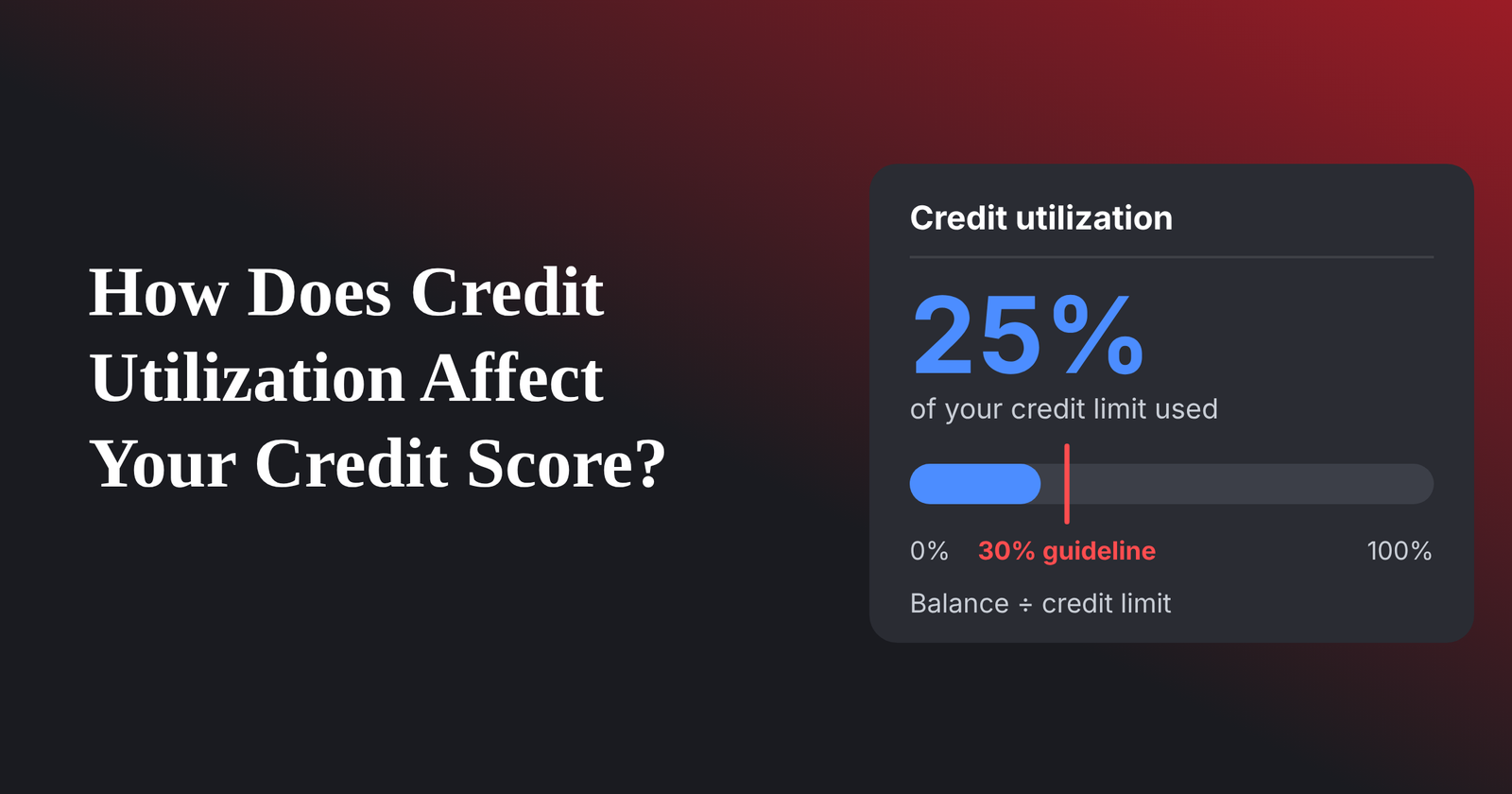
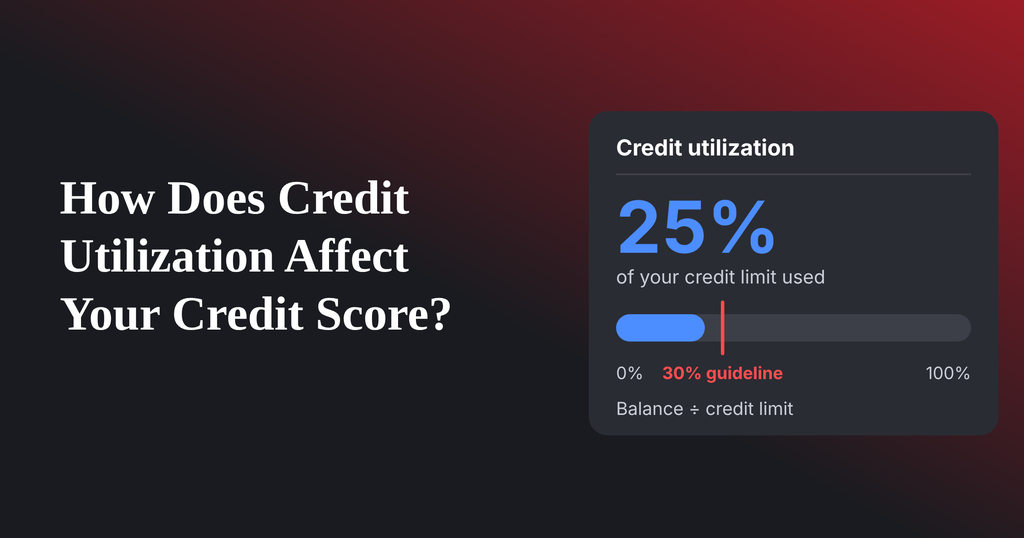
Credit utilization is the share of your available credit that you are actually using, and it is one of the most influential and most controllable factors in many credit scoring systems. If your cards have a combined limit of 10,000 and you owe 2,000, you are using 20% of your available credit. Lenders often read a high figure as a sign of financial strain, while a low figure suggests you are managing credit comfortably. This guide is written for readers worldwide, so it uses neutral currency amounts and flags where national rules and scoring systems differ. It is general education, not personal financial, legal or tax advice.
In this article you will learn what credit utilization is, how it affects your credit score, how to calculate it and seven ways to lower it. You will also see a hypothetical worked example, common myths and mistakes, and answers to six frequently asked questions. If you want the wider picture first, start with our guide on how to improve your credit score.
Table of Contents
- What Is Credit Utilization?
- How Credit Utilization Affects Your Credit Score
- How to Calculate Your Credit Utilization
- Hypothetical Worked Example: Credit Utilization in Action
- 7 Ways to Lower Your Credit Utilization
- Myths About Credit Utilization
- Common Mistakes to Avoid
- Worldwide Advice vs. Country-Specific Rules
- Frequently Asked Questions
- Conclusion
What Is Credit Utilization?
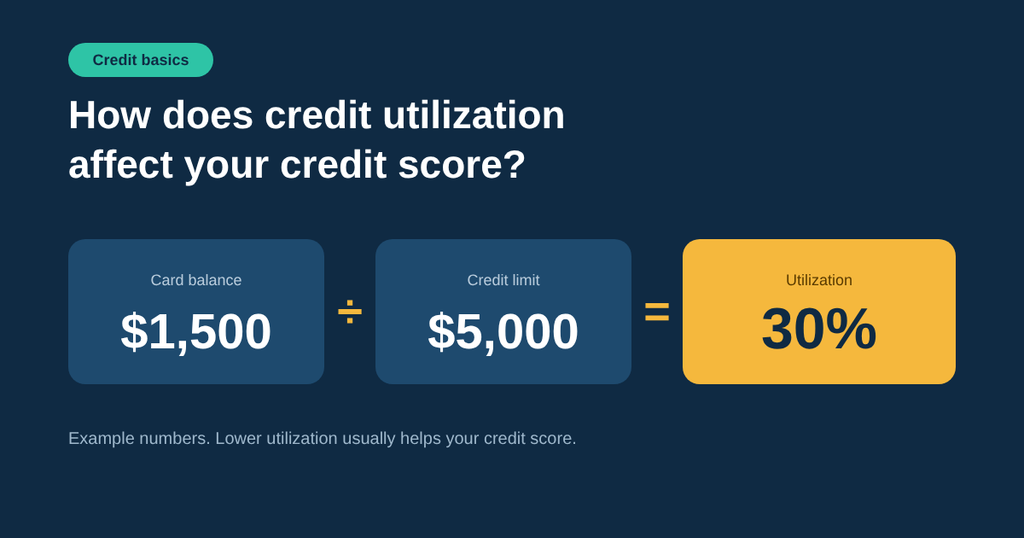
Credit utilization, sometimes called your credit use or utilization rate, compares how much revolving credit you are using with how much you have available. Revolving credit mainly means credit cards and lines of credit, where you can borrow, repay and borrow again up to a limit.
The Financial Consumer Agency of Canada explains it with a simple example: if your card has a 5,000 limit and you normally use 1,000, your credit utilization rate is 20%. The formula is the same everywhere: canada
Credit utilization = total balances ÷ total credit limits × 100
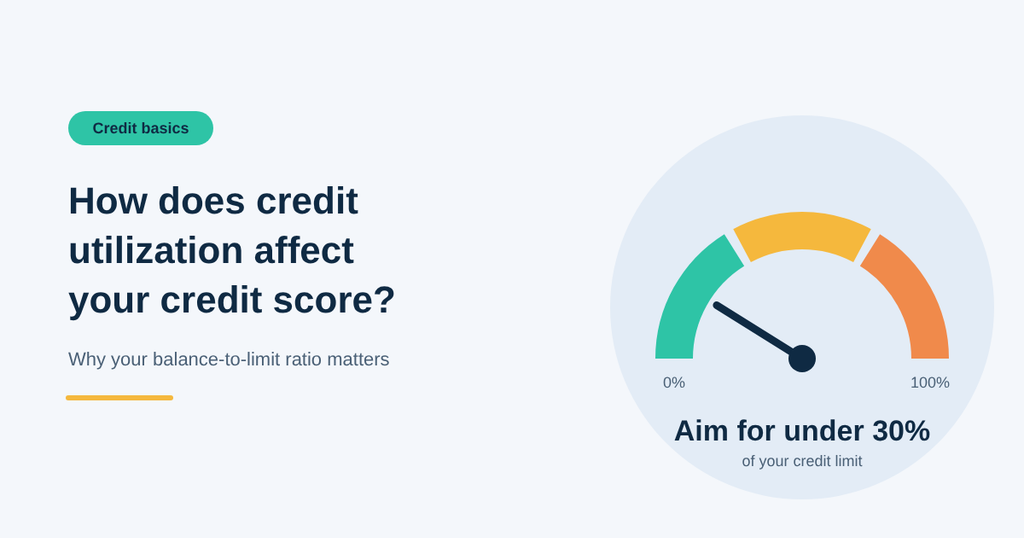
The agency also advises aiming to use less than 30% of your total limit, as set out on its improving your credit score page.
How Credit Utilization Affects Your Credit Score
A credit score is a number that summarises your credit report. The same agency notes that credit bureaus and lenders use different formulas and do not share the exact details, but a score generally goes up when you pay on time and use credit responsibly, and goes down when you miss payments or carry too much debt. You can read more in its credit report and score basics. canada
Credit utilization fits into this picture in a straightforward way:
- Lower is generally better. A low rate suggests you are not stretched.
- A high rate can pull a score down. Using most of your limit can signal risk to lenders.
- It can change quickly. Unlike a late payment, which stays on your record, utilization reflects your current balances. When balances fall, the ratio improves.
- Exact weight varies. Each scoring model treats it differently, and some countries use different systems altogether.
Lenders use your credit record to decide whether to lend, how much interest to charge and what limit to offer, so a healthy credit utilization rate can help you borrow on better terms.
Why Credit Utilization Can Change From Month to Month
Your reported credit utilization depends on the balance recorded when the lender reports to the credit bureau. Many lenders report around the statement date, not the due date. That means you can pay in full every month and still show a high balance on your report if you spend heavily before the statement closes. The Canadian agency therefore advises keeping your monthly utilization low even when you pay the full balance.
How to Calculate Your Credit Utilization
Follow these steps to work out your own rate:
- List every credit card and line of credit, with its limit and current balance.
- Add up all balances.
- Add up all limits.
- Divide total balances by total limits and multiply by 100.
- Repeat for each card individually, since some scoring models also look at single accounts.
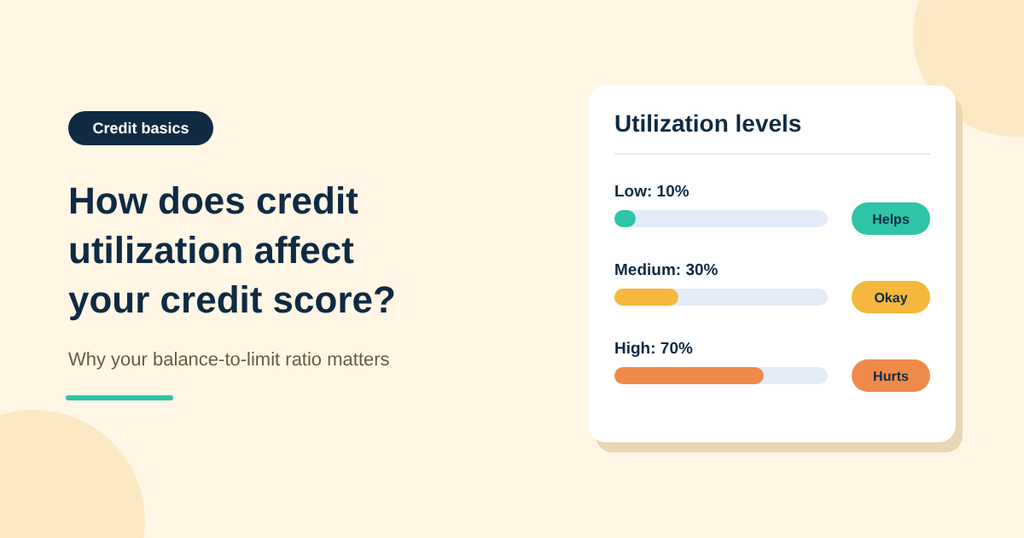
Here is a rough guide to how different levels are often viewed. These bands are not official cut-offs, and every scoring model differs.
| Utilization range | General signal |
|---|---|
| 0% to 10% | Very low use, usually viewed favourably |
| 10% to 30% | Moderate use, commonly seen as healthy |
| 30% to 50% | Elevated use, may start to weigh on a score |
| Over 50% | High use, more likely to hurt a score |
| Over 100% | Over the limit, which is generally best avoided |
Hypothetical Worked Example: Credit Utilization in Action
The following example is hypothetical and uses a neutral currency. Imagine someone with three credit cards:
| Card | Limit | Balance | Utilization |
|---|---|---|---|
| Card A | 3,000 | 1,800 | 60% (1,800 ÷ 3,000) |
| Card B | 5,000 | 500 | 10% (500 ÷ 5,000) |
| Card C | 2,000 | 0 | 0% |
| Total | 10,000 | 2,300 | 23% (2,300 ÷ 10,000) |
Overall credit utilization is a moderate 23%, but Card A is at 60%, which could still matter to some scoring models. Now see how different actions change the picture:
| Scenario | Total balance | Total limit | Overall utilization |
|---|---|---|---|
| Starting point | 2,300 | 10,000 | 23% |
| Pay 900 off Card A | 1,400 | 10,000 | 14% |
| Card A limit raised to 4,500, balance unchanged | 2,300 | 11,500 | 20% |
| New 2,000 purchase on Card C | 4,300 | 10,000 | 43% |
After paying 900, Card A falls to 30% (900 ÷ 3,000). If the limit rises to 4,500 with no change in spending, Card A sits at 40% (1,800 ÷ 4,500). The new purchase pushes overall use to 43% (4,300 ÷ 10,000). The example shows that credit utilization responds to both balances and limits, and that it can move quickly in either direction.
7 Ways to Lower Your Credit Utilization
Use these seven strategies to bring your credit utilization down.
- Pay down balances. This is the most direct fix. Moneysmart’s credit card calculator helps you see how repaying a larger fixed amount reduces your balance and your interest costs. Our guide to paying off credit card debt faster sets out practical methods. moneysmart
- Pay before the statement closes. Because balances are often reported around the statement date, an extra payment before then can lower the figure that appears on your report.
- Make smaller, more frequent payments. Paying several times a month keeps the reported balance down.
- Ask for a higher limit, carefully. A higher limit lowers your ratio if your spending stays the same. Check whether the lender will run a credit check first, and do not treat the extra room as extra spending money.
- Keep old accounts open where it is sensible. Closing a card removes its limit from your total, which can raise your ratio. Weigh this against any annual fees.
- Consider consolidating, with care. Moving card balances into a loan can reduce revolving utilization, but only if you do not run the cards back up and the total cost is lower. Our explainer on what is a personal loan covers the basics, and our guide on good debt vs bad debt can help you judge the trade-off.
- Plan your spending. A budget stops new charges from undoing your progress. Our guide on how to create a monthly budget shows how.
Never go over your limit. The Canadian agency lists staying within your limits as a key habit, and going over can bring fees and extra damage to your record.
Myths About Credit Utilization
- “I need to carry a balance to build credit.” You do not. Carrying a balance costs interest and raises your utilization. Using a card and repaying it is enough.
- “If I pay in full, my utilization is always zero.” Not necessarily. The reported balance depends on when your lender reports.
- “30% is a magic number.” It is a common guideline, not a rule. Lower is generally better.
- “Only my overall ratio matters.” Some models also look at individual cards.
- “Checking my own score lowers it.” Checking your own report is usually treated differently from a lender’s credit application, but rules vary, so check your local guidance.
Common Mistakes to Avoid
- Maxing out a card: very high use on any card can hurt your standing.
- Ignoring statement dates: a high balance at the reporting date can show up even if you pay it off days later.
- Closing your oldest or highest-limit card without thinking: this can raise your ratio and shorten your credit history.
- Opening many new accounts at once: applications can leave inquiries on your record.
- Spending a new limit: a higher limit helps only if your balances stay the same.
- Paying only minimums: balances stay high, interest builds and credit utilization stays elevated.
- Overlooking errors: check your credit report for wrong balances or limits and dispute mistakes through the official process in your country.
Worldwide Advice vs. Country-Specific Rules
The basic idea that using less of your available credit looks safer to lenders applies in many places. The details differ.
| Applies worldwide | Check locally |
|---|---|
| Keep balances low compared with limits | Which scoring model lenders in your country use |
| Pay on time, every time | How much weight utilization carries and whether single cards matter |
| Avoid going over your limit | When and how lenders report balances to credit bureaus |
| Check your report for errors | How to get your free report and dispute mistakes |
| Be cautious with new credit | Whether credit scores are used at all in your country |
Use the left column as your framework, then confirm the right column with your national regulator, credit bureaus or a qualified, regulated adviser. Some countries rely on credit reports and scores far less than others. Our disclaimer explains that FASTDLS content is educational and not personal advice.
Frequently Asked Questions
1. How does credit utilization affect my credit score?
Credit utilization shows how much of your available credit you use, and a high rate can pull your score down while a low rate generally helps. Scoring models differ, so the exact effect varies. Keeping balances well below your limits is a widely recommended habit.
2. What is a good credit utilization ratio?
The Financial Consumer Agency of Canada suggests staying under 30% of your total limit. Lower is generally better, and there is no single number that applies in every country or scoring model.
3. Does paying my balance in full each month keep utilization low?
Not always. Lenders usually report a balance at a particular point, often around the statement date, so a large balance can appear even if you repay it after the statement. Making a payment before the statement closes can help.
4. Does closing a credit card hurt my score?
It can. Closing a card removes its limit from your total, which may raise your overall ratio, and it can also shorten your credit history. Consider the annual fee and your spending habits before you decide.
5. Does a credit limit increase help?
It can lower your ratio if your balances stay the same. However, the lender may check your credit first, and spending more cancels the benefit. Ask the lender about its process before you apply.
6. How quickly does lowering utilization improve my score?
It depends on when your lender reports to the credit bureau and on the scoring model. Many people see changes after the next report, but results vary and nothing is guaranteed. Keep your balances low consistently rather than expecting an instant fix.
Conclusion
Credit utilization is one of the clearest levers you can pull to influence your credit standing. By understanding the formula, keeping balances low compared with your limits and watching when your lender reports, you can lower credit utilization without needing a higher income.
Remember the essentials: calculate your ratio, pay down balances, pay before the statement date, avoid maxing out cards and be careful with new credit. Good credit utilization works best alongside on-time payments, a simple budget and the habits in our guide on how to manage your money better.
Your next step is simple. List your cards, limits and balances today, calculate your credit utilization and pick one action from the seven ways above to start this week.